 gdz.by


Номер 2, страница 117 - гдз по английскому языку 8 класс учебник Лапицкая, Демченко
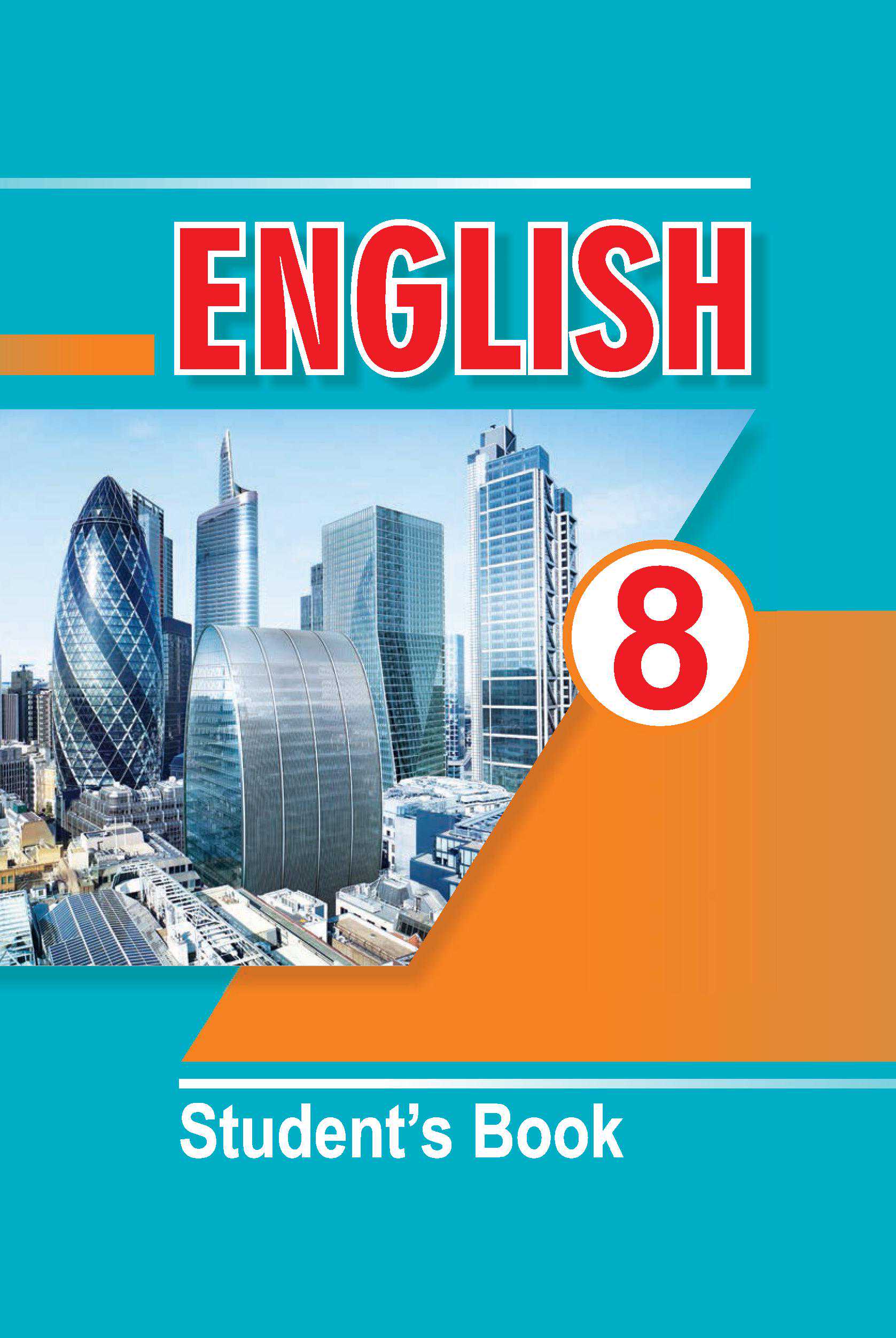
Авторы: Лапицкая Л. М., Демченко Н. В., Калишевич А. И., Юхнель Н. В., Волков А. В., Севрюкова Т. Ю.
Тип: Учебник
Издательство: Вышэйшая школа
Год издания: 2021 - 2025
Цвет обложки: бирюзовый, оранжевый
Допущено Министерством образования Республики Беларусь
Популярные ГДЗ в 8 классе







Unit 5. Britain and Belarus round the calendar. Lesson 1. Public or bank holidays? - номер 2, страница 117.
 №1
№1
№2 (с. 117)
Условие. №2 (с. 117)
скриншот условия
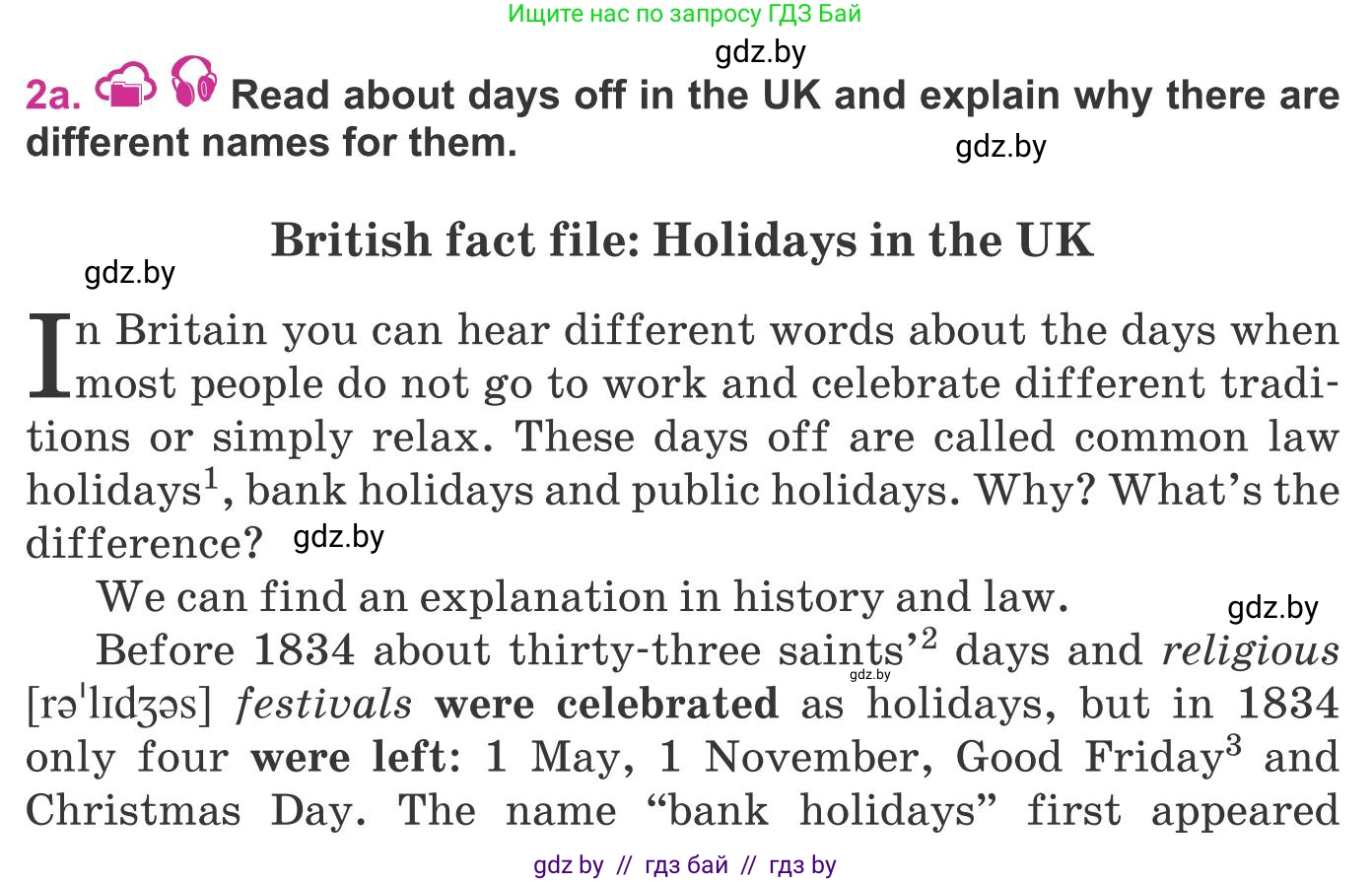


2a. Read about days off in the UK and explain why there are different names for them.
British fact file: Holidays in the UK
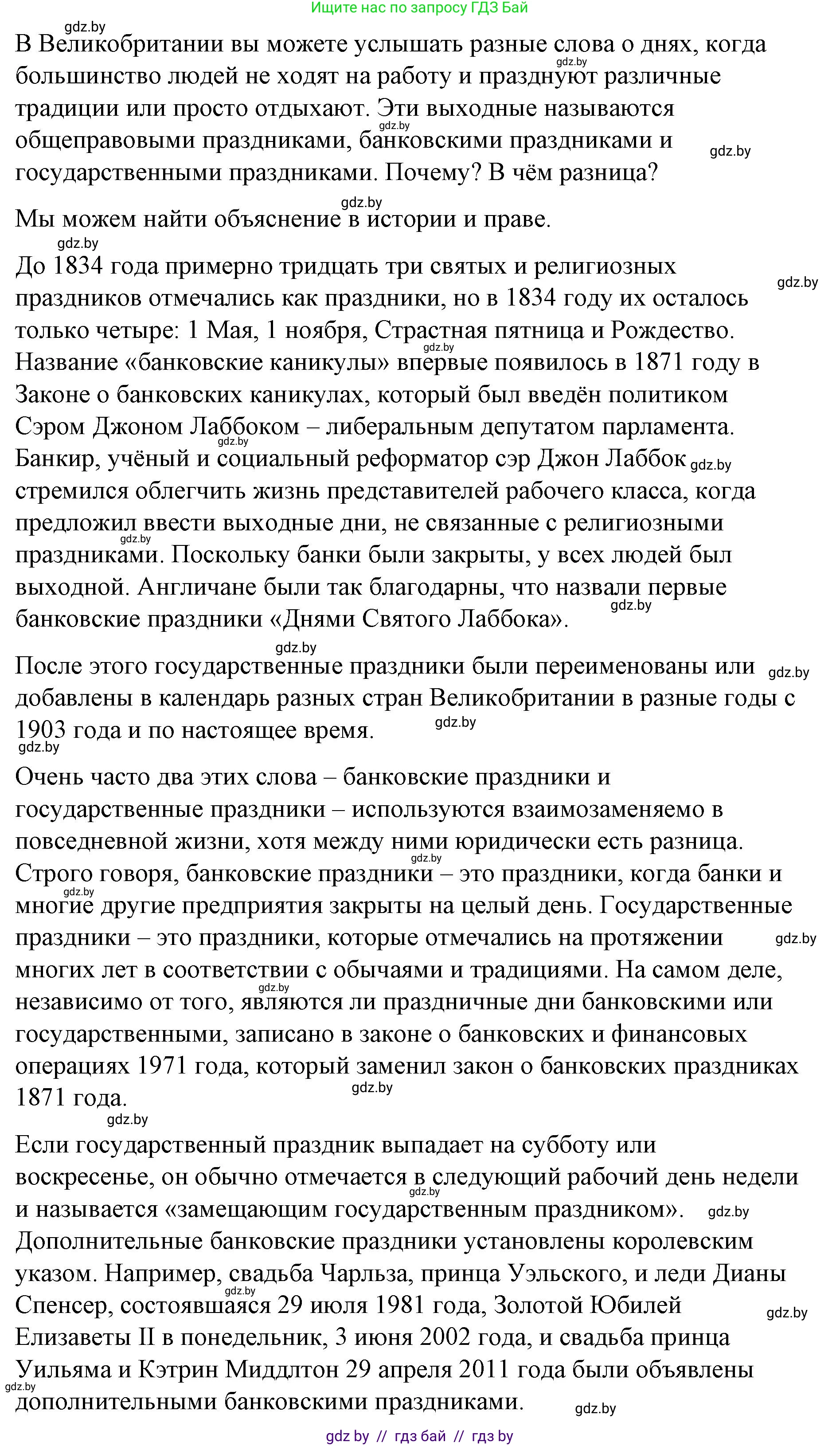
In Britain you can hear different words about the days when most people do not go to work and celebrate different tradi tions or simply relax. These days off are called common law holidays1, bank holidays and public holidays. Why? What's the difference?
We can find an explanation in history and law.
Before 1834 about thirty-three saints'2 days and religious [rəˈlɪdʒəs] festivals were celebrated as holidays, but in 1834 only four were left: 1 May, 1 November, Good Friday3 and Christmas Day. The name "bank holidays" first appeared in 1871 in the Bank Holidays Act, which was introduced by a politi cian [,pɒləˈtɪʃ(ə)n] Sir John Lubbock – a Liberal MP1. A banker, scientist and social reformer, Sir John Lubbock aimed to ease the life of the working class people when he sug gested introducing days off, which were not religious holidays. As banks were closed, all people had a day off. English people were so thankful that they called the first Bank Holidays "St Lubbock's Days".
After that, public holidays were renamed or added to the calendar of different UK countries in different years from 1903 to the present time.
Very often the two words – bank holidays and public holi days – are used interchangeably2 in everyday life, although le gally3 there is a difference. Strictly speaking, bank holidays are holidays when banks and many other businesses are closed for the day. Public holidays are holidays, which have been cele brated for many years through custom (обычай) and tradition. In fact, whether holidays are bank or public, is written in the Banking and Financial Dealings Act 1971, which replaced the Bank Holidays Act 1871.
If a public holiday falls on a Saturday or Sunday, it is usu ally celebrated on the next working weekday, called "a substi tute4 public holiday". Extra bank holidays are created by Royal proclamation5. For example, the wedding of Charles, Prince of Wales, and Lady Diana Spencer on 29 July 1981, the Golden Jubilee of Elizabeth II on Monday, 3 June 2002 and the wed ding of Prince William and Catherine Middleton on 29 April 2011 were made extra bank holidays.
2b. Read the "Grammar focus" and answer the questions.
1. What's the difference between sentences (1) and (2)?
2. What do the sentences mean?
3. Why is sentence (2) used?
4. What are the grammar forms in bold called?
5. How are Past Simple Passive Voice forms formed?
Grammar focus: Past Simple Passive Voice
1) The Bank Holidays Act introduced bank holidays in Britain in 1871.
2) Bank holidays were introduced (by the Bank Holidays Act) in Britain in 1871.
S was / were V3
See "Grammar reference" on page 257.
2c. Look through the text and find all the sentences in the Passive Voice. What do they mean? What forms are they?
2d. Guess the meaning of the words in italics.
Решение. №2 (с. 117)



Решение 2. №2 (с. 117)
2b. Прочитайте раздел "Grammar focus" и ответьте на вопросы.
1. В чем разница между предложениями (1) и (2)?
2. Что означают эти предложения?
3. Почему используется предложение (2)?
4. Как называются грамматические формы, выделенные жирным шрифтом?
5. Как образуются формы Past Simple Passive Voice?
Ответ:
1. Sentence (1) is in the Active Voice, where the subject (The Bank Holidays Act) performs the action. Sentence (2) is in the Passive Voice, where the subject (Bank holidays) receives the action.
2. Both sentences mean that the Bank Holidays Act established bank holidays in Britain in 1871.
3. Sentence (2) is used to focus on the action itself or the object of the action (Bank holidays), rather than on the agent who performed it (the Bank Holidays Act).
4. The form in bold in sentence (1) is the Past Simple Active Voice. The form in bold in sentence (2) is the Past Simple Passive Voice.
5. Past Simple Passive Voice is formed using was/were + the Past Participle (V3) of the verb.
Перевод:
1. Предложение (1) стоит в Активном (действительном) залоге, где подлежащее (Закон о банковских каникулах) совершает действие. Предложение (2) стоит в Пассивном (страдательном) залоге, где подлежащее (Банковские каникулы) испытывает на себе действие.
2. Оба предложения означают, что Закон о банковских каникулах ввел банковские каникулы в Британии в 1871 году.
3. Предложение (2) используется для того, чтобы сфокусироваться на самом действии или на объекте действия (Банковские каникулы), а не на том, кто его совершил (Закон о банковских каникулах).
4. Форма, выделенная жирным шрифтом в предложении (1), - это Past Simple в активном залоге. Форма, выделенная жирным шрифтом в предложении (2), - это Past Simple в пассивном залоге.
5. Past Simple Passive Voice образуется при помощи was/were + Причастие прошедшего времени (третья форма глагола).
Другие задания:

Помогло решение? Оставьте отзыв в комментариях ниже.
Присоединяйтесь к Телеграм-группе @gdz_by_belarus
ПрисоединитьсяМы подготовили для вас ответ c подробным объяснением домашего задания по английскому языку за 8 класс, для упражнения номер 2 расположенного на странице 117 к учебнику 2021 года издания для учащихся школ и гимназий.
Теперь на нашем сайте ГДЗ.ТОП вы всегда легко и бесплатно найдёте условие с правильным ответом на вопрос «Как решить ДЗ» и «Как сделать» задание по английскому языку к упражнению №2 (с. 117), авторов: Лапицкая (Людмила Михайловна), Демченко (Наталья Валентиновна), Калишевич (Алла Ивановна), Юхнель (Наталья Валентиновна), Волков (Андрей Валерьевич), Севрюкова (Татьяна Юрьевна), учебного пособия издательства Вышэйшая школа.