 gdz.by


Номер 3, страница 136 - гдз по английскому языку 8 класс учебник Лапицкая, Демченко
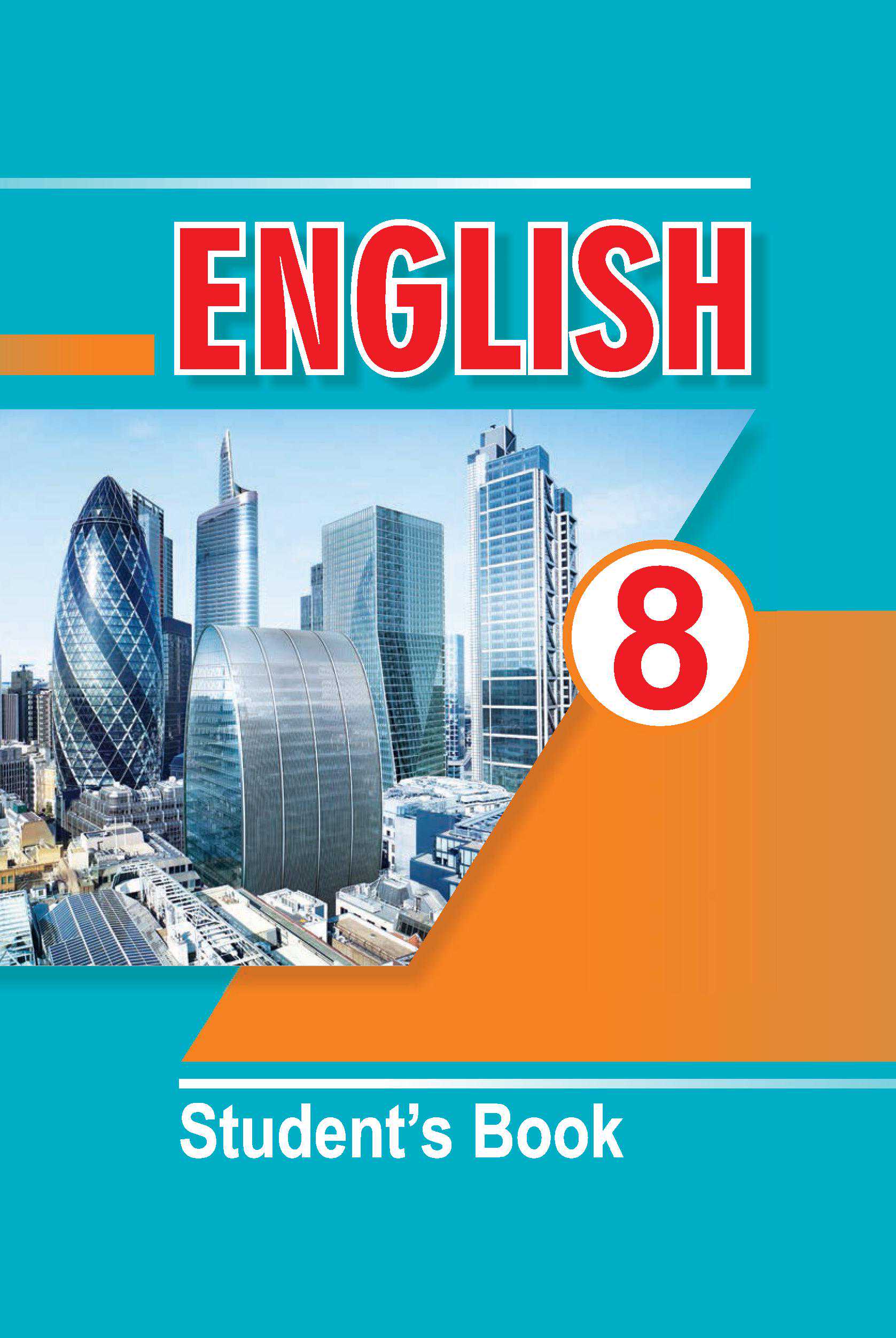
Авторы: Лапицкая Л. М., Демченко Н. В., Калишевич А. И., Юхнель Н. В., Волков А. В., Севрюкова Т. Ю.
Тип: Учебник
Издательство: Вышэйшая школа
Год издания: 2021 - 2025
Цвет обложки: бирюзовый, оранжевый
Допущено Министерством образования Республики Беларусь
Популярные ГДЗ в 8 классе




Unit 5. Britain and Belarus round the calendar. Lesson 5. Belarus round the calendar - номер 3, страница 136.
 №2
№2
№3 (с. 136)
Условие. №3 (с. 136)
скриншот условия
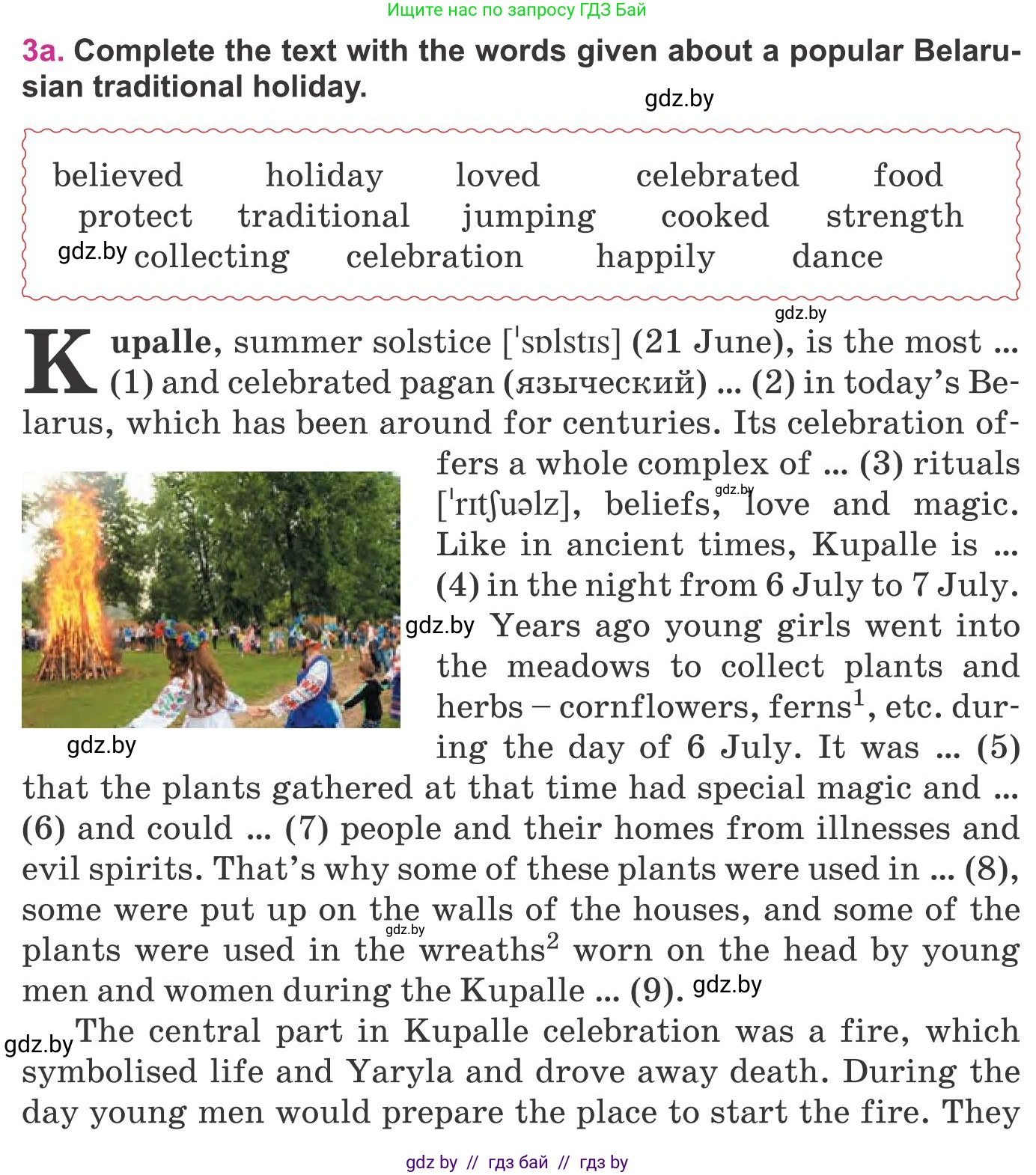
3a. Complete the text with the words given about a popular Belaru- sian traditional holiday.
believed holiday loved celebrated food
protect traditional jumping cooked strength
collecting celebration happily dance
Kupalle, summer solstice ['sɒlstɪs] (21 June), is the most ... (1) and celebrated pagan (языческий) ... (2) in today's Belarus, which has been around for centuries. Its celebration offers a whole complex of ... (3) rituals ['rɪtʃuəlz], beliefs, love and magic. Like in ancient times, Kupalle is ... (4) in the night from 6 July to 7 July. Years ago young girls went into the meadows to collect plants and herbs – cornflowers, ferns¹, etc. during the day of 6 July. It was ... (5) that the plants gathered at that time had special magic and ... (6) and could ... (7) people and their homes from illnesses and evil spirits. That's why some of these plants were used in ... (8), some were put up on the walls of the houses, and some of the plants were used in the wreaths² worn on the head by young men and women during the Kupalle ... (9).
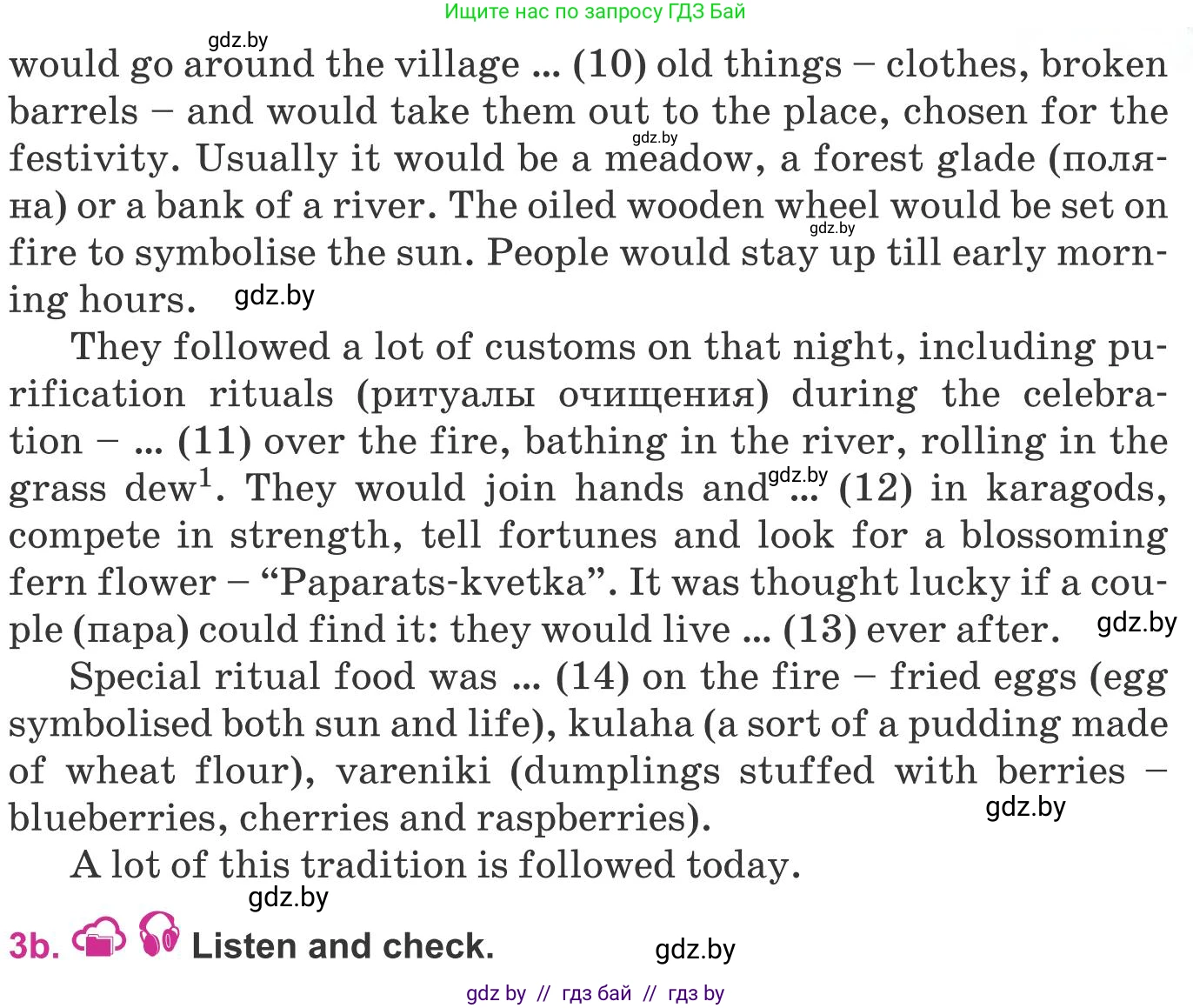
The central part in Kupalle celebration was a fire, which symbolised life and Yaryla and drove away death. During the day young men would prepare the place to start the fire. They would go around the village ... (10) old things – clothes, broken barrels – and would take them out to the place, chosen for the festivity. Usually it would be a meadow, a forest glade (поляна) or a bank of a river. The oiled wooden wheel would be set on fire to symbolise the sun. People would stay up till early morning hours.
They followed a lot of customs on that night, including purification rituals (ритуалы очищения) during the celebration – ... (11) over the fire, bathing in the river, rolling in the grass dew¹. They would join hands and ... (12) in karagods, compete in strength, tell fortunes and look for a blossoming fern flower – “Paparats-kvetka”. It was thought lucky if a couple (пара) could find it: they would live ... (13) ever after.
Special ritual food was ... (14) on the fire – fried eggs (egg symbolised both sun and life), kulaha (a sort of a pudding made of wheat flour), vareniki (dumplings stuffed with berries – blueberries, cherries and raspberries).
A lot of this tradition is followed today.
3b. Listen and check.
Решение. №3 (с. 136)
Решение 2. №3 (с. 136)
3a. Дополните текст о популярном белорусском традиционном празднике, используя данные слова.
Ответ:
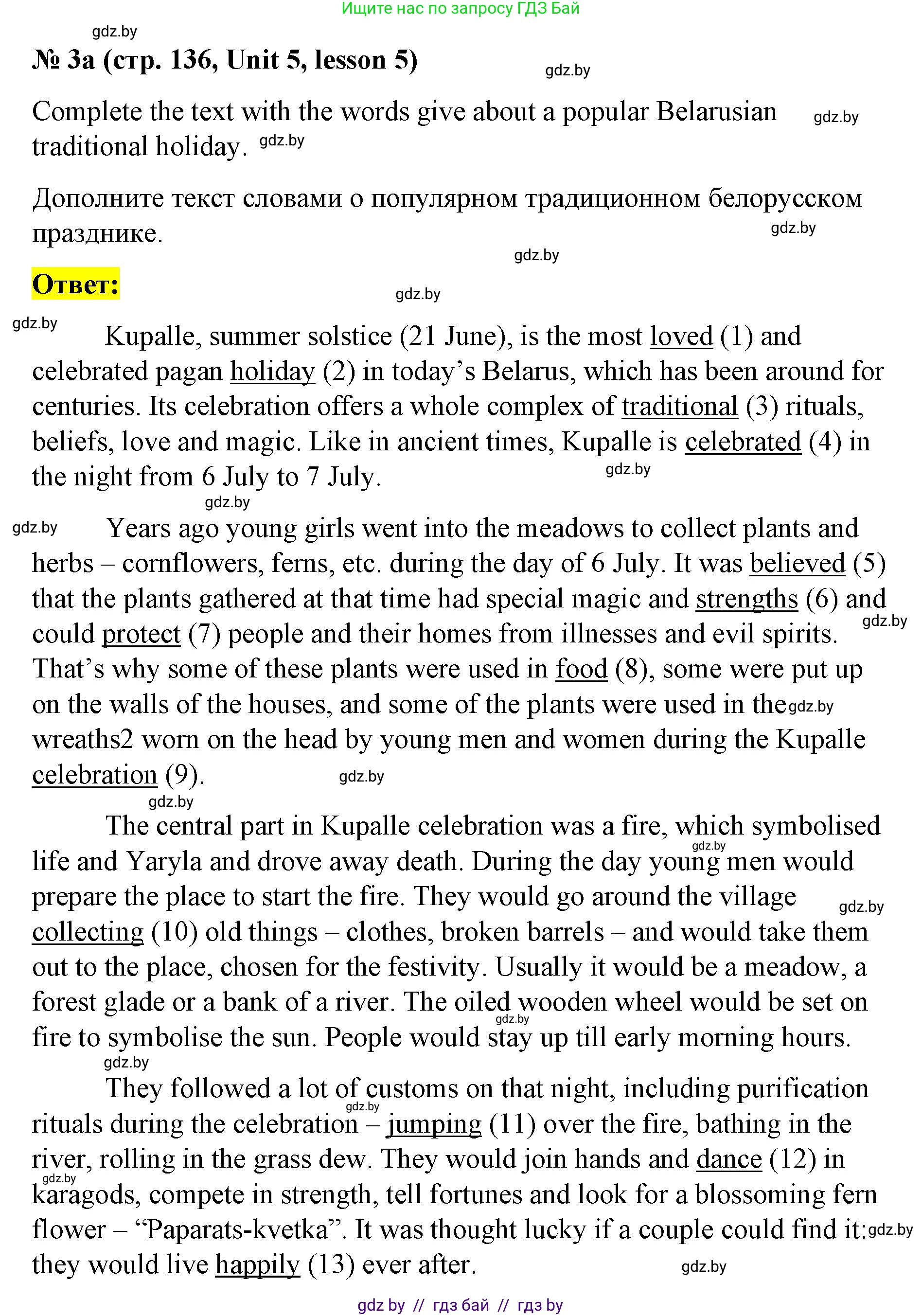
Kupalle, summer solstice ['sɔlstəs] (21 June), is the most (1) loved and celebrated pagan (языческий) (2) holiday in today’s Belarus, which has been around for centuries. Its celebration offers a whole complex of (3) traditional rituals ['rɪtʃuəlz], beliefs, love and magic. Like in ancient times, Kupalle is (4) celebrated in the night from 6 July to 7 July.
Years ago young girls went into the meadows to collect plants and herbs – cornflowers, ferns¹, etc. during the day of 6 July. It was (5) believed that the plants gathered at that time had special magic and (6) strength and could (7) protect people and their homes from illnesses and evil spirits. That’s why some of these plants were used in (8) food, some were put up on the walls of the houses, and some of the plants were used in the wreaths² worn on the head by young men and women during the Kupalle (9) celebration.
The central part in Kupalle celebration was a fire, which symbolised life and Yaryla and drove away death. During the day young men would prepare the place to start the fire. They would go around the village (10) collecting old things – clothes, broken barrels – and would take them out to the place, chosen for the festivity. Usually it would be a meadow, a forest glade (поляна) or a bank of a river. The oiled wooden wheel would be set on fire to symbolise the sun. People would stay up till early morning hours.
They followed a lot of customs on that night, including purification rituals (ритуалы очищения) during the celebration – (11) jumping over the fire, bathing in the river, rolling in the grass dew¹. They would join hands and (12) dance in karagods, compete in strength, tell fortunes and look for a blossoming fern flower – “Paparats-kvetka”. It was thought lucky if a couple (пара) could find it: they would live (13) happily ever after.
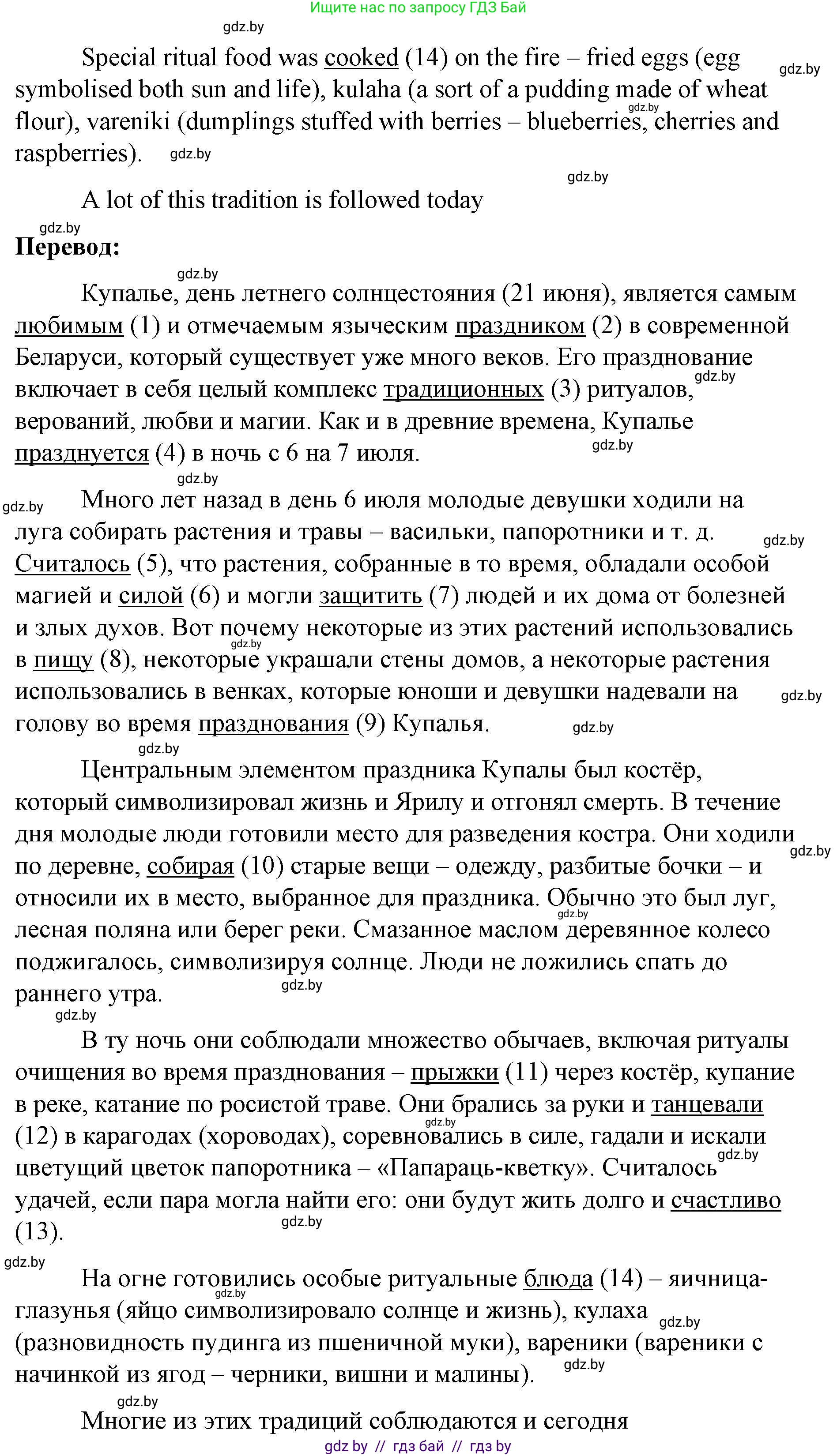
Special ritual food was (14) cooked on the fire – fried eggs (egg symbolised both sun and life), kulaha (a sort of a pudding made of wheat flour), vareniki (dumplings stuffed with berries – blueberries, cherries and raspberries).
A lot of this tradition is followed today.
Перевод:
Купалье, день летнего солнцестояния ['sɔlstəs] (21 июня), — это самый (1) любимый и отмечаемый языческий (2) праздник в современной Беларуси, существующий на протяжении веков. Его празднование предлагает целый комплекс (3) традиционных ритуалов ['rɪtʃuəlz], верований, любви и магии. Как и в древние времена, Купалье (4) празднуется в ночь с 6 на 7 июля.
Много лет назад молодые девушки ходили на луга собирать растения и травы – васильки, папоротники¹ и т. д. – днём 6 июля. (5) Считалось, что растения, собранные в это время, обладают особой магией и (6) силой и могут (7) защитить людей и их дома от болезней и злых духов. Поэтому некоторые из этих растений использовались в (8) еде, некоторые вывешивались на стены домов, а некоторые использовались в венках², которые носили на голове молодые мужчины и женщины во время купальского (9) празднования.
Центральной частью празднования Купалья был костёр, который символизировал жизнь и Ярилу и отгонял смерть. Днём юноши готовили место для разведения костра. Они ходили по деревне, (10) собирая старые вещи – одежду, сломанные бочки – и выносили их на место, выбранное для празднества. Обычно это был луг, лесная поляна (поляна) или берег реки. Промасленное деревянное колесо поджигали, чтобы символизировать солнце. Люди бодрствовали до раннего утра.
В ту ночь они следовали множеству обычаев, включая обряды очищения (ритуалы очищения) во время празднования – (11) прыжки через костёр, купание в реке, катание по росе на траве¹. Они брались за руки и (12) танцевали в хороводах, соревновались в силе, гадали и искали цветущий цветок папоротника – «Папараць-кветка». Считалось удачей, если пара (пара) могла его найти: они будут жить (13) счастливо до конца своих дней.
Особая ритуальная еда (14) готовилась на костре – яичница (яйцо символизировало и солнце, и жизнь), кулага (вид пудинга из пшеничной муки), вареники (вареники с начинкой из ягод – черники, вишни и малины).
Многие из этих традиций соблюдаются и сегодня.
Другие задания:

Помогло решение? Оставьте отзыв в комментариях ниже.
Присоединяйтесь к Телеграм-группе @gdz_by_belarus
ПрисоединитьсяМы подготовили для вас ответ c подробным объяснением домашего задания по английскому языку за 8 класс, для упражнения номер 3 расположенного на странице 136 к учебнику 2021 года издания для учащихся школ и гимназий.
Теперь на нашем сайте ГДЗ.ТОП вы всегда легко и бесплатно найдёте условие с правильным ответом на вопрос «Как решить ДЗ» и «Как сделать» задание по английскому языку к упражнению №3 (с. 136), авторов: Лапицкая (Людмила Михайловна), Демченко (Наталья Валентиновна), Калишевич (Алла Ивановна), Юхнель (Наталья Валентиновна), Волков (Андрей Валерьевич), Севрюкова (Татьяна Юрьевна), учебного пособия издательства Вышэйшая школа.