 gdz.by


Номер 4, страница 135 - гдз по английскому языку 9 класс учебник Лапицкая, Демченко

Авторы: Лапицкая Л. М., Демченко Н. В., Волков А. В., Калишевич А. И., Севрюкова Т. Ю., Юхнель Н. В.
Тип: Student's book (Учебник)
Издательство: Вышэйшая школа
Год издания: 2018 - 2025
Цвет обложки: синий
Допущено Министерством образования Республики Беларусь
Популярные ГДЗ в 9 классе












Unit 5. Weather. Lesson 6. How is weather predicted? - номер 4, страница 135.
 №3
№3
№4 (с. 135)
Условие. №4 (с. 135)
скриншот условия
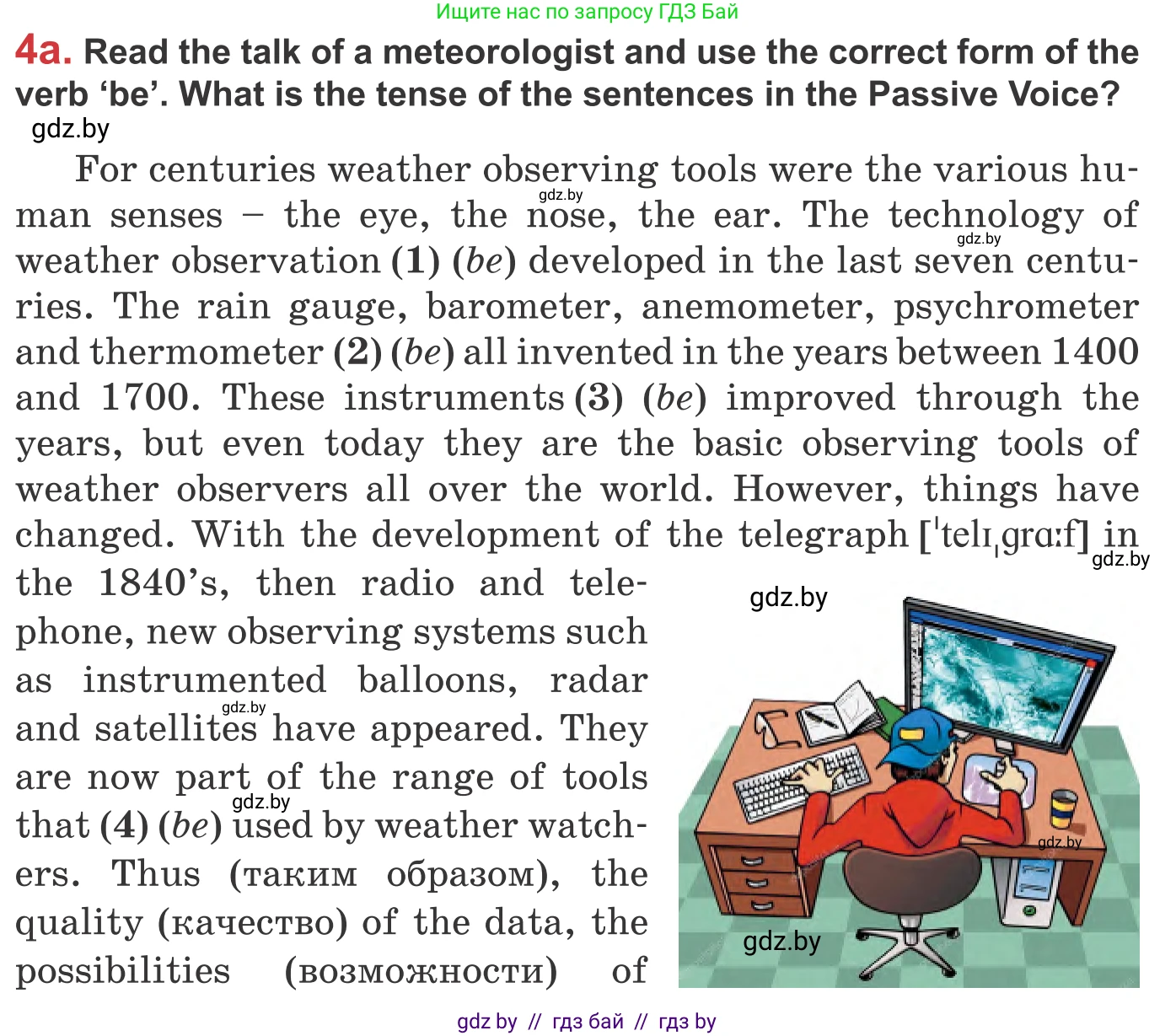
4a. Read the talk of a meteorologist and use the correct form of the verb 'be'. What is the tense of the sentences in the Passive Voice?
For centuries weather observing tools were the various human senses – the eye, the nose, the ear. The technology of weather observation (1)(be) developed in the last seven centuries. The rain gauge, barometer, anemometer, psychrometer and thermometer (2)(be) all invented in the years between 1400 and 1700. These instruments (3)(be) improved through the years, but even today they are the basic observing tools of weather observers all over the world. However, things have changed. With the development of the telegraph ['teliˌgra:f] in the 1840’s, then radio and telephone, new observing systems such as instrumented balloons, radar and satellites have appeared. They are now part of the range of tools that (4)(be) used by weather watchers. Thus (таким образом), the quality (качество) of the data, the possibilities (возможности) of
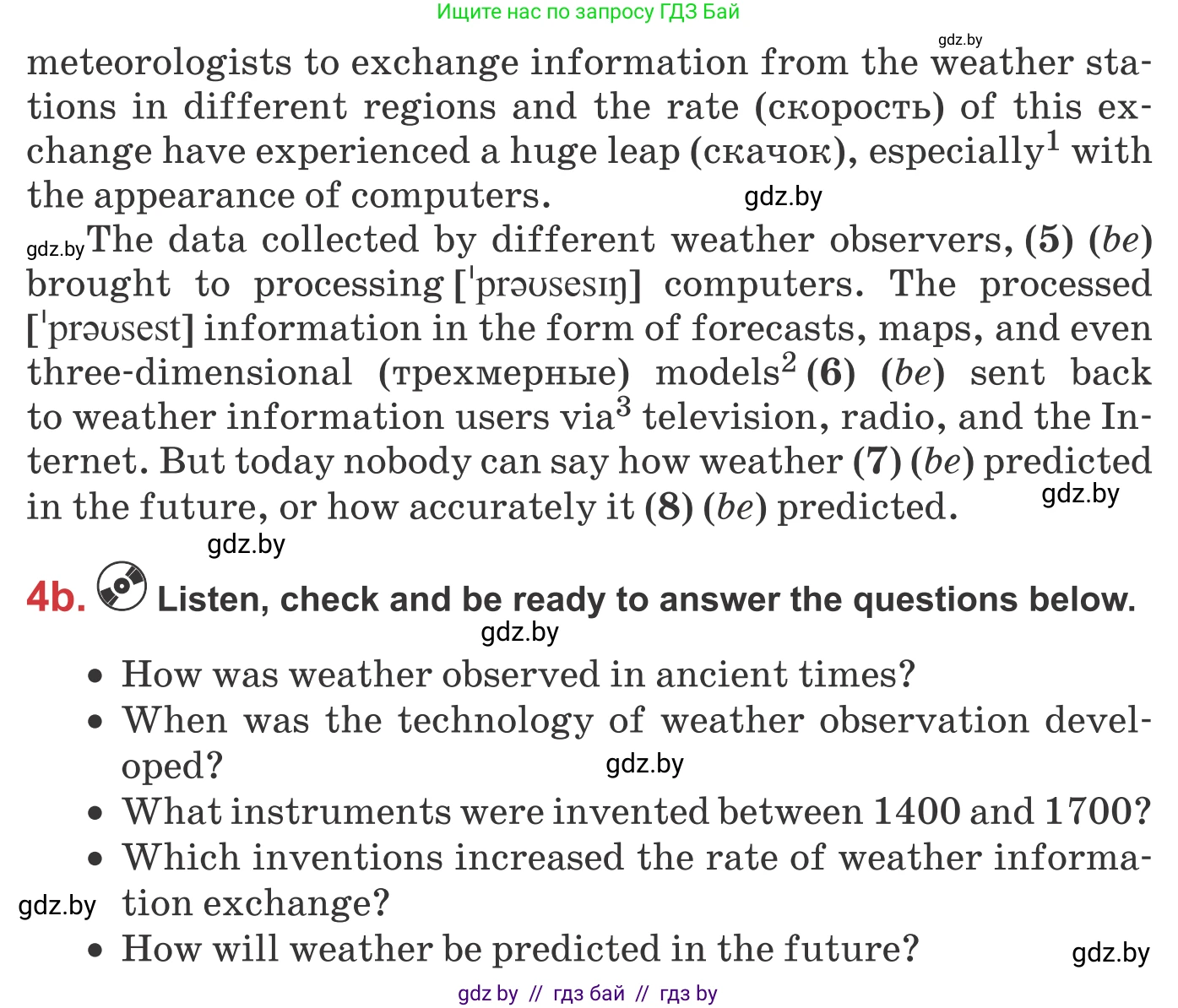
meteorologists to exchange information from the weather stations in different regions and the rate (скорость) of this exchange have experienced a huge leap (скачок), especially1 with the appearance of computers.
The data collected by different weather observers, (5)(be) brought to processing ['prəʊsesɪŋ] computers. The processed ['prəʊsest] information in the form of forecasts, maps, and even three-dimensional (трехмерные) models2(6)(be) sent back to weather information users via3 television, radio, and the Internet. But today nobody can say how weather (7)(be) predicted in the future, or how accurately it (8)(be) predicted.
4b. (Аудио значок) Listen, check and be ready to answer the questions below.
• How was weather observed in ancient times?
• When was the technology of weather observation developed?
• What instruments were invented between 1400 and 1700?
• Which inventions increased the rate of weather information exchange?
• How will weather be predicted in the future?
Решение 1. №4 (с. 135)

Решение 2. №4 (с. 135)
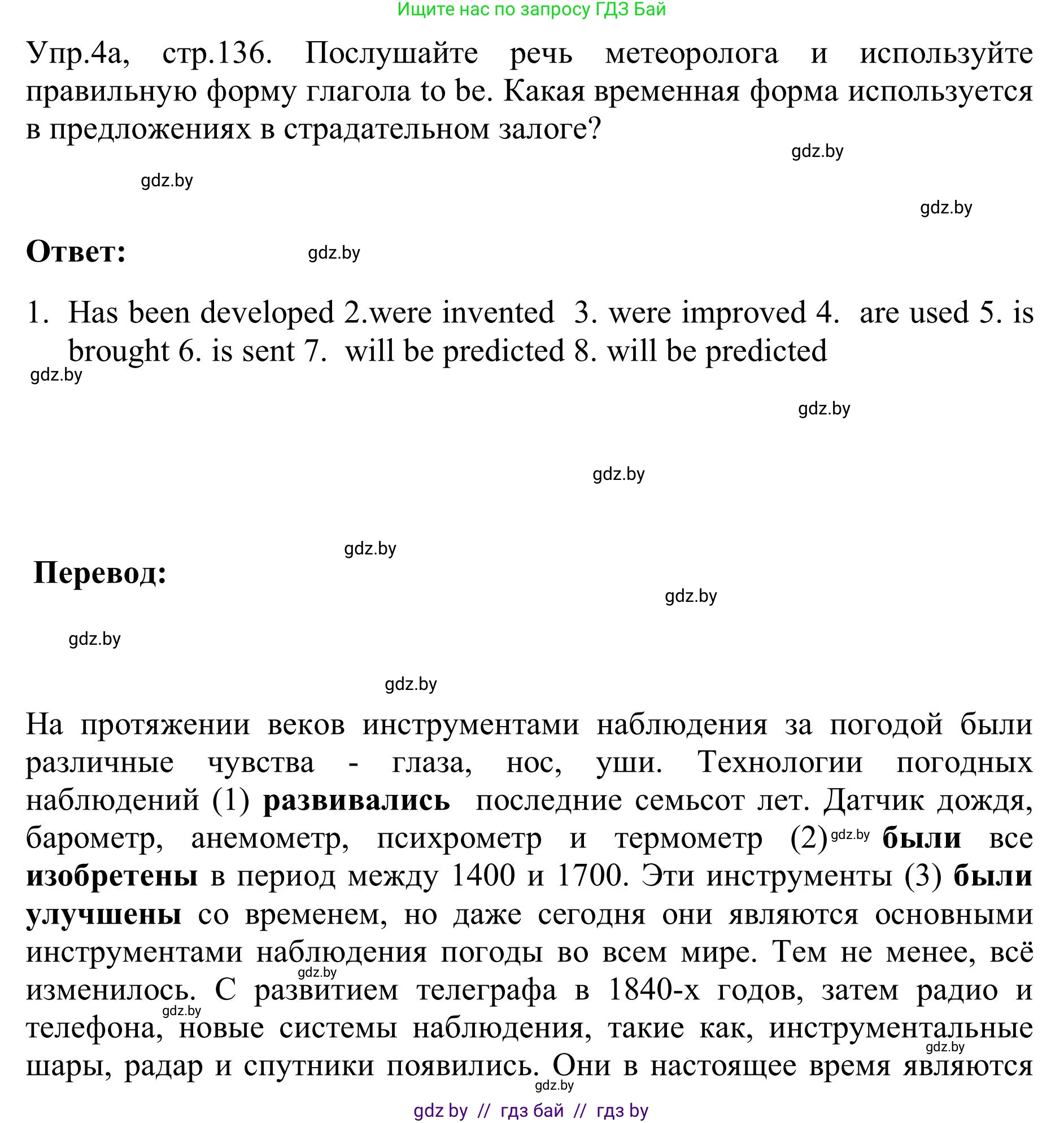
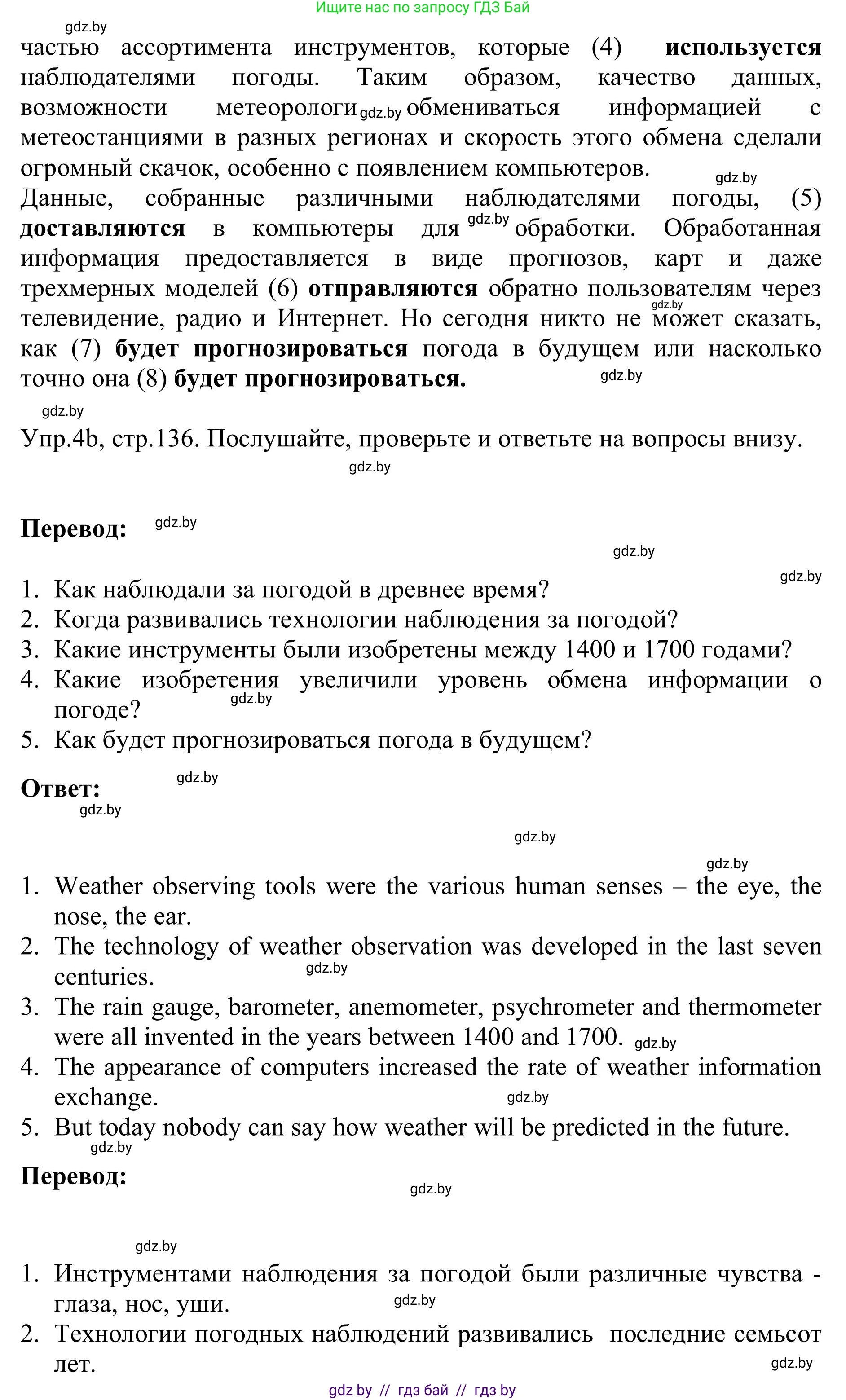
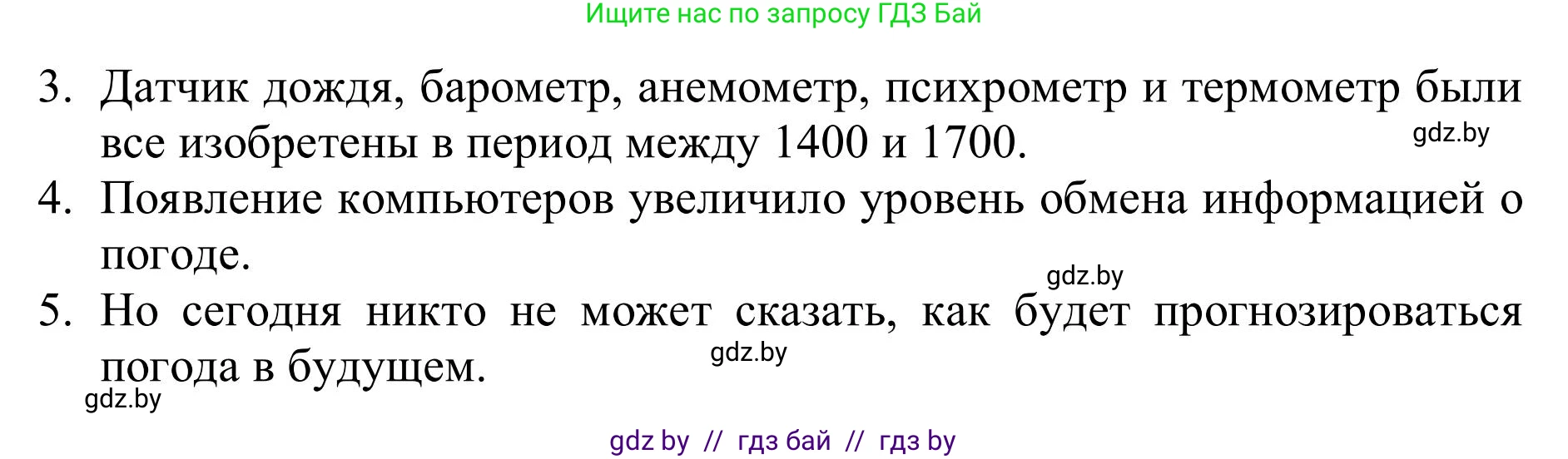
Решение 3. №4 (с. 135)
4a. Прочитайте рассказ метеоролога и используйте правильную форму глагола 'be'. Какое время используется в предложениях в страдательном залоге?
4b. Прослушайте, проверьте и будьте готовы ответить на вопросы ниже.
- Как наблюдали за погодой в древние времена?
- Когда была разработана технология наблюдения за погодой?
- Какие инструменты были изобретены между 1400 и 1700 годами?
- Какие изобретения увеличили скорость обмена погодной информацией?
- Как будут предсказывать погоду в будущем?
Ответ:
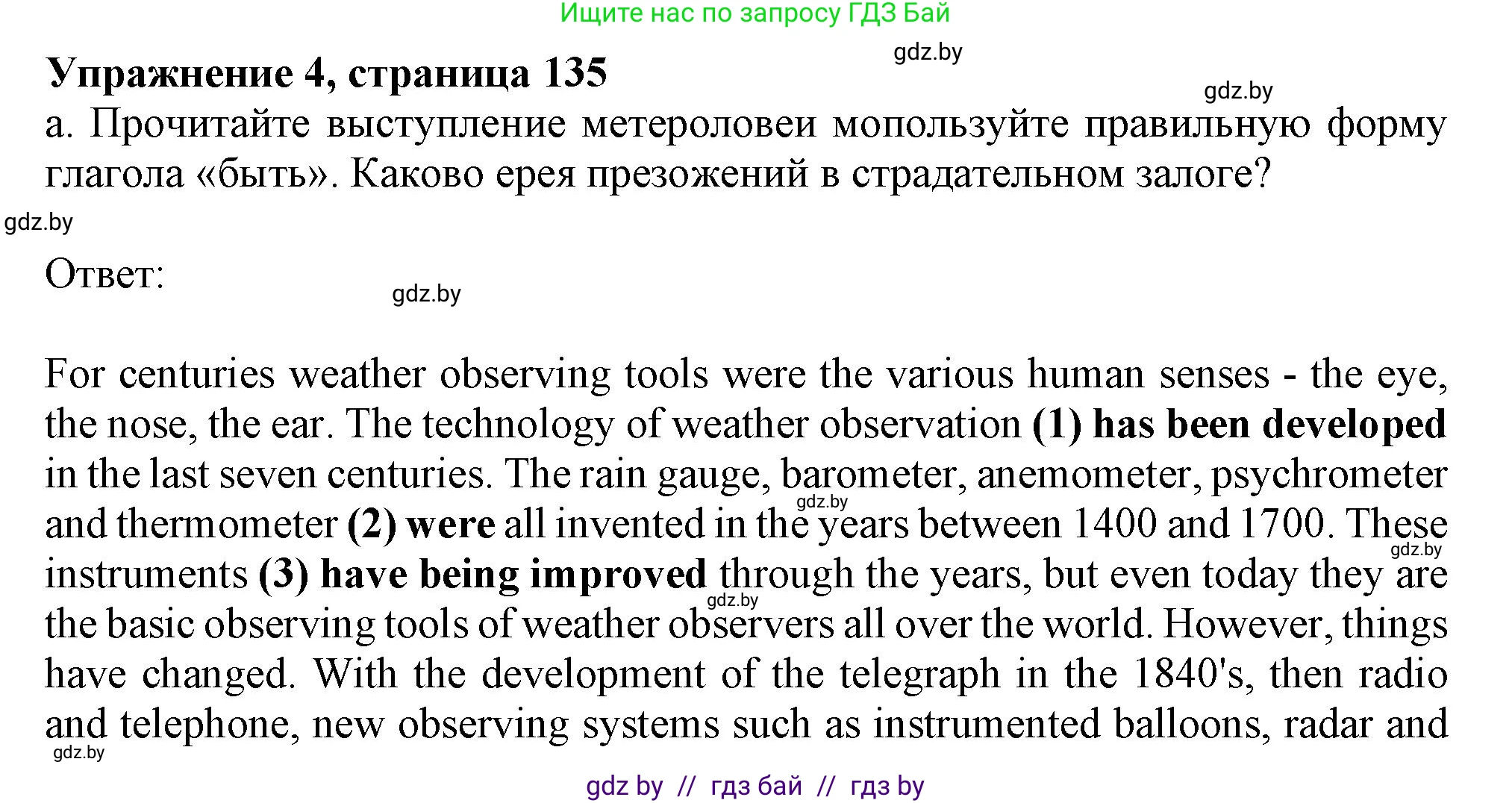
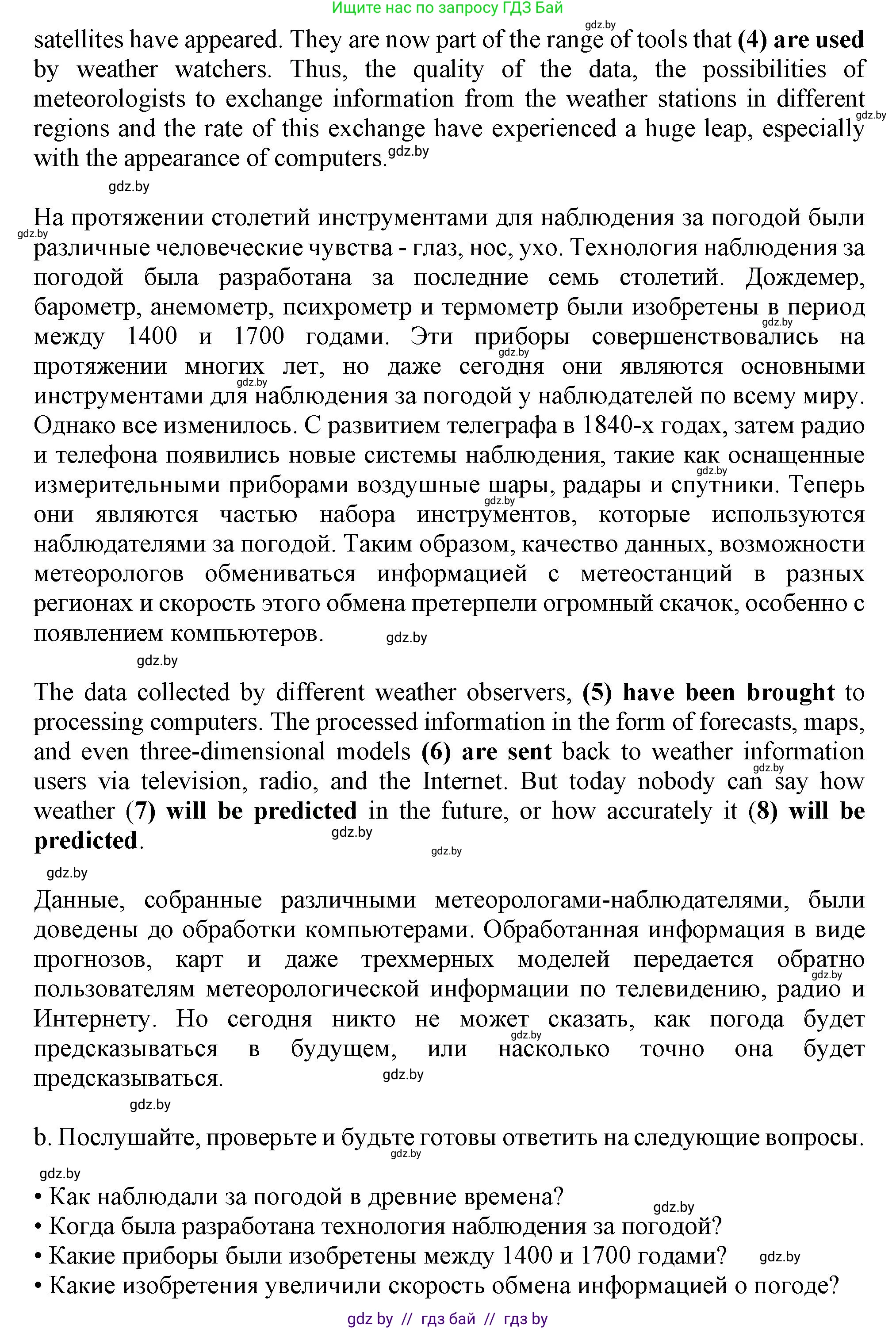
4a. The tenses of the sentences in the Passive Voice are Past Simple, Present Perfect, Present Simple, and Future Simple.
4b. In ancient times, weather was observed using the human senses — the eye, the nose, the ear.
The technology of weather observation was developed in the last seven centuries.
The rain gauge, barometer, anemometer, psychrometer and thermometer were invented between 1400 and 1700.
The telegraph, radio, telephone, and especially computers increased the rate of weather information exchange.
Nobody can say how weather will be predicted in the future.
Перевод:
4a. Времена предложений в страдательном залоге: Past Simple, Present Perfect, Present Simple и Future Simple.
4b. В древние времена за погодой наблюдали с помощью человеческих органов чувств — глаз, носа, ушей.
Технология наблюдения за погодой была разработана в последние семь столетий.
Дождемер, барометр, анемометр, психрометр и термометр были изобретены в период между 1400 и 1700 годами.
Телеграф, радио, телефон и особенно компьютеры увеличили скорость обмена погодной информацией.
Никто не может сказать, как будут предсказывать погоду в будущем.
Другие задания:

Помогло решение? Оставьте отзыв в комментариях ниже.
Присоединяйтесь к Телеграм-группе @gdz_by_belarus
ПрисоединитьсяМы подготовили для вас ответ c подробным объяснением домашего задания по английскому языку за 9 класс, для упражнения номер 4 расположенного на странице 135 к Учебник (Student's book) 2018 года издания для учащихся школ и гимназий.
Теперь на нашем сайте ГДЗ.ТОП вы всегда легко и бесплатно найдёте условие с правильным ответом на вопрос «Как решить ДЗ» и «Как сделать» задание по английскому языку к упражнению №4 (с. 135), авторов: Лапицкая (Людмила Михайловна), Демченко (Наталья Валентиновна), Волков (Андрей Валерьевич), Калишевич (Алла Ивановна), Севрюкова (Татьяна Юрьевна), Юхнель (Наталья Валентиновна), учебного пособия издательства Вышэйшая школа.