 gdz.by


Номер 2, страница 155 - гдз по английскому языку 9 класс учебник Лапицкая, Демченко
Авторы: Лапицкая Л. М., Демченко Н. В., Волков А. В., Калишевич А. И., Севрюкова Т. Ю., Юхнель Н. В.
Тип: Student's book (Учебник)
Издательство: Вышэйшая школа
Год издания: 2018 - 2025
Цвет обложки: синий
Допущено Министерством образования Республики Беларусь
Популярные ГДЗ в 9 классе




Unit 6. Climate. Lesson 3. Are extreme weather events related to climate? - номер 2, страница 155.
 №1
№1
№2 (с. 155)
Условие. №2 (с. 155)
скриншот условия
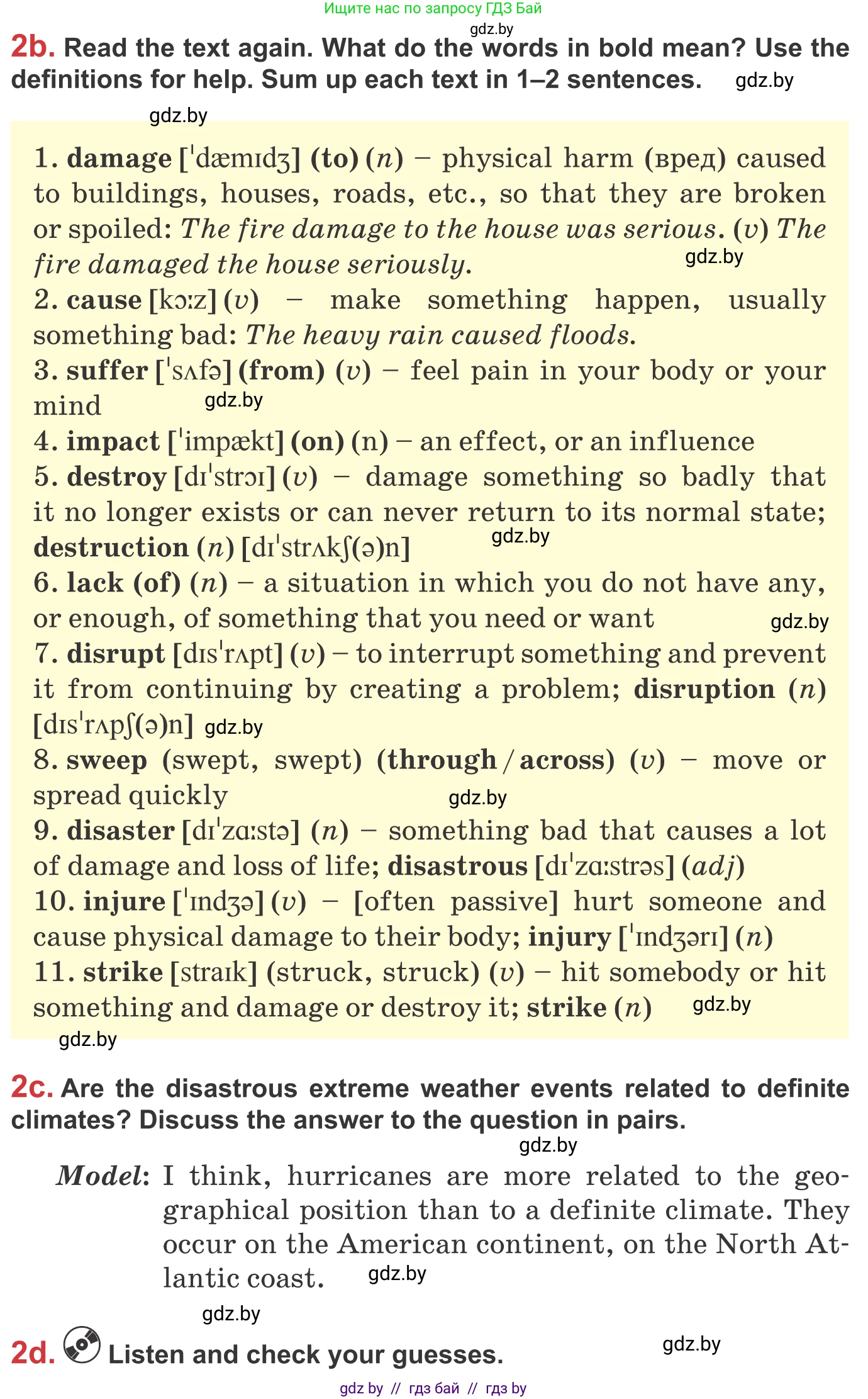
2a. Listen and read about the following extreme weather events and say on what continents they occurred.
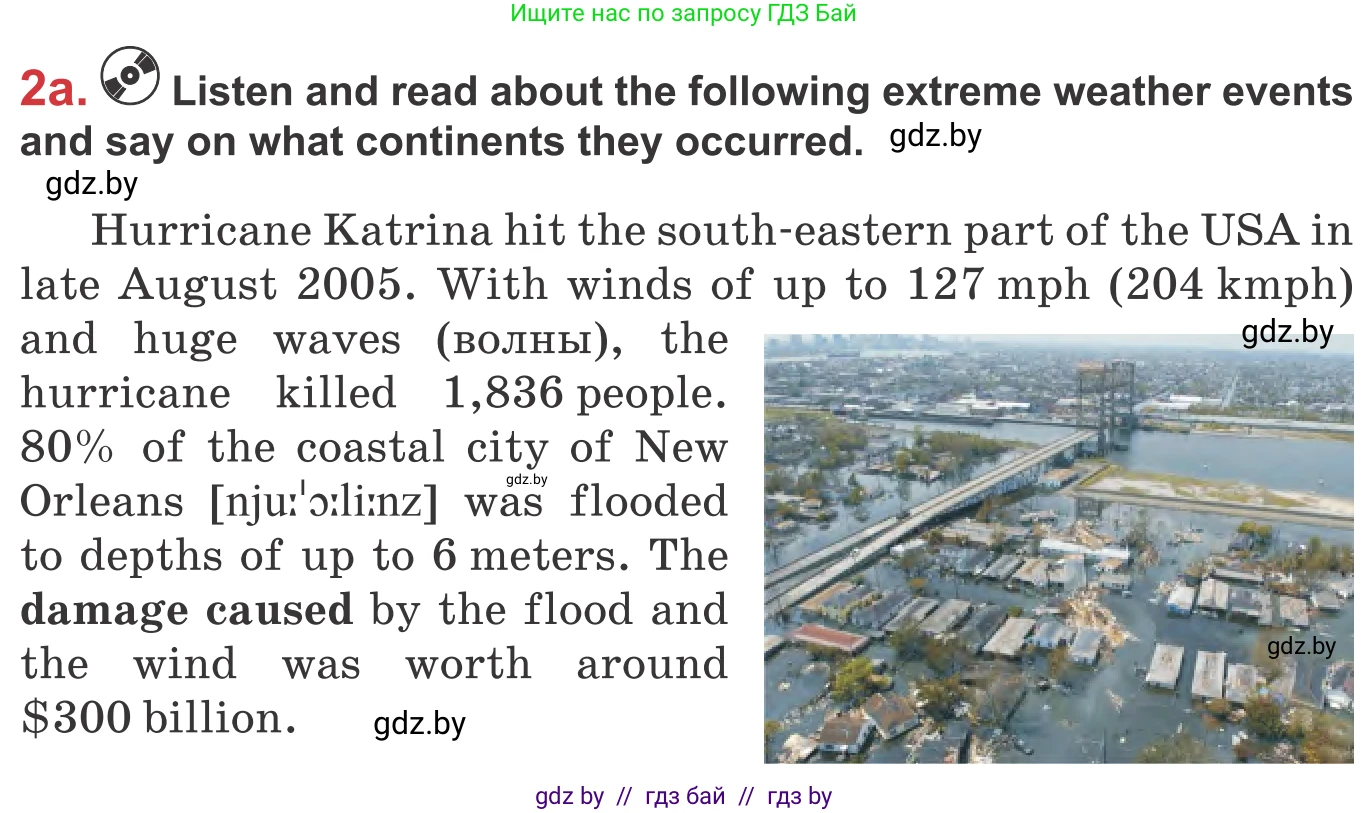
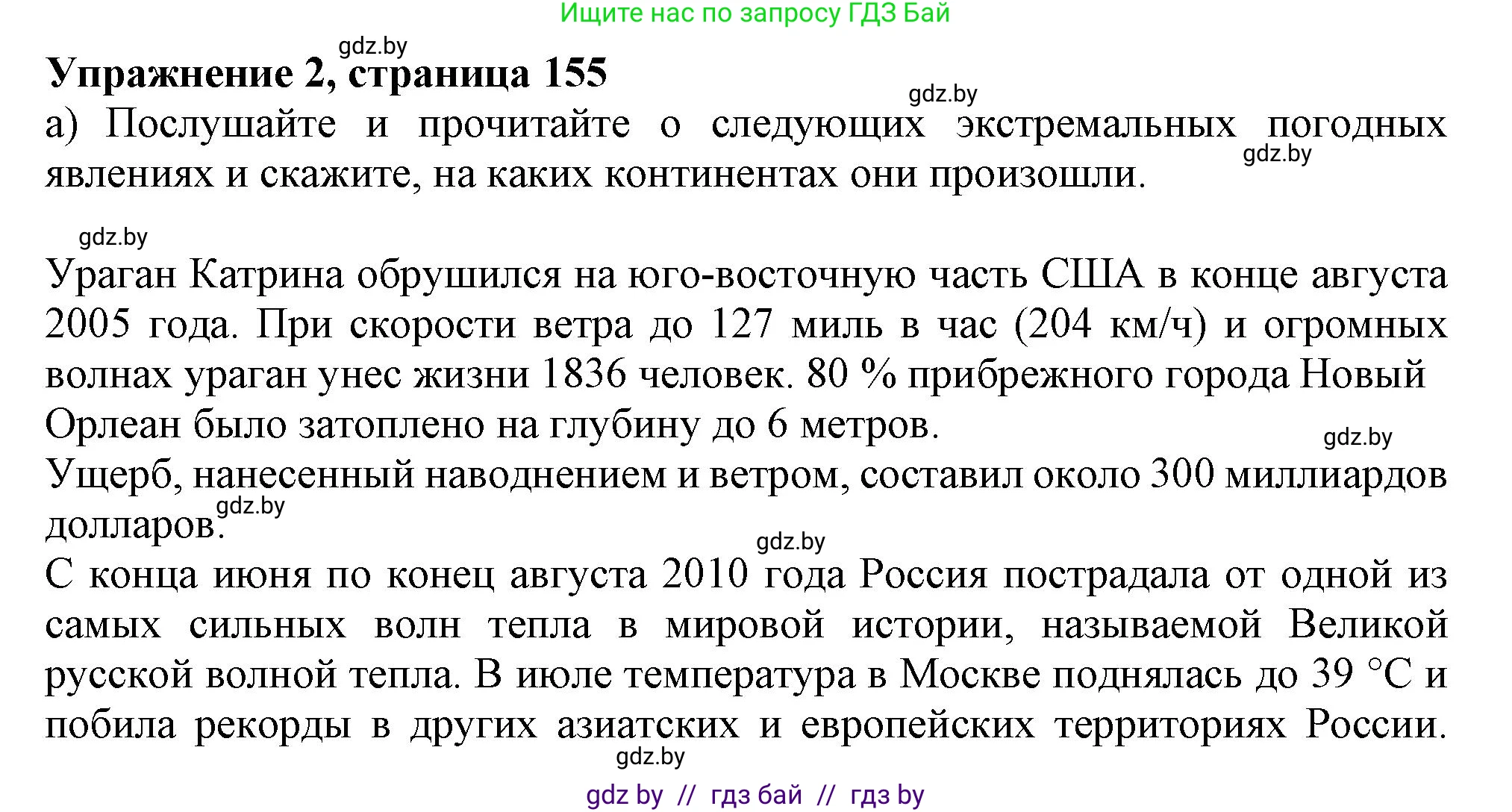
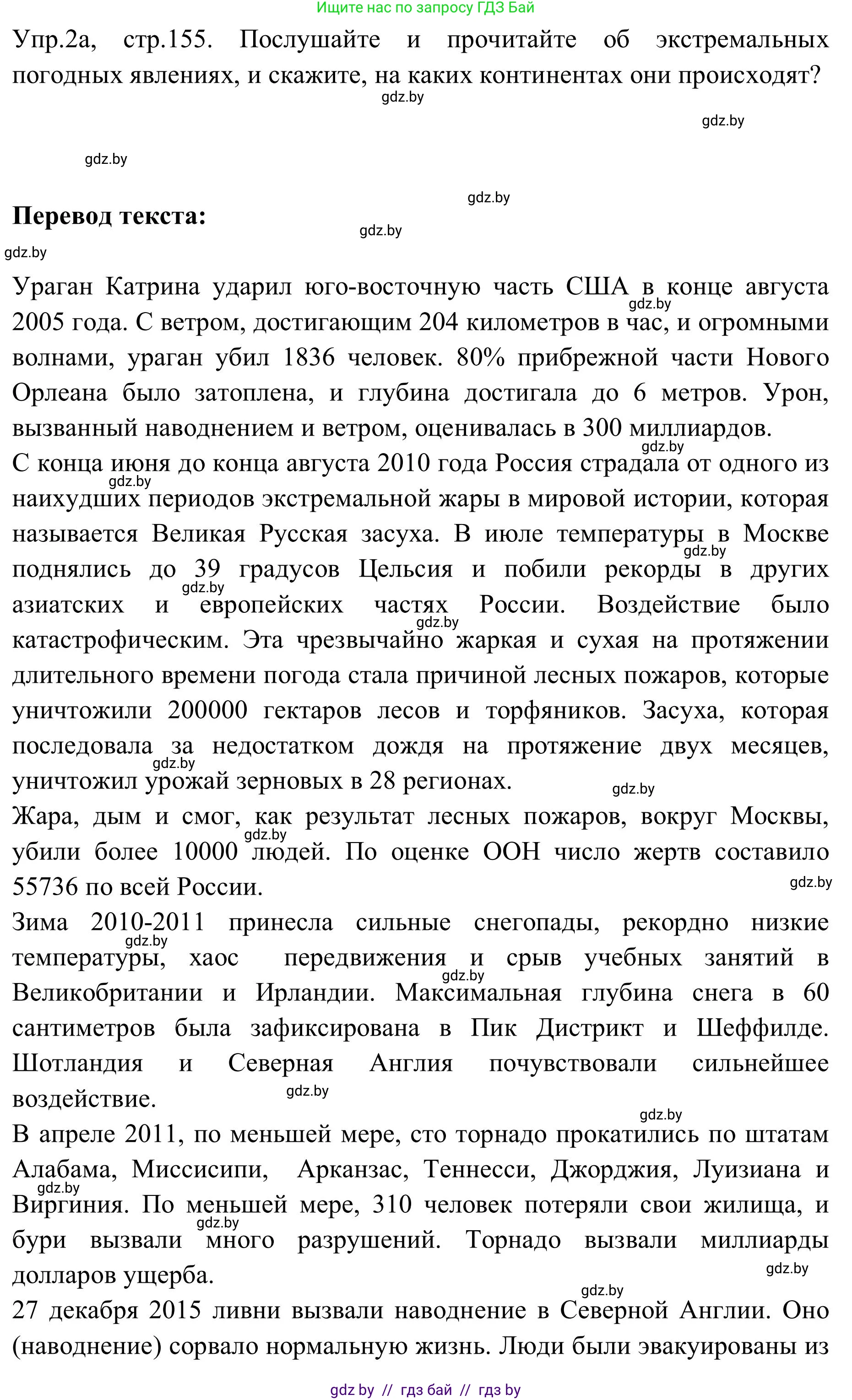
Hurricane Katrina hit the south-eastern part of the USA in late August 2005. With winds of up to 127 mph (204 kmph) and huge waves (волны), the hurricane killed 1,836 people. 80% of the coastal city of New Orleans [njuːˈɔːlɪnz] was flooded to depths of up to 6 meters. The damage caused by the flood and the wind was worth around $300 billion.
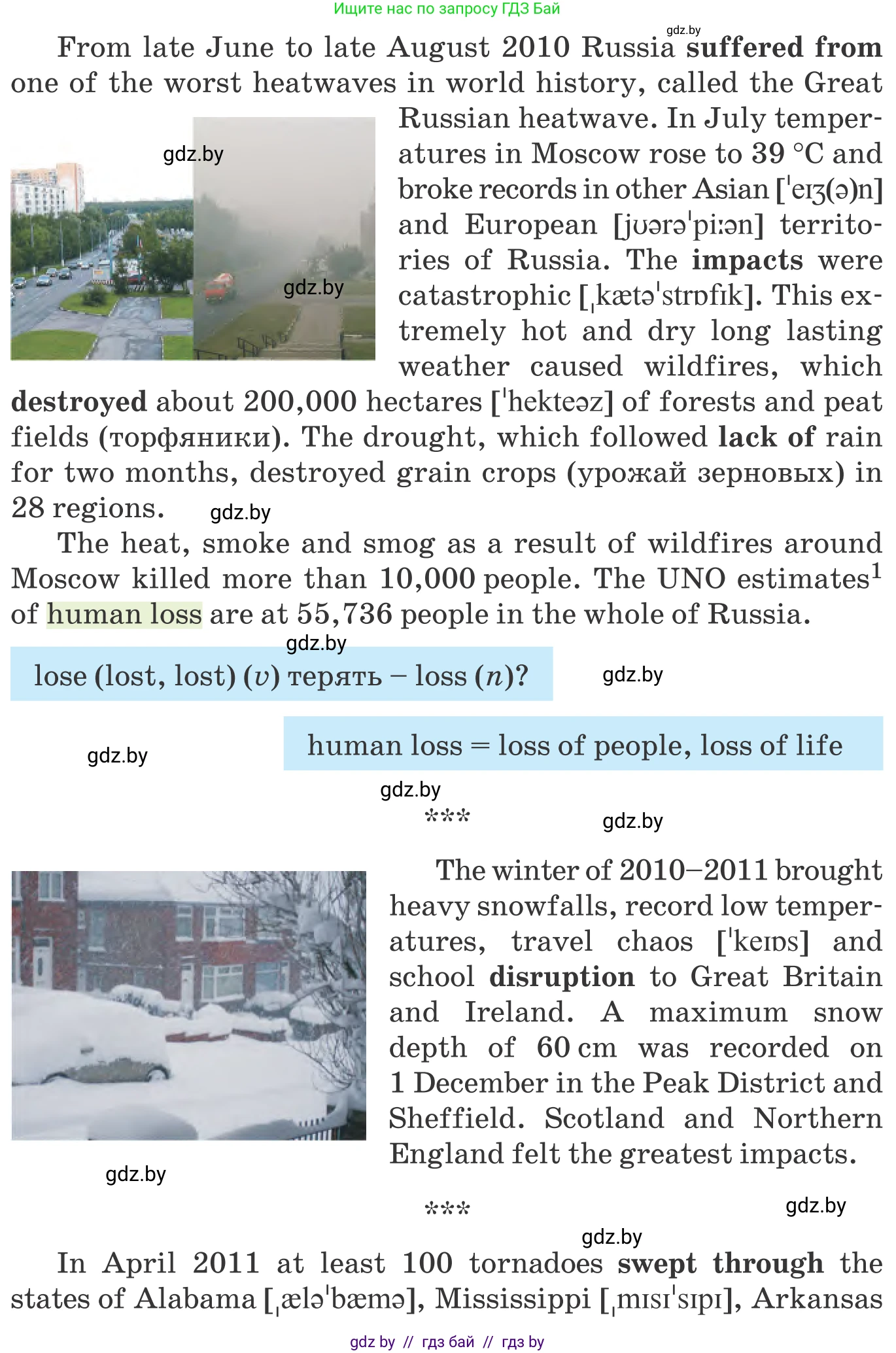
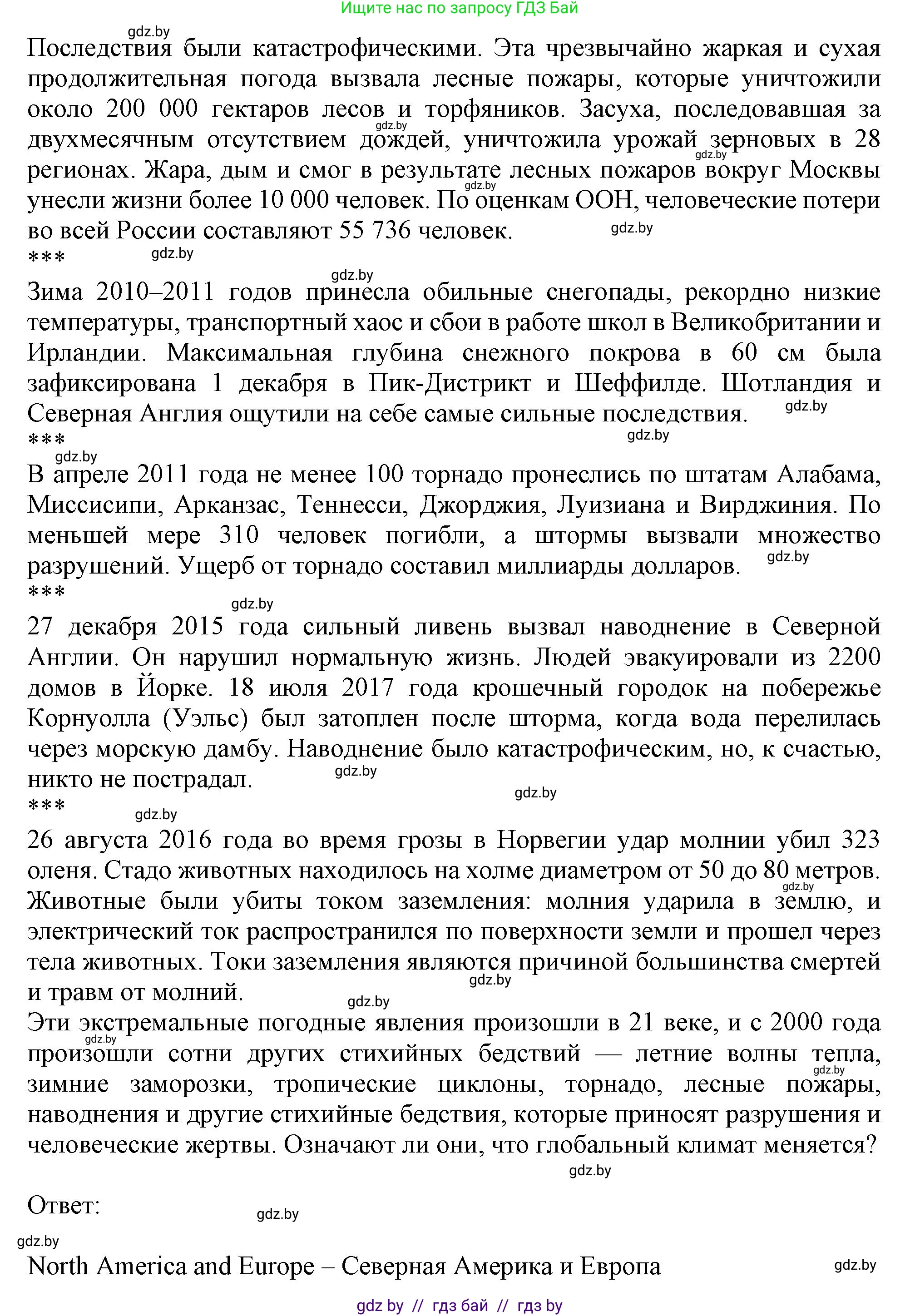
From late June to late August 2010 Russia suffered from one of the worst heatwaves in world history, called the Great Russian heatwave. In July temperatures in Moscow rose to 39 °C and broke records in other Asian [ˈeɪʒ(ə)n] and European [jʊərəˈpiːən] territories of Russia. The impacts were catastrophic [kætəˈstrɒfɪk]. This extremely hot and dry long lasting weather caused wildfires, which destroyed about 200,000 hectares [ˈhektəz] of forests and peat fields (торфяники). The drought, which followed lack of rain for two months, destroyed grain crops (урожай зерновых) in 28 regions.
The heat, smoke and smog as a result of wildfires around Moscow killed more than 10,000 people. The UNO estimates1 of human loss are at 55,736 people in the whole of Russia.
lose (lost, lost) (v) терять – loss (n)?
human loss = loss of people, loss of life
***
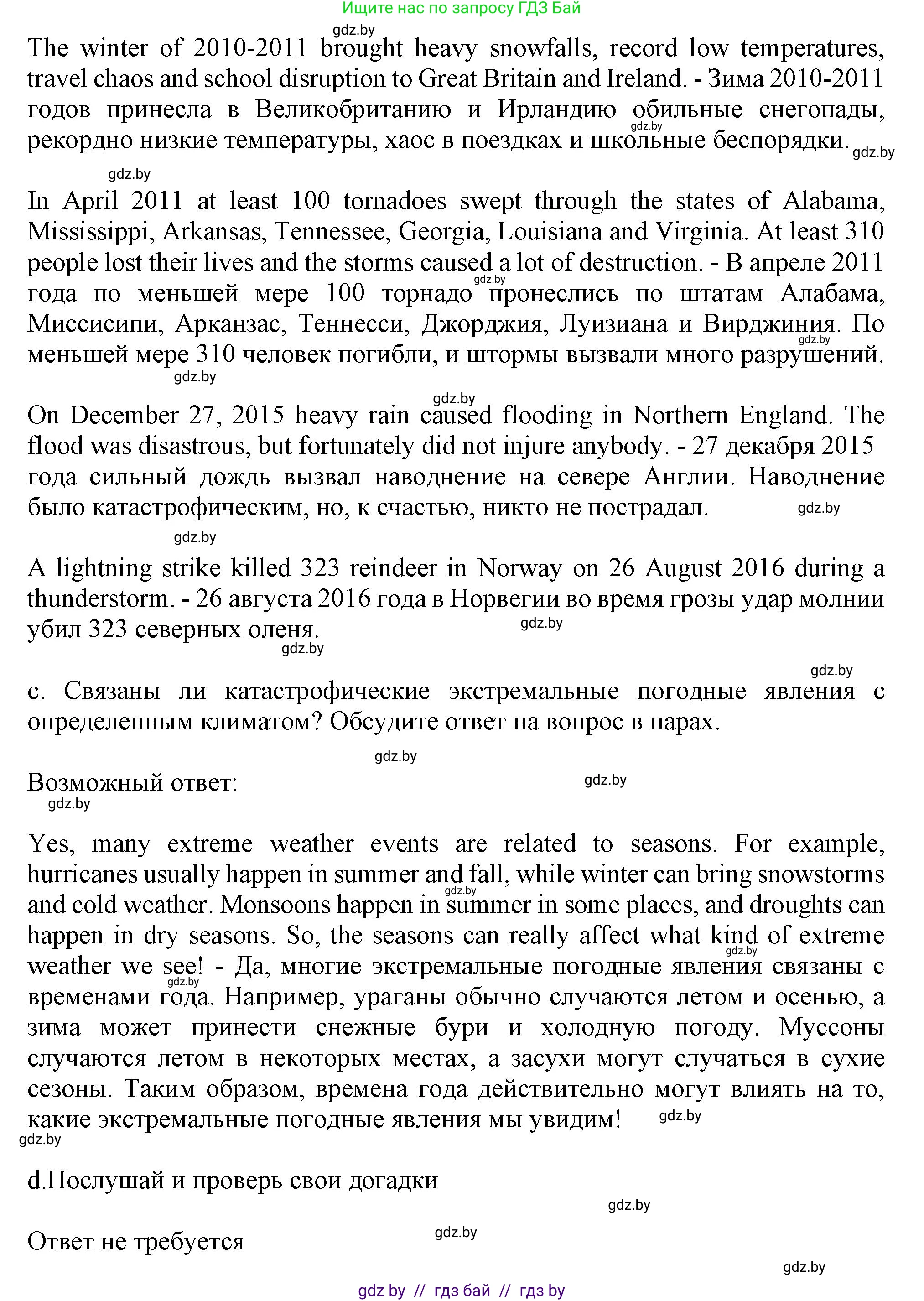
The winter of 2010–2011 brought heavy snowfalls, record low temperatures, travel chaos [ˈkeɪɒs] and school disruption to Great Britain and Ireland. A maximum snow depth of 60 cm was recorded on 1 December in the Peak District and Sheffield. Scotland and Northern England felt the greatest impacts.
***
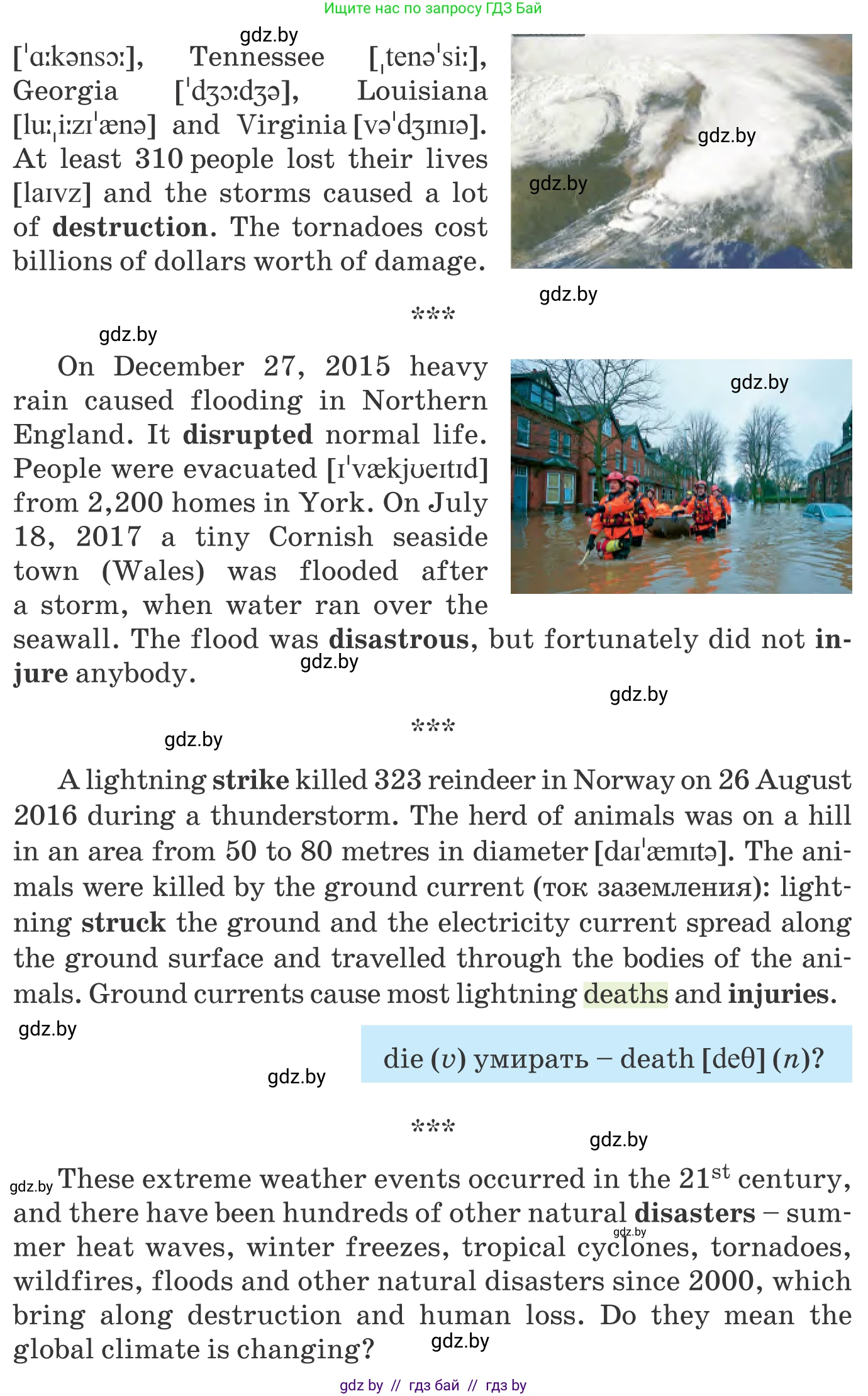
In April 2011 at least 100 tornadoes swept through the states of Alabama [ˌæləˈbæmə], Mississippi [ˌmɪsɪˈsɪpɪ], Arkansas [ˈɑːkənsɔː], Tennessee [ˌtenəˈsiː], Georgia [ˈdʒɔːrdʒə], Louisiana [luˌɪziˈænə] and Virginia [vəˈdʒɪnɪə]. At least 310 people lost their lives [larvz] and the storms caused a lot of destruction. The tornadoes cost billions of dollars worth of damage.
***
On December 27, 2015 heavy rain caused flooding in Northern England. It disrupted normal life. People were evacuated [ɪˈvækjueɪtɪd] from 2,200 homes in York. On July 18, 2017 a tiny Cornish seaside town (Wales) was flooded after a storm, when water ran over the seawall. The flood was disastrous, but fortunately did not injure anybody.
***
A lightning strike killed 323 reindeer in Norway on 26 August 2016 during a thunderstorm. The herd of animals was on a hill in an area from 50 to 80 metres in diameter [daɪˈæmɪtə]. The animals were killed by the ground current (ток заземления): lightning struck the ground and the electricity current spread along the ground surface and travelled through the bodies of the animals. Ground currents cause most lightning deaths and injuries.
die (v) умирать – death [deθ] (n)?
***
These extreme weather events occurred in the 21st century, and there have been hundreds of other natural disasters – summer heat waves, winter freezes, tropical cyclones, tornadoes, wildfires, floods and other natural disasters since 2000, which bring along destruction and human loss. Do they mean the global climate is changing?
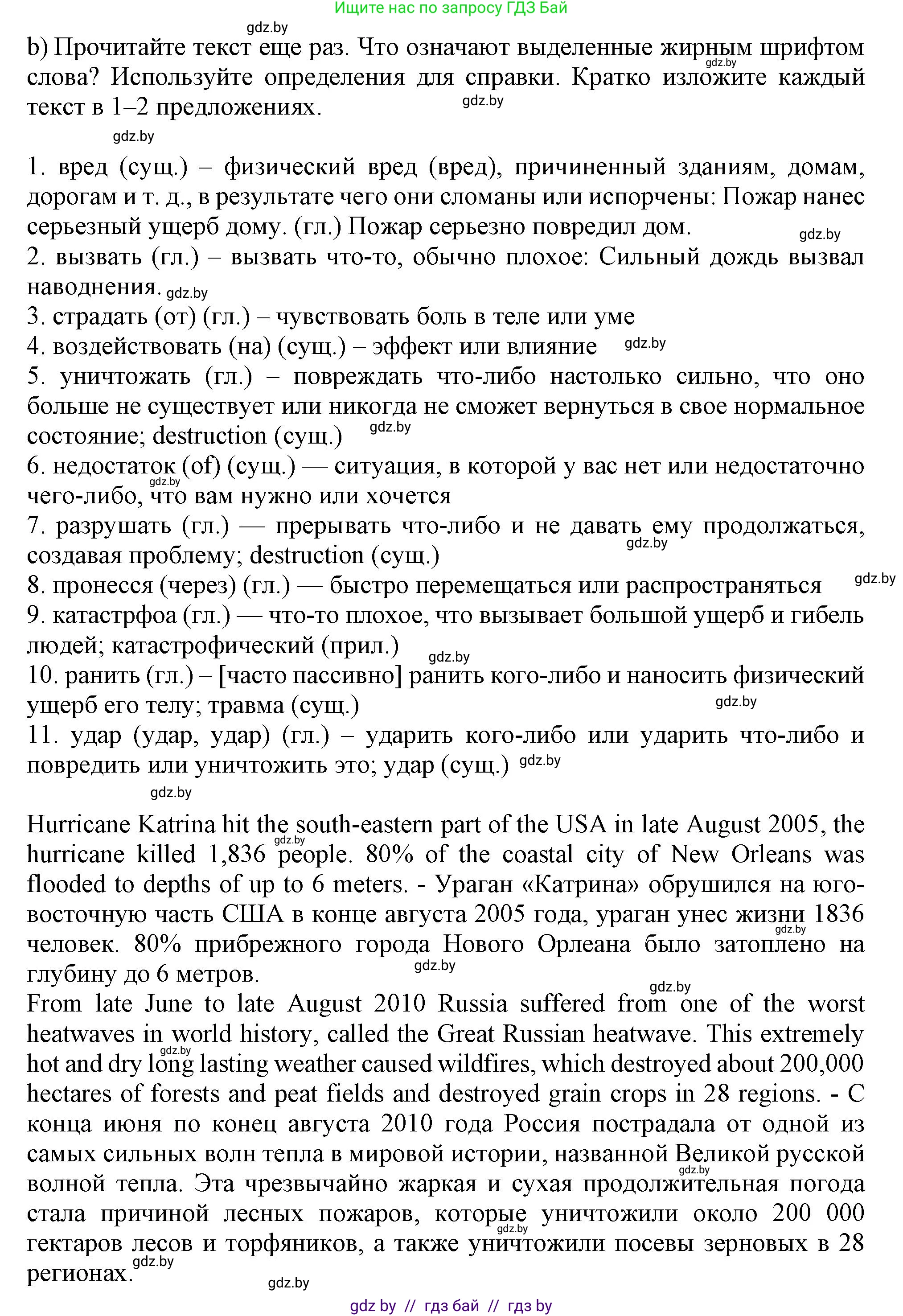
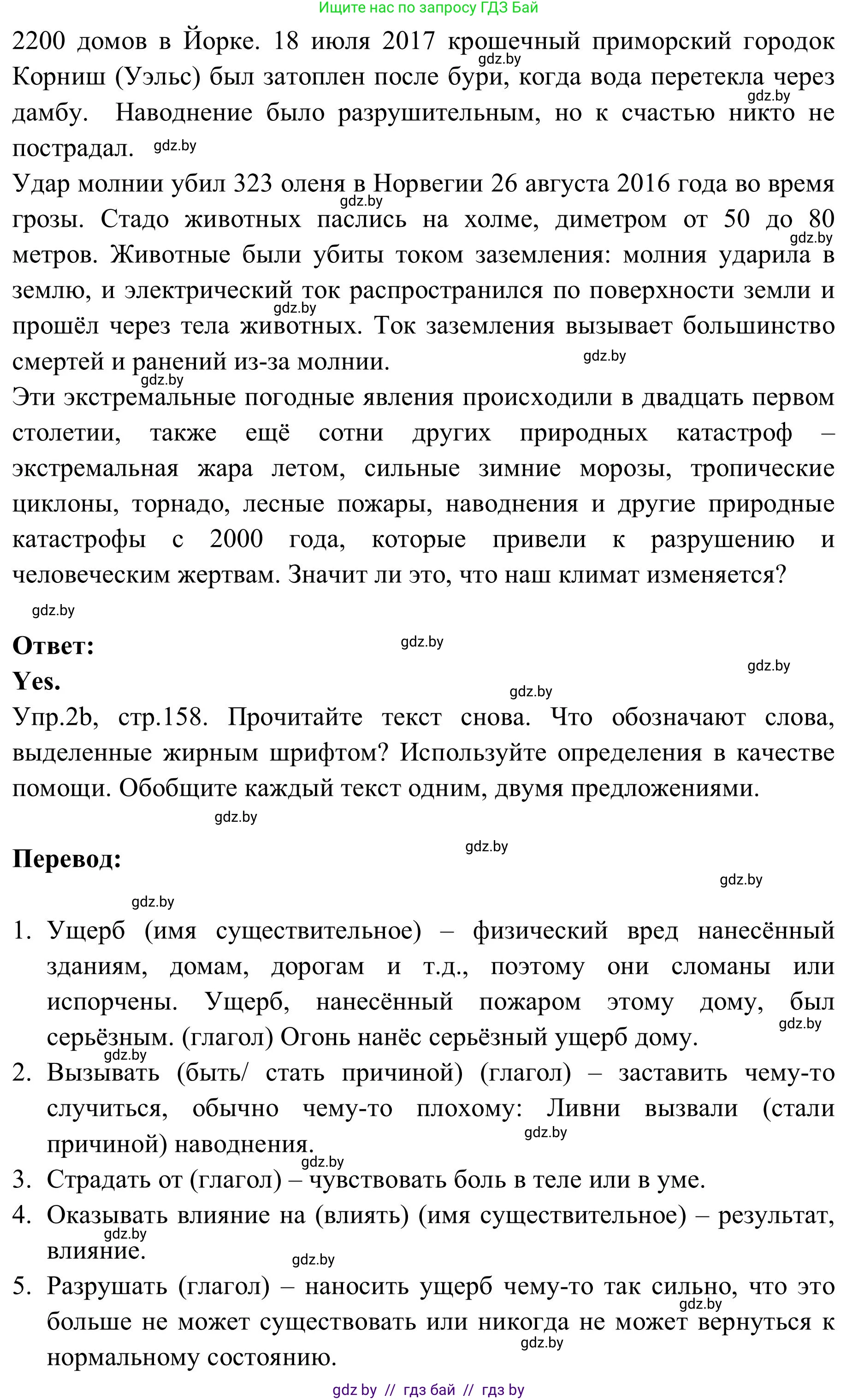
2b. Read the text again. What do the words in bold mean? Use the definitions for help. Sum up each text in 1–2 sentences.
1.damage [ˈdæmɪdʒ] (to) (n) – physical harm (вред) caused to buildings, houses, roads, etc., so that they are broken or spoiled: The fire damage to the house was serious. (v) The fire damaged the house seriously.
2.cause [kɔːz] (v) – make something happen, usually something bad: The heavy rain caused floods.
3.suffer [ˈsʌfə] (from) (v) – feel pain in your body or your mind
4.impact [ˈɪmpækt] (on) (n) – an effect, or an influence
5.destroy [dɪˈstrɔɪ] (v) – damage something so badly that it no longer exists or can never return to its normal state; destruction (n) [dɪˈstrʌkʃ(ə)n]
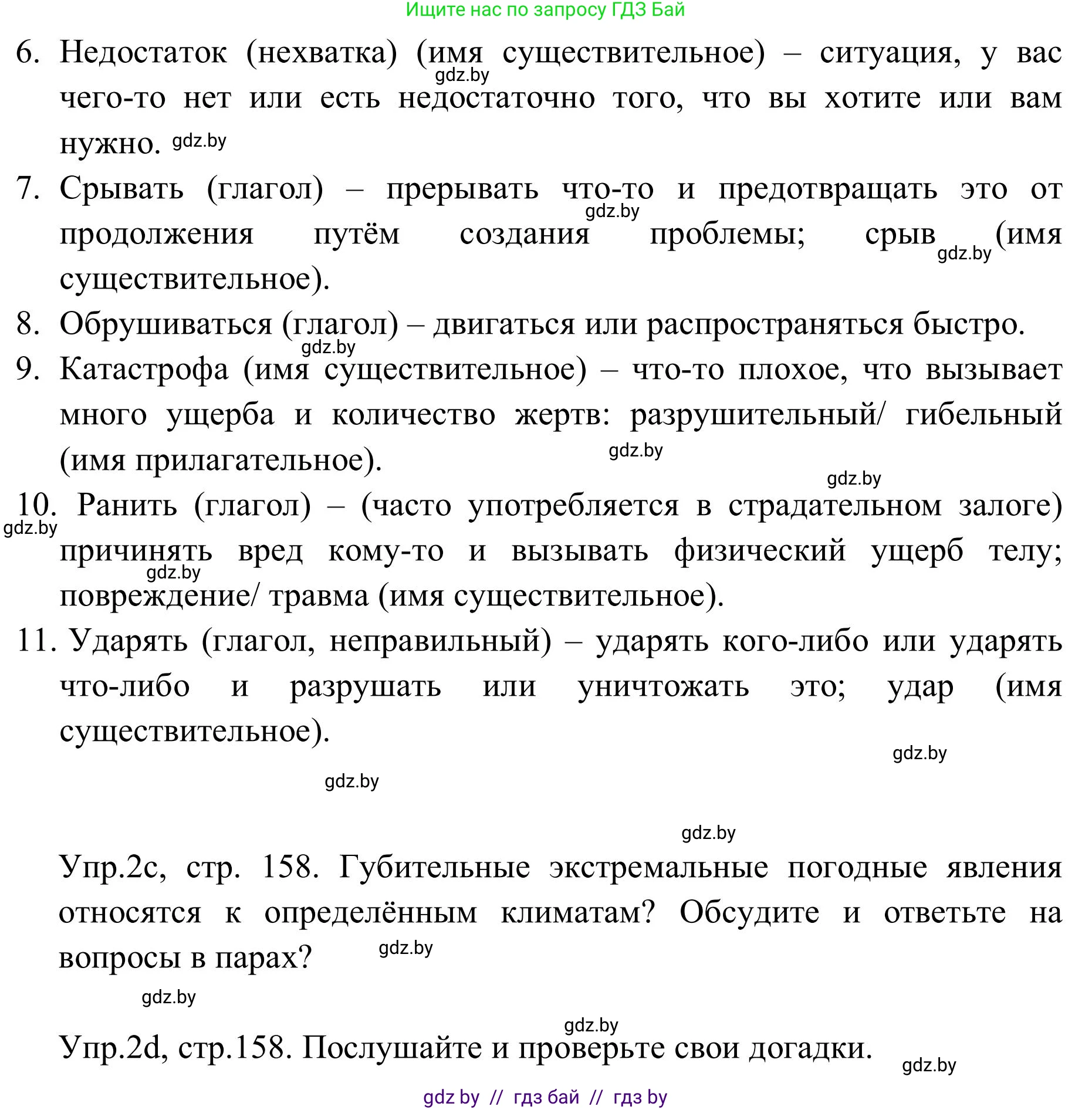
6.lack (of) (n) – a situation in which you do not have any, or enough, of something that you need or want
7.disrupt [dɪsˈrʌpt] (v) – to interrupt something and prevent it from continuing by creating a problem; disruption (n) [dɪsˈrʌpʃ(ə)n]
8.sweep (swept, swept) (through / across) (v) – move or spread quickly
9.disaster [dɪˈzɑːstə] (n) – something bad that causes a lot of damage and loss of life; disastrous [dɪˈzɑːstrəs] (adj)
10.injure [ˈɪndʒə] (v) – [often passive] hurt someone and cause physical damage to their body; injury [ˈɪndʒəri] (n)
11.strike [straɪk] (struck, struck) (v) – hit somebody or hit something and damage or destroy it; strike (n)
2c. Are the disastrous extreme weather events related to definite climates? Discuss the answer to the question in pairs.
Model: I think, hurricanes are more related to the geo- graphical position than to a definite climate. They occur on the American continent, on the North At- lantic coast.
2d. Listen and check your guesses.
Решение 1. №2 (с. 155)
Решение 2. №2 (с. 155)
Решение 3. №2 (с. 155)
2a. Прослушайте и прочитайте о следующих экстремальных погодных явлениях и скажите, на каких континентах они произошли.
Ответ:
| Event | Location | Continent |
|---|---|---|
| Hurricane Katrina (2005) | USA | North America |
| The Great Russian heatwave (2010) | Russia | Europe and Asia |
| Heavy snowfalls (2010–2011) | Great Britain and Ireland | Europe |
| Tornadoes (2011) | USA | North America |
| Flooding (2015, 2017) | Northern England, Wales | Europe |
| Lightning strike (2016) | Norway | Europe |
Перевод:
| Событие | Местоположение | Континент |
|---|---|---|
| Ураган Катрина (2005) | США | Северная Америка |
| Аномальная жара в России (2010) | Россия | Европа и Азия |
| Сильные снегопады (2010–2011) | Великобритания и Ирландия | Европа |
| Торнадо (2011) | США | Северная Америка |
| Наводнение (2015, 2017) | Северная Англия, Уэльс | Европа |
| Удар молнии (2016) | Норвегия | Европа |
Другие задания:

Помогло решение? Оставьте отзыв в комментариях ниже.
Присоединяйтесь к Телеграм-группе @gdz_by_belarus
ПрисоединитьсяМы подготовили для вас ответ c подробным объяснением домашего задания по английскому языку за 9 класс, для упражнения номер 2 расположенного на странице 155 к Учебник (Student's book) 2018 года издания для учащихся школ и гимназий.
Теперь на нашем сайте ГДЗ.ТОП вы всегда легко и бесплатно найдёте условие с правильным ответом на вопрос «Как решить ДЗ» и «Как сделать» задание по английскому языку к упражнению №2 (с. 155), авторов: Лапицкая (Людмила Михайловна), Демченко (Наталья Валентиновна), Волков (Андрей Валерьевич), Калишевич (Алла Ивановна), Севрюкова (Татьяна Юрьевна), Юхнель (Наталья Валентиновна), учебного пособия издательства Вышэйшая школа.