 gdz.by


Номер 3, страница 254 - гдз по английскому языку 10 класс учебник Юхнель, Наумова
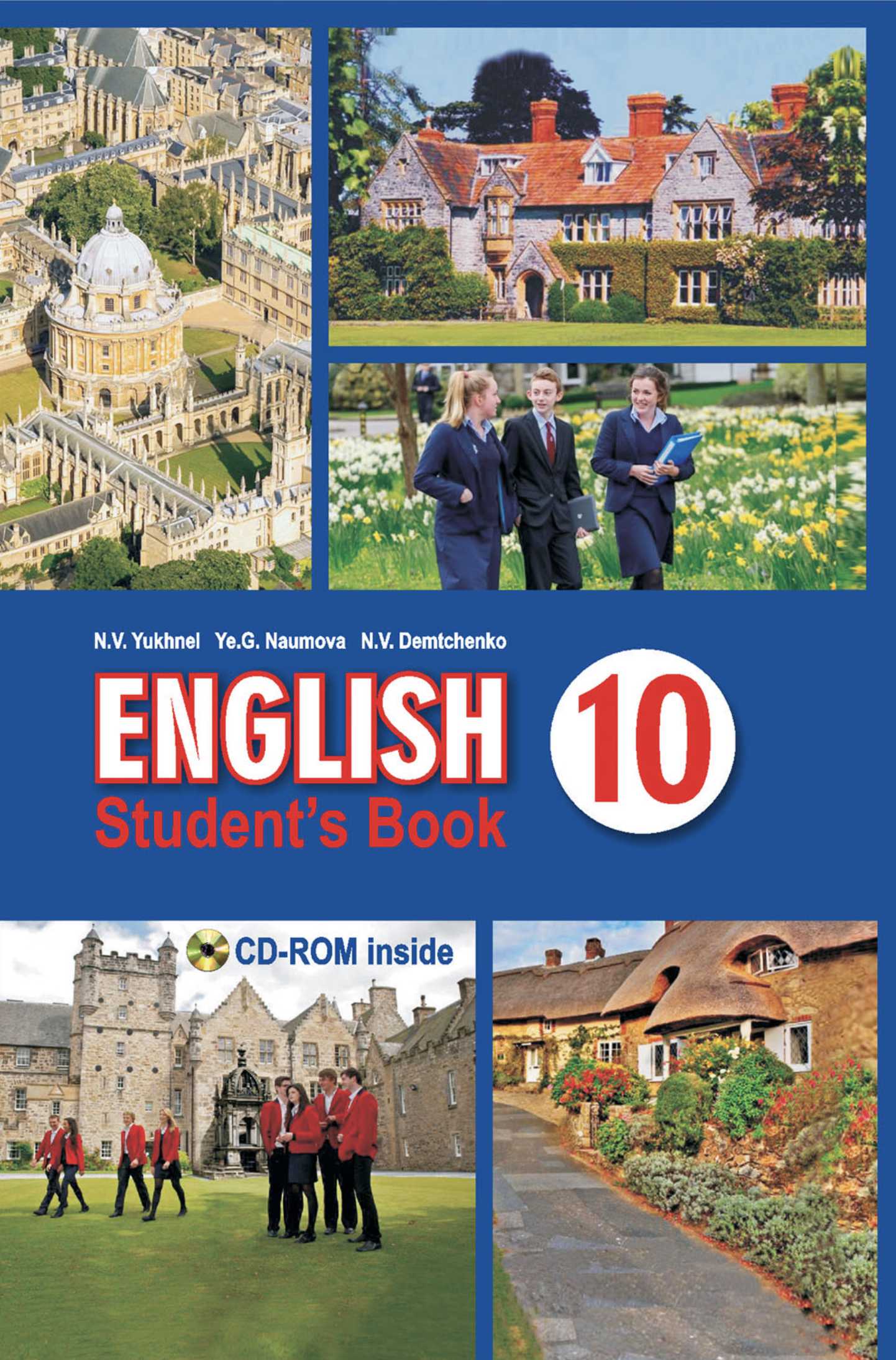
Авторы: Юхнель Н. В., Наумова Е. Г., Демченко Н. В.
Тип: Student's book (Учебник)
Издательство: Вышэйшая школа
Год издания: 2019 - 2025
Цвет обложки: синий
ISBN: 978-985-06-3097-1, 978-985-06-3098-8 (отд. изд)
Допущено Министерством образования Республики Беларусь
Популярные ГДЗ в 10 классе


Unit 8. News. Lesson 9. Teens’ point of view - номер 3, страница 254.
 №2
№2
№3 (с. 254)
Условие. №3 (с. 254)
скриншот условия
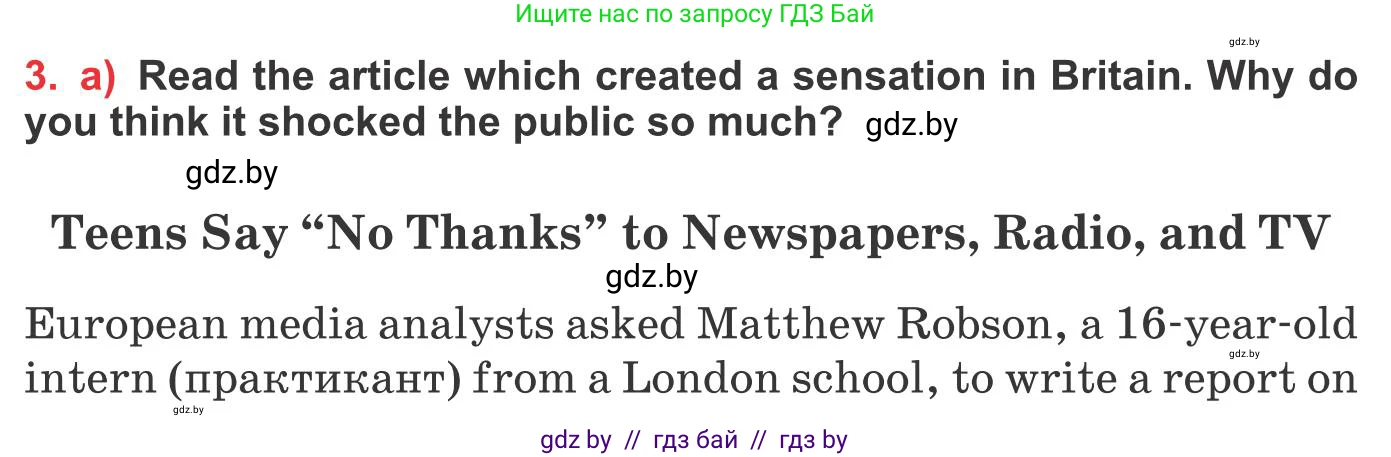
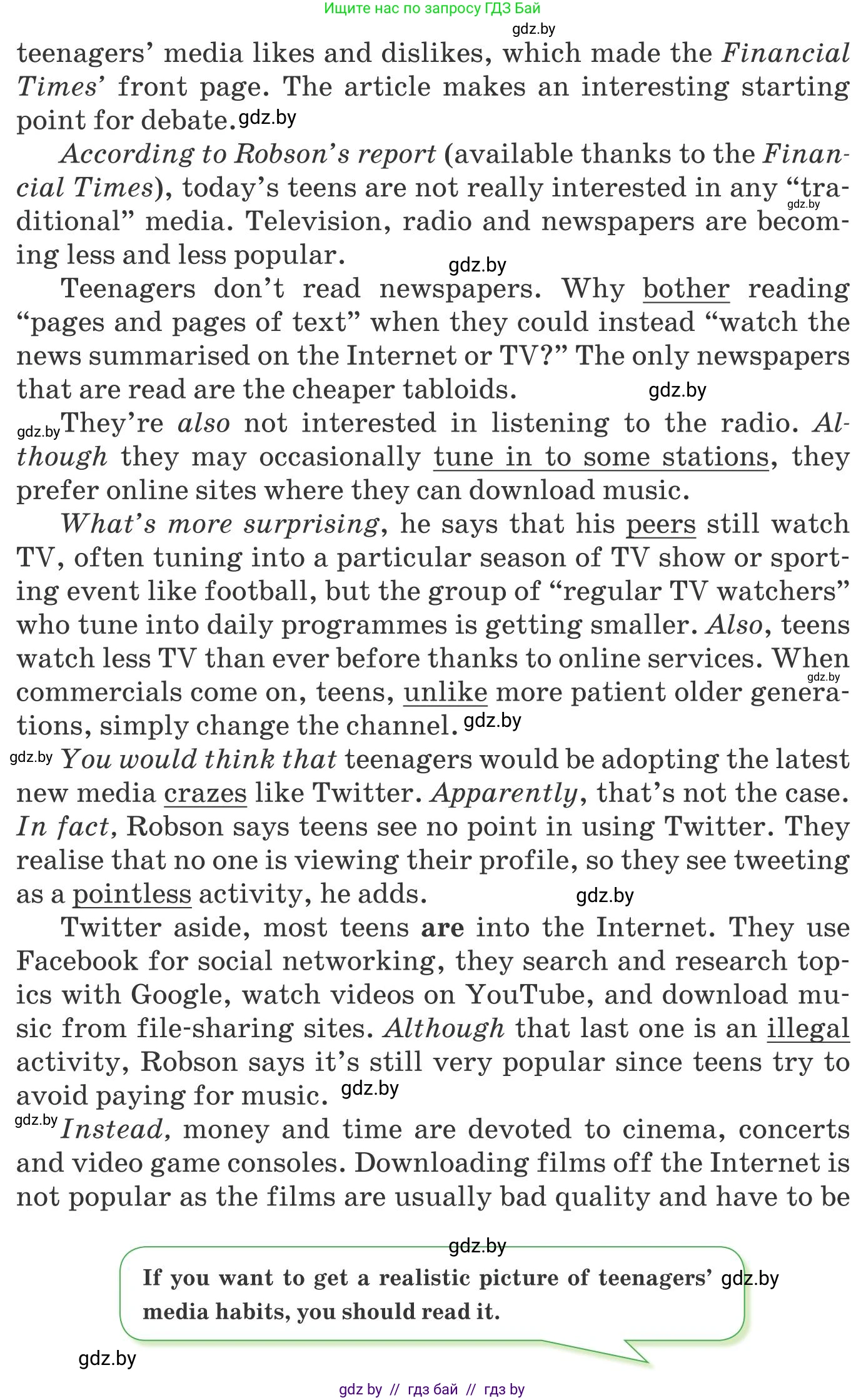
3. a) Read the article which created a sensation in Britain. Why do you think it shocked the public so much?
Teens Say “No Thanks” to Newspapers, Radio, and TV
European media analysts asked Matthew Robson, a 16-year-old intern (практикант) from a London school, to write a report on
teenagers’ media likes and dislikes, which made the Financial Times’ front page. The article makes an interesting starting point for debate.
According to Robson’s report (available thanks to the Financial Times), today’s teens are not really interested in any “traditional” media. Television, radio and newspapers are becoming less and less popular.
Teenagers don’t read newspapers. Why bother reading “pages and pages of text” when they could instead “watch the news summarised on the Internet or TV?” The only newspapers that are read are the cheaper tabloids.
They’re also not interested in listening to the radio. Although they may occasionally tune in to some stations, they prefer online sites where they can download music.
What’s more surprising, he says that his peers still watch TV, often tuning into a particular season of TV show or sporting event like football, but the group of “regular TV watchers” who tune into daily programmes is getting smaller. Also, teens watch less TV than ever before thanks to online services. When commercials come on, teens, unlike more patient older generations, simply change the channel.
You would think that teenagers would be adopting the latest new media crazes like Twitter. Apparently, that’s not the case. In fact, Robson says teens see no point in using Twitter. They realise that no one is viewing their profile, so they see tweeting as a pointless activity, he adds.
Twitter aside, most teens are into the Internet. They use Facebook for social networking, they search and research topics with Google, watch videos on YouTube, and download music from file-sharing sites. Although that last one is an illegal activity, Robson says it’s still very popular since teens try to avoid paying for music.
Instead, money and time are devoted to cinema, concerts and video game consoles. Downloading films off the Internet is not popular as the films are usually bad quality and have to be
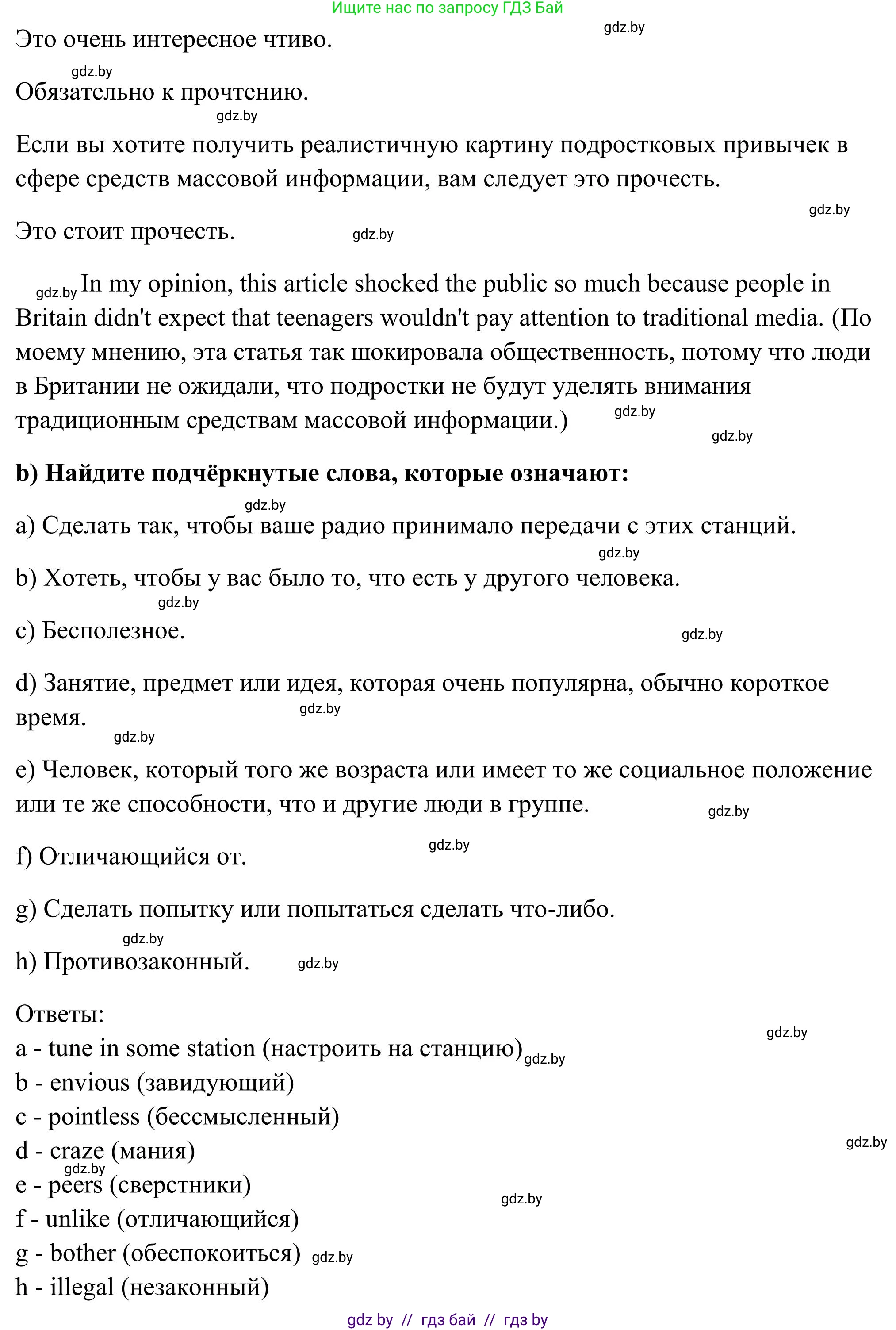
If you want to get a realistic picture of teenagers’ media habits, you should read it.
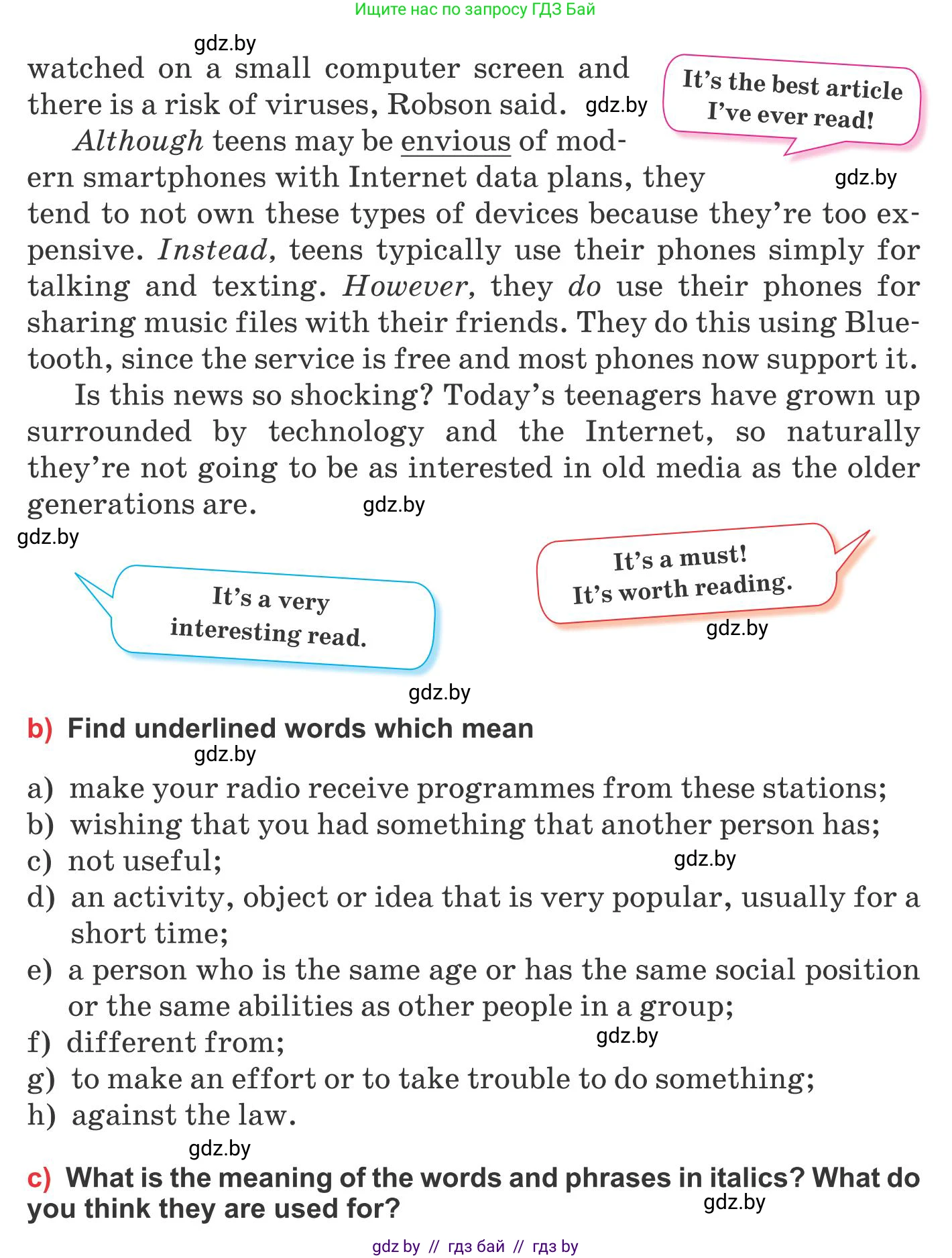
watched on a small computer screen and It’s the best article I’ve ever read! there is a risk of viruses, Robson said.
Although teens may be envious of modern smartphones with Internet data plans, they tend to not own these types of devices because they’re too expensive. Instead, teens typically use their phones simply for talking and texting. However, they do use their phones for sharing music files with their friends. They do this using Bluetooth, since the service is free and most phones now support it.
Is this news so shocking? Today’s teenagers have grown up surrounded by technology and the Internet, so naturally they’re not going to be as interested in old media as the older generations are.
It’s a very interesting read.
It’s a must! It’s worth reading.
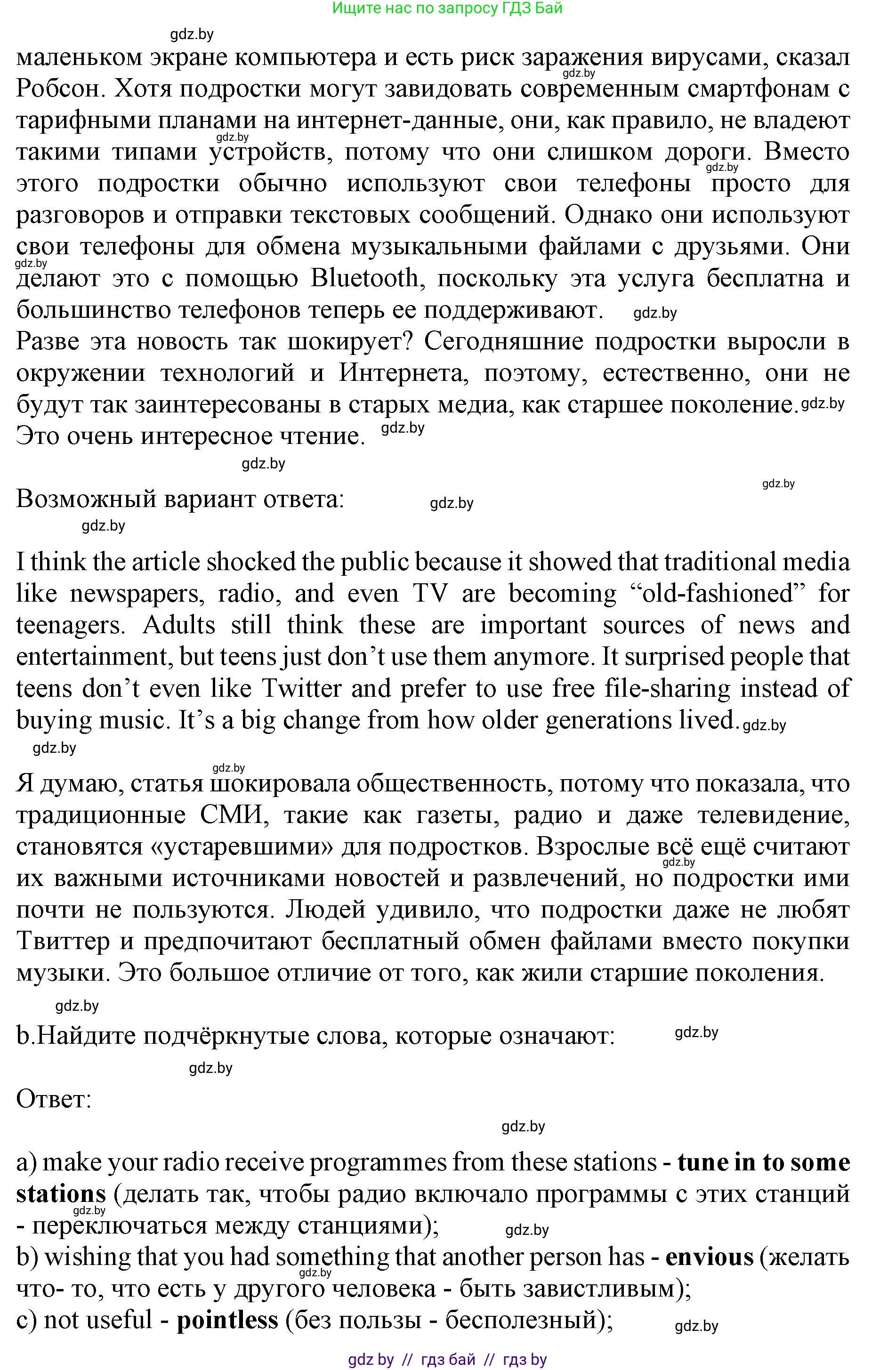
b) Find underlined words which mean
a) make your radio receive programmes from these stations;
b) wishing that you had something that another person has;
c) not useful;
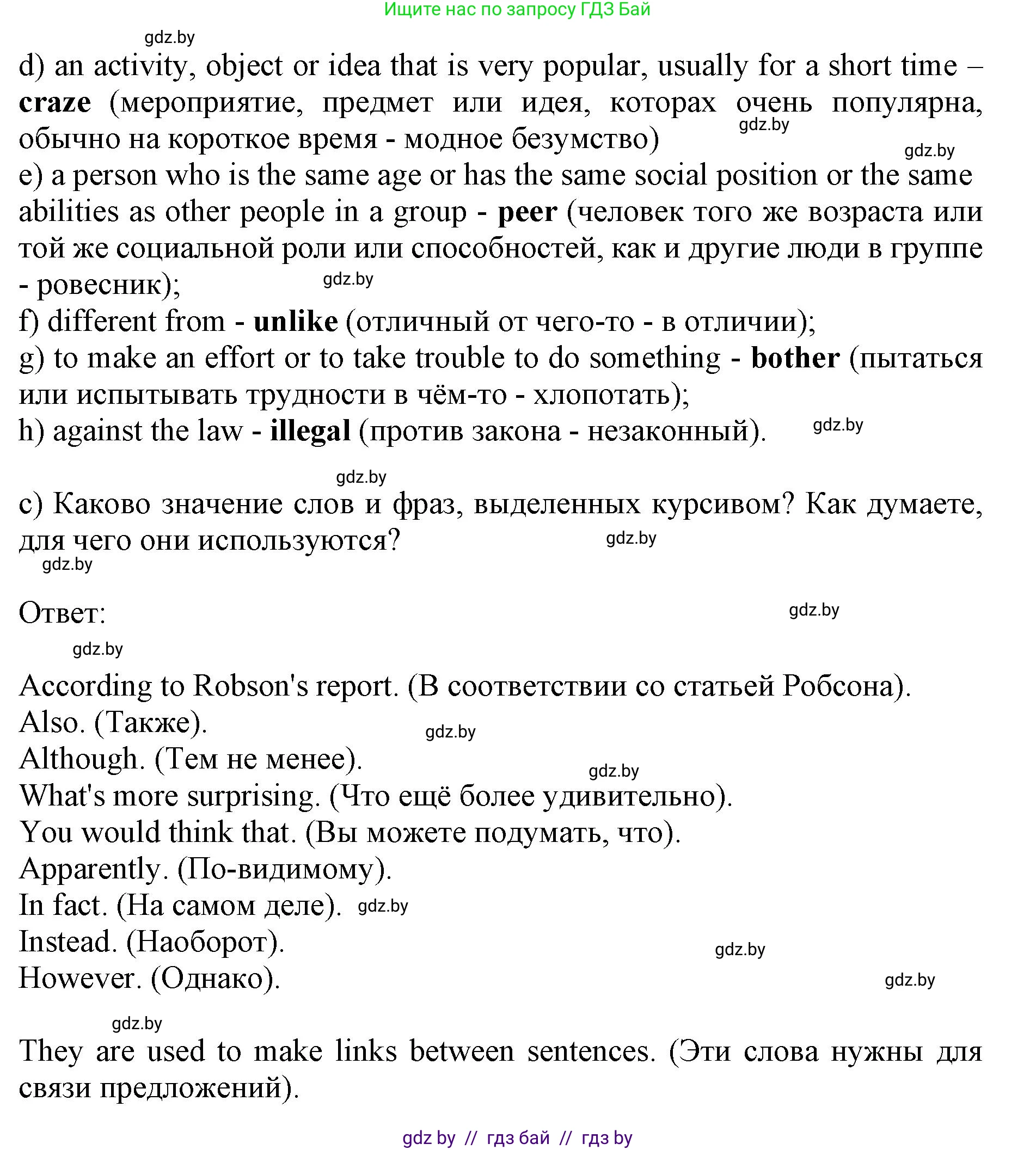
d) an activity, object or idea that is very popular, usually for a short time;
e) a person who is the same age or has the same social position or the same abilities as other people in a group;
f) different from;
g) to make an effort or to take trouble to do something;
h) against the law.
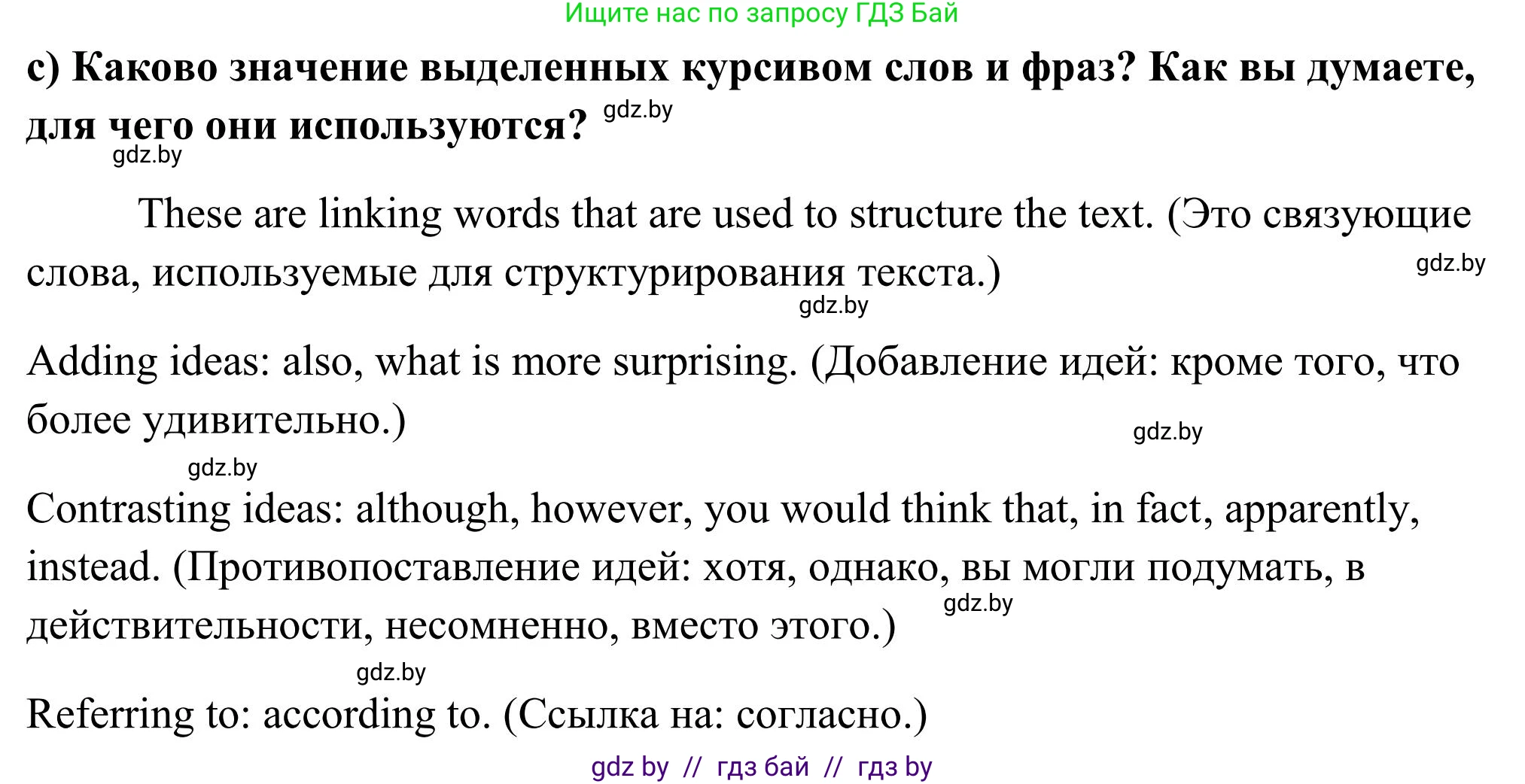
c) What is the meaning of the words and phrases in italics? What do you think they are used for?
Решение. №3 (с. 254)
Решение 2. №3 (с. 254)
Решение 3. №3 (с. 254)
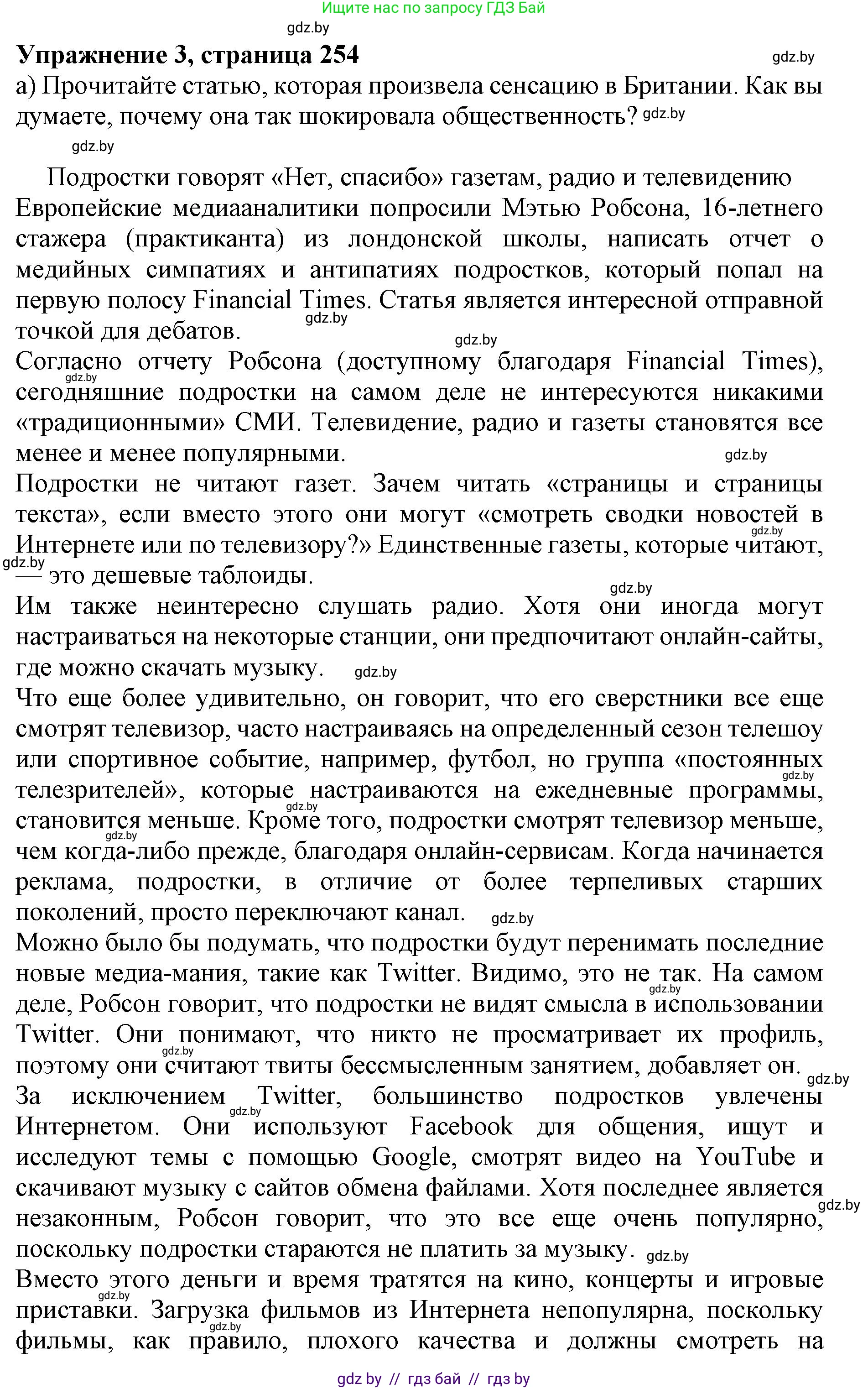
3. a) Прочитайте статью, которая произвела сенсацию в Великобритании. Как вы думаете, почему она так шокировала общественность?
Ответ: The article likely shocked the public because it revealed a dramatic shift in media consumption habits among the younger generation. It showed that teenagers were largely abandoning traditional media like newspapers, radio, and television, which were staples for previous generations. The report highlighted that teens, unlike older generations, were not interested in "traditional" media and even rejected newer platforms like Twitter, viewing them as pointless. This stark generational divide, demonstrating a complete departure from established media consumption and a move towards internet-based, sometimes illegal, activities, was likely the primary reason for the shock.
Перевод: Статья, вероятно, шокировала общественность, потому что она показала резкий сдвиг в привычках медиапотребления среди молодого поколения. Она продемонстрировала, что подростки в значительной степени отказываются от традиционных СМИ, таких как газеты, радио и телевидение, которые были основными для предыдущих поколений. В отчете подчеркивалось, что подростки, в отличие от старших поколений, не интересуются «традиционными» СМИ и даже отвергают новые платформы, такие как Twitter, считая их бессмысленными. Этот разительный разрыв между поколениями, демонстрирующий полный отход от устоявшегося медиапотребления и переход к интернет-активностям, иногда незаконным, вероятно, и стал основной причиной шока.
Другие задания:

Помогло решение? Оставьте отзыв в комментариях ниже.
Присоединяйтесь к Телеграм-группе @gdz_by_belarus
ПрисоединитьсяМы подготовили для вас ответ c подробным объяснением домашего задания по английскому языку за 10 класс, для упражнения номер 3 расположенного на странице 254 к Учебник (Student's book) 2019 года издания для учащихся школ и гимназий.
Теперь на нашем сайте ГДЗ.ТОП вы всегда легко и бесплатно найдёте условие с правильным ответом на вопрос «Как решить ДЗ» и «Как сделать» задание по английскому языку к упражнению №3 (с. 254), авторов: Юхнель (Наталья Валентиновна), Наумова (Елена Георгиевна), Демченко (Наталья Валентиновна), учебного пособия издательства Вышэйшая школа.