 gdz.by


Номер 1, страница 9, часть 2 - гдз по английскому языку 10 класс учебник Демченко, Юхнель
Авторы: Демченко Н. В., Юхнель Н. В., Севрюкова Т. Ю., Бушуева Э. В., Лапицкая Л. М.
Тип: Student's book (Учебник)
Издательство: Вышэйшая школа
Год издания: 2021 - 2025
Уровень обучения: повышенный
Часть: 2
Цвет обложки: голубой
Допущено Министерством образования Республики Беларусь
Популярные ГДЗ в 10 классе












Часть 2. Unit 5. Art. Lesson 2. Stories behind works of art - номер 1, страница 9.
 №5
№5
№1 (с. 9)
Условие. №1 (с. 9)
скриншот условия
LESSON 2. Stories behind works of art
Communicative area: listening about interesting facts about works of art
Active vocabulary: commission, iconic, recognisable, canvas, background
Receptive grammar: Past Perfect Continuous
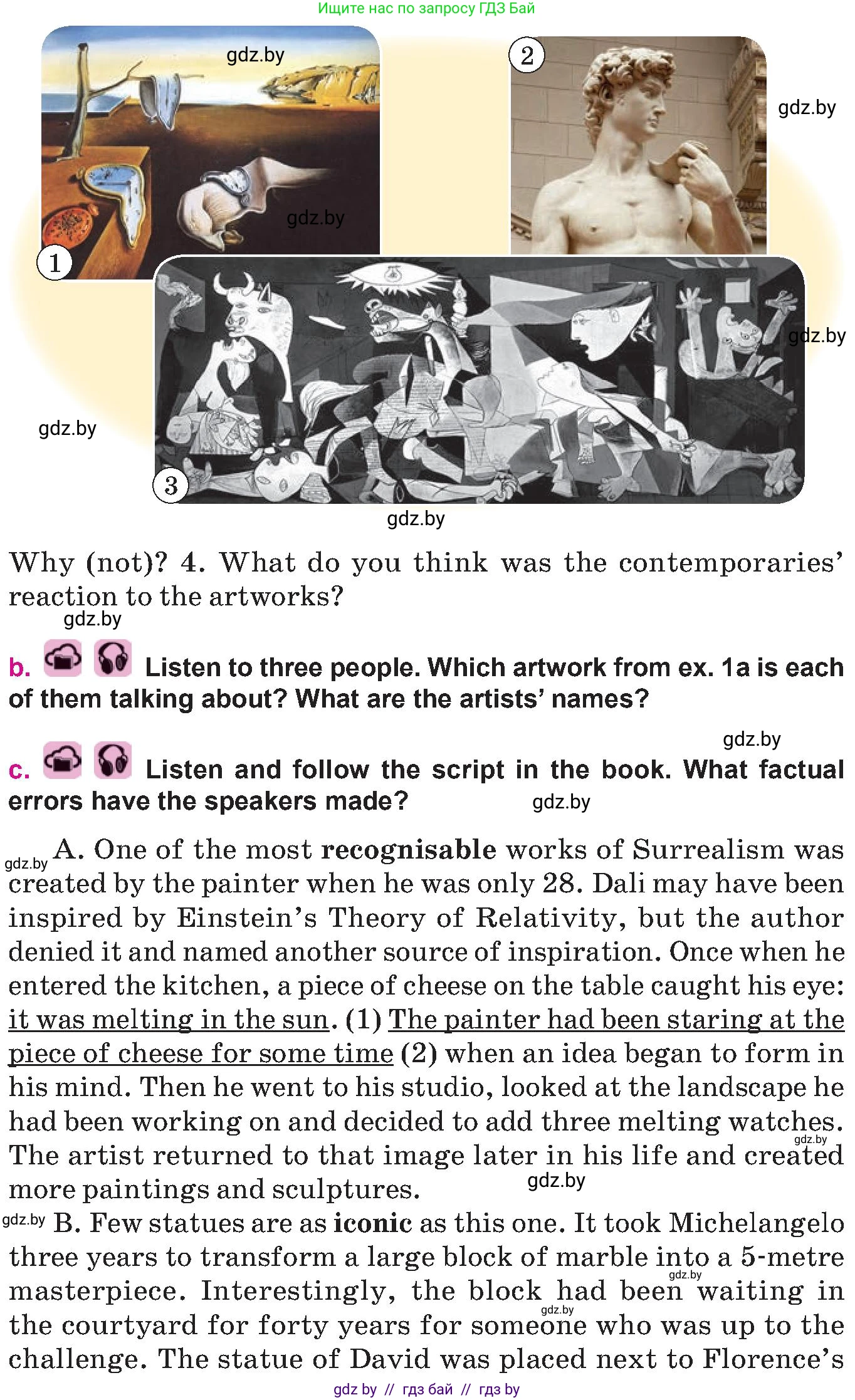
1. a. Look at the pictures on page 10 and discuss the questions below.
1. Which of the artworks appeals to you most? Why? 2. What emotions do the other artworks arise in you? 3. Do you think that a bit of background information about the artist and the artwork helps to understand it better and appreciate it? Why (not)? 4. What do you think was the contemporaries’ reaction to the artworks?
b. Listen to three people. Which artwork from ex. 1a is each of them talking about? What are the artists’ names?
c. Listen and follow the script in the book. What factual errors have the speakers made?
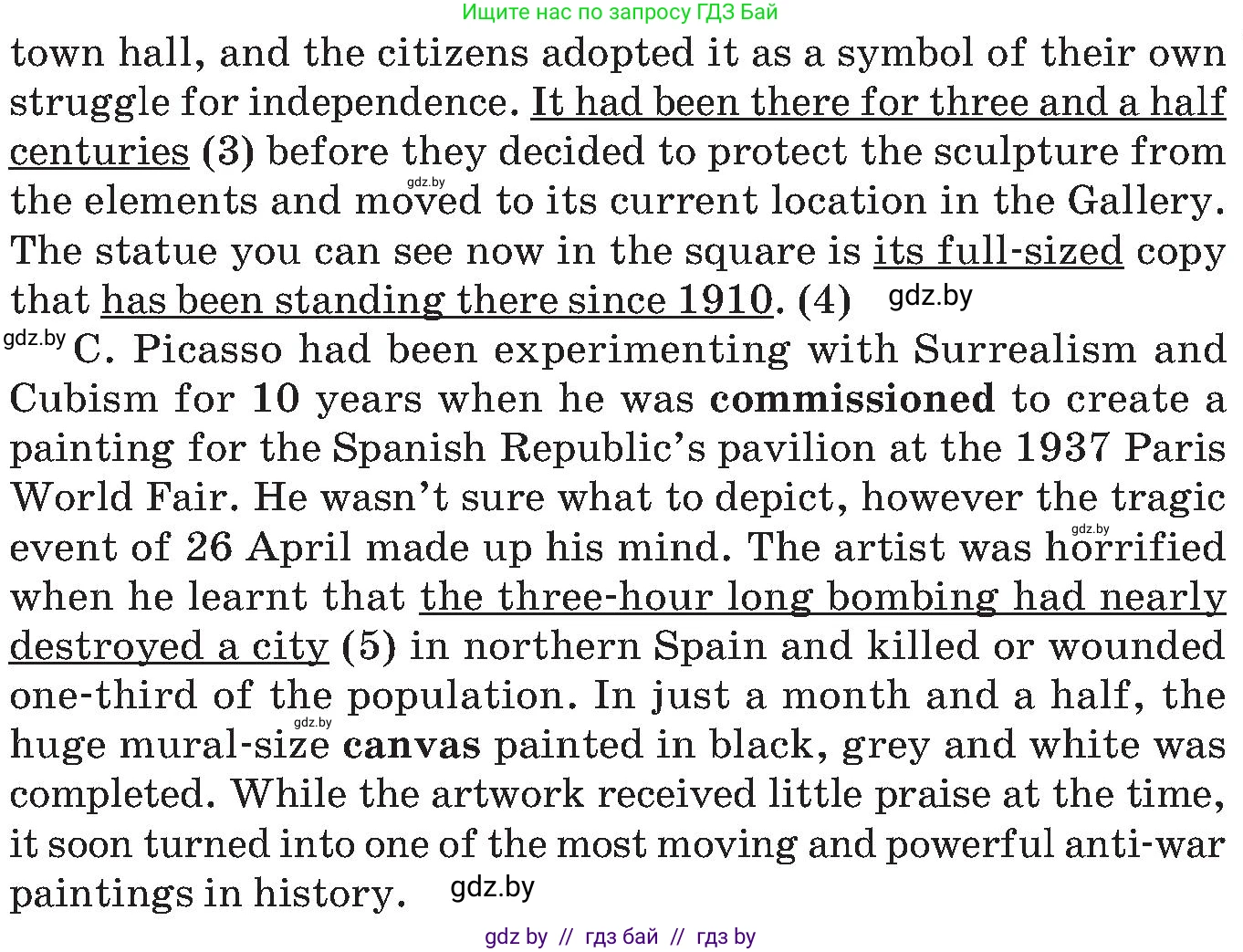
A. One of the most recognisable works of Surrealism was created by the painter when he was only 28. Dali may have been inspired by Einstein’s Theory of Relativity, but the author denied it and named another source of inspiration. Once when he entered the kitchen, a piece of cheese on the table caught his eye: it was melting in the sun. (1) The painter had been staring at the piece of cheese for some time (2) when an idea began to form in his mind. Then he went to his studio, looked at the landscape he had been working on and decided to add three melting watches. The artist returned to that image later in his life and created more paintings and sculptures.
B. Few statues are as iconic as this one. It took Michelangelo three years to transform a large block of marble into a 5-metre masterpiece. Interestingly, the block had been waiting in the courtyard for forty years for someone who was up to the challenge. The statue of David was placed next to Florence’s town hall, and the citizens adopted it as a symbol of their own struggle for independence. It had been there for three and a half centuries (3) before they decided to protect the sculpture from the elements and moved to its current location in the Gallery. The statue you can see now in the square is its full-sized copy that has been standing there since 1910. (4)
C. Picasso had been experimenting with Surrealism and Cubism for 10 years when he was commissioned to create a painting for the Spanish Republic’s pavilion at the 1937 Paris World Fair. He wasn’t sure what to depict, however the tragic event of 26 April made up his mind. The artist was horrified when he learnt that the three-hour long bombing had nearly destroyed a city (5) in northern Spain and killed or wounded one-third of the population. In just a month and a half, the huge mural-size canvas painted in black, grey and white was completed. While the artwork received little praise at the time, it soon turned into one of the most moving and powerful anti-war paintings in history.
Решение 2. №1 (с. 9)
1. c. Прослушайте и следите за текстом в книге. Какие фактические ошибки допустили говорящие?
Ответ:
A. The speaker says Dalí added three melting watches. The painting actually depicts four watches: three are melting, but one is solid and covered in ants.
B. The text states it took Michelangelo three years to complete the statue of David. It actually took him just over two years. It also says the marble block had waited for forty years, but it was closer to twenty-five years.
C. The speaker claims Picasso was experimenting with Surrealism and Cubism. Picasso is primarily the founder of Cubism. Also, Guernica is a town, not a city.
Перевод:
A. Говорящий говорит, что Дали добавил трое плавящихся часов. На самом деле на картине изображено четверо часов: трое плавящихся, а одни — твердые и покрыты муравьями.
B. В тексте утверждается, что Микеланджело потребовалось три года, чтобы завершить статую Давида. На самом деле ему потребовалось чуть более двух лет. Также говорится, что мраморный блок ждал сорок лет, но на самом деле этот срок был ближе к двадцати пяти годам.
C. Говорящий утверждает, что Пикассо экспериментировал с сюрреализмом и кубизмом. Пикассо в первую очередь является основателем кубизма. Кроме того, Герника — это городок, а не крупный город.
Другие задания:

Помогло решение? Оставьте отзыв в комментариях ниже.
Присоединяйтесь к Телеграм-группе @gdz_by_belarus
ПрисоединитьсяМы подготовили для вас ответ c подробным объяснением домашего задания по английскому языку за 10 класс, для упражнения номер 1 расположенного на странице 9 для 2-й части к Учебник (Student's book) 2021 года издания для учащихся школ и гимназий.
Теперь на нашем сайте ГДЗ.ТОП вы всегда легко и бесплатно найдёте условие с правильным ответом на вопрос «Как решить ДЗ» и «Как сделать» задание по английскому языку к упражнению №1 (с. 9), авторов: Демченко (Наталья Валентиновна), Юхнель (Наталья Валентиновна), Севрюкова (Татьяна Юрьевна), Бушуева (Эдите Владиславовна), Лапицкая (Людмила Михайловна), 2-й части повышенный уровень обучения учебного пособия издательства Вышэйшая школа.