 gdz.by


Номер 1, страница 13, часть 2 - гдз по английскому языку 10 класс учебник Демченко, Юхнель
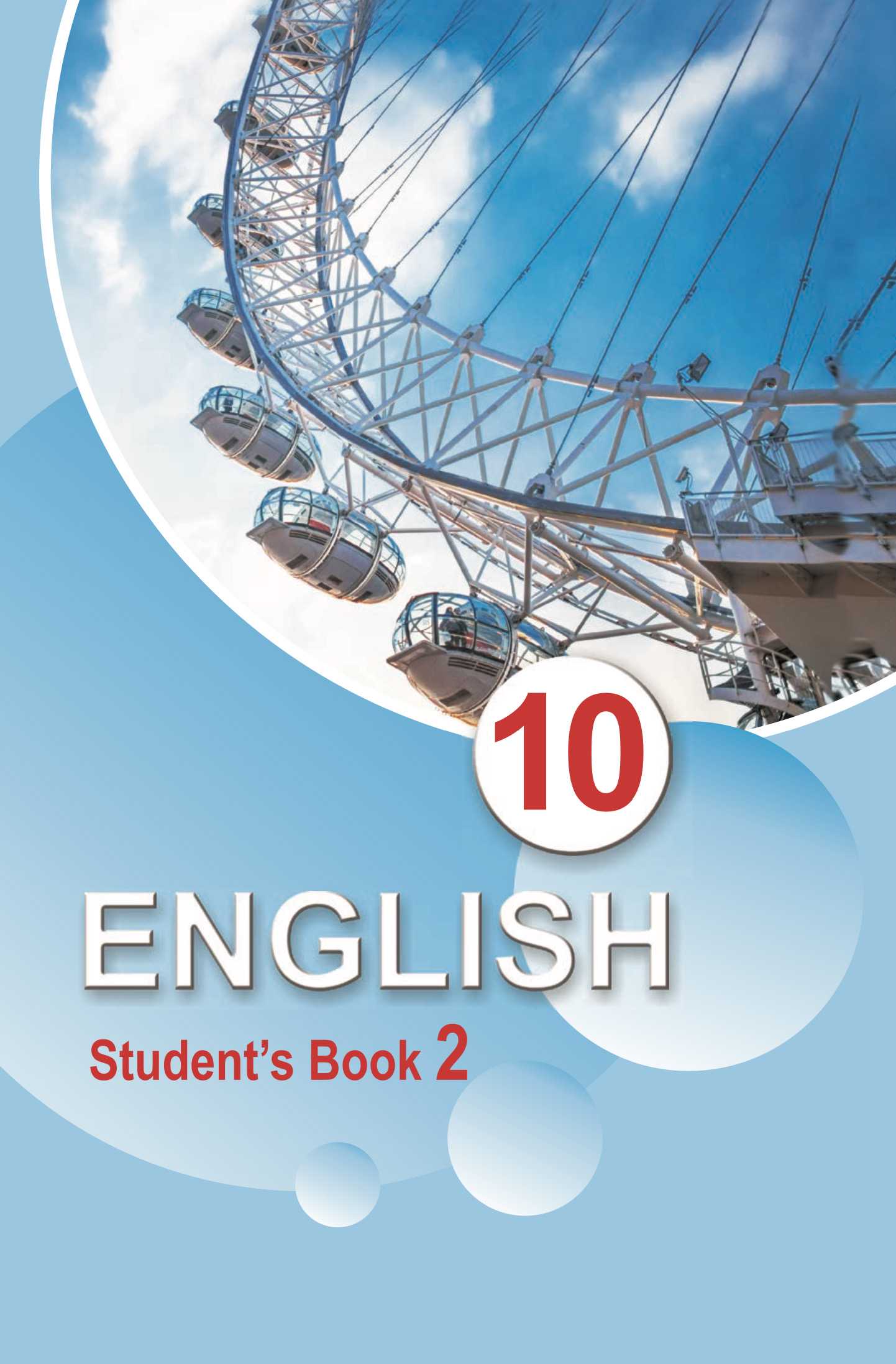
Авторы: Демченко Н. В., Юхнель Н. В., Севрюкова Т. Ю., Бушуева Э. В., Лапицкая Л. М.
Тип: Student's book (Учебник)
Издательство: Вышэйшая школа
Год издания: 2021 - 2025
Уровень обучения: повышенный
Часть: 2
Цвет обложки: голубой
Допущено Министерством образования Республики Беларусь
Популярные ГДЗ в 10 классе





Часть 2. Unit 5. Art. Lesson 3. A dreamer who never woke up - номер 1, страница 13.
 №5
№5
№1 (с. 13)
Условие. №1 (с. 13)
скриншот условия
LESSON 3. A dreamer who never woke up
Communicative area: reading and speaking about a famous artist and his creative work
Active vocabulary: vibrant, heritage, to pay homage
1. a. Answer the questions.
1. A representative of what art movement is Marc Chagall? 2. What kinds of art is Marc Chagall's creative work linked with? 3. What are his most famous artworks?
b. Read Marc Chagall's biography and check your ideas.
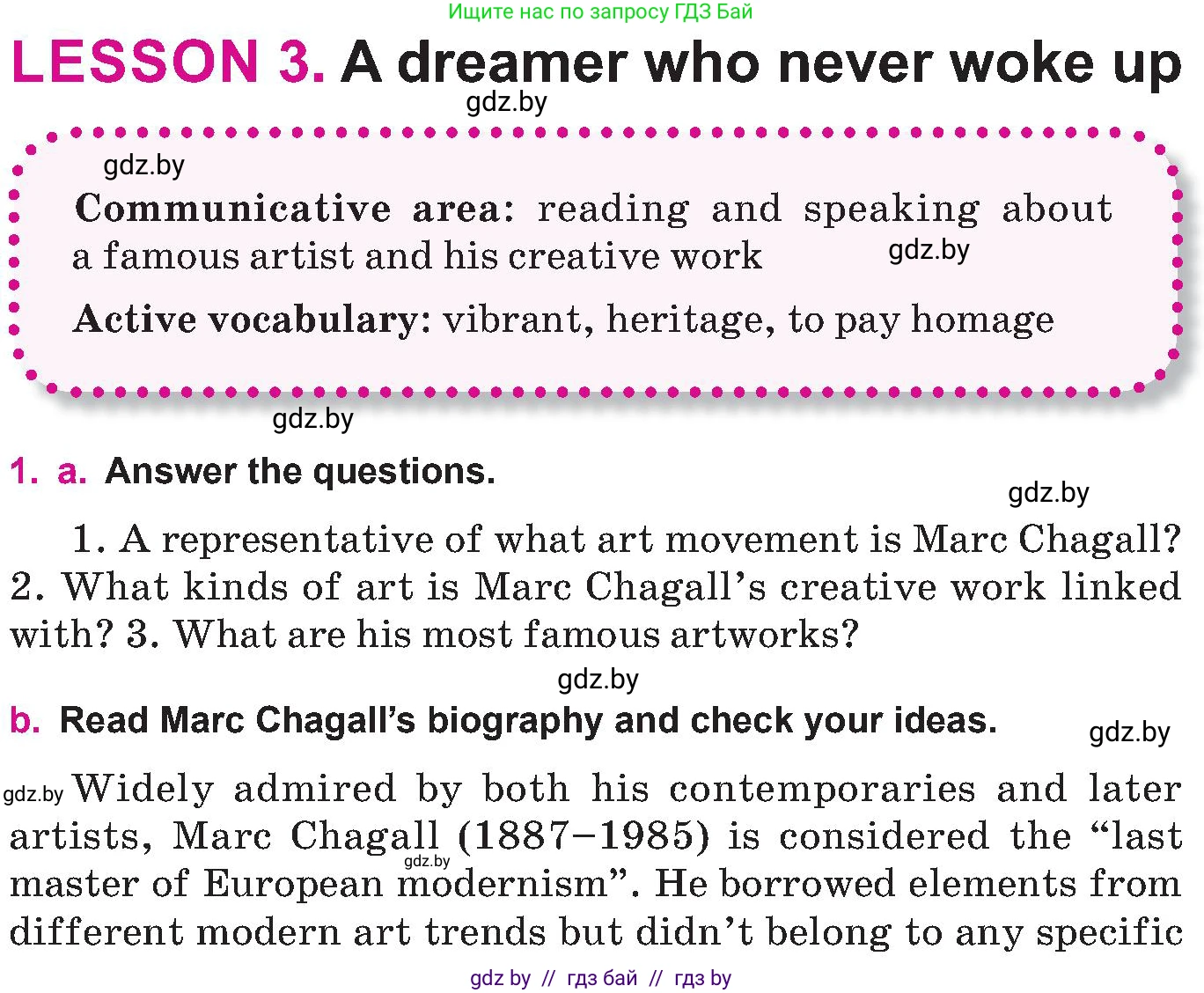
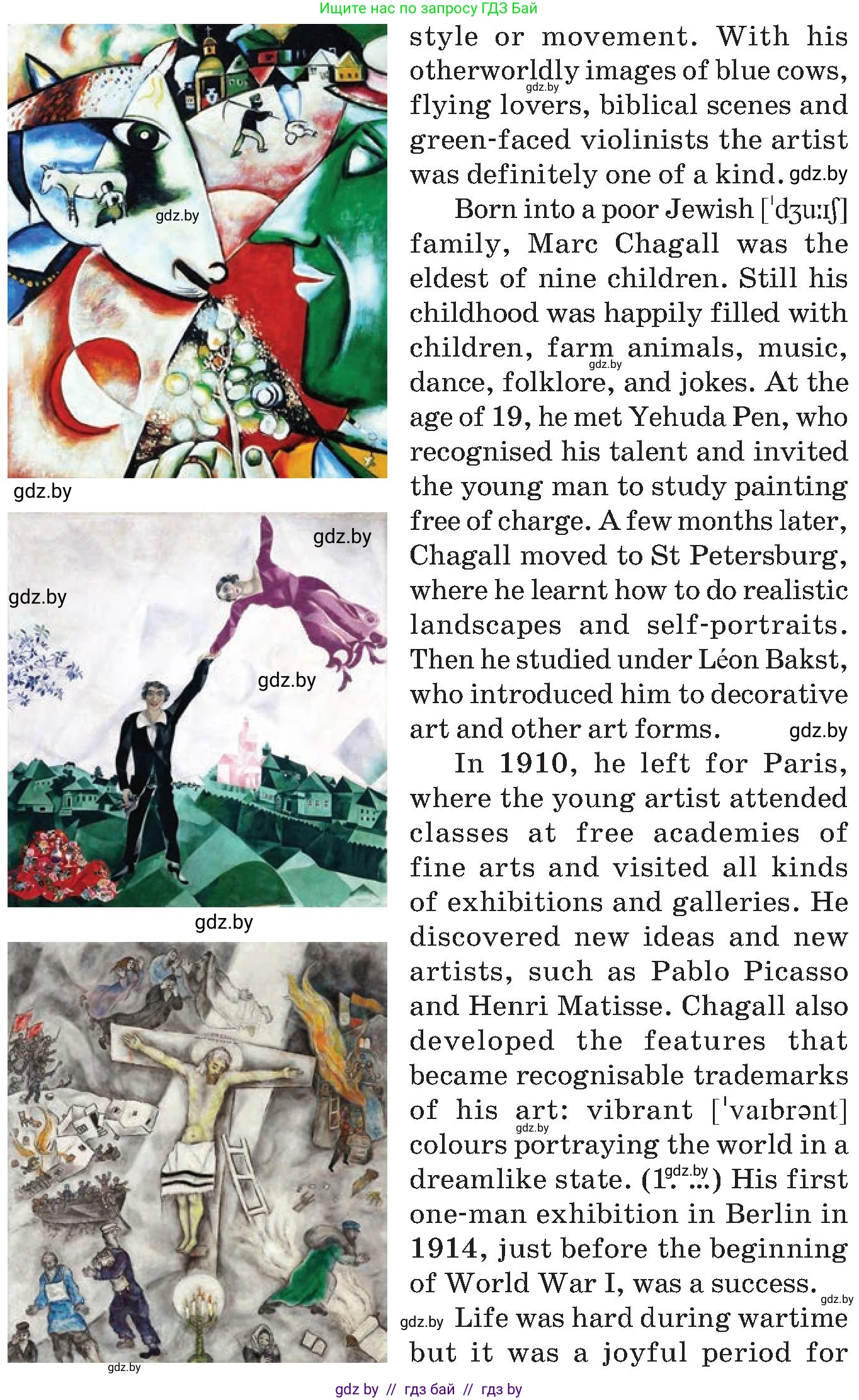
Widely admired by both his contemporaries and later artists, Marc Chagall (1887–1985) is considered the “last master of European modernism”. He borrowed elements from different modern art trends but didn't belong to any specific style or movement. With his otherworldly images of blue cows, flying lovers, biblical scenes and green-faced violinists the artist was definitely one of a kind.
Born into a poor Jewish ['dʒu:ɪʃ] family, Marc Chagall was the eldest of nine children. Still his childhood was happily filled with children, farm animals, music, dance, folklore, and jokes. At the age of 19, he met Yehuda Pen, who recognised his talent and invited the young man to study painting free of charge. A few months later, Chagall moved to St Petersburg, where he learnt how to do realistic landscapes and self-portraits. Then he studied under Léon Bakst, who introduced him to decorative art and other art forms.
In 1910, he left for Paris, where the young artist attended classes at free academies of fine arts and visited all kinds of exhibitions and galleries. He discovered new ideas and new artists, such as Pablo Picasso and Henri Matisse. Chagall also developed the features that became recognisable trademarks of his art: vibrant ['vaɪbrənt] colours portraying the world in a dreamlike state. (1. ...) His first one-man exhibition in Berlin in 1914, just before the beginning of World War I, was a success.
Life was hard during wartime but it was a joyful period for Chagall: he returned to Vitebsk and in 1915 married Bella Rosenfeld, a woman who became his greatest love and inspiration for life. (2. ...)
For some time after the 1917 revolution Marc Chagall was a director of the new Academy of Art in Vitebsk. However, he became disappointed with the work in the school because of the differences with his colleagues and left for Moscow. There, the artist designed costumes and settings for the Jewish Chamber Theatre.
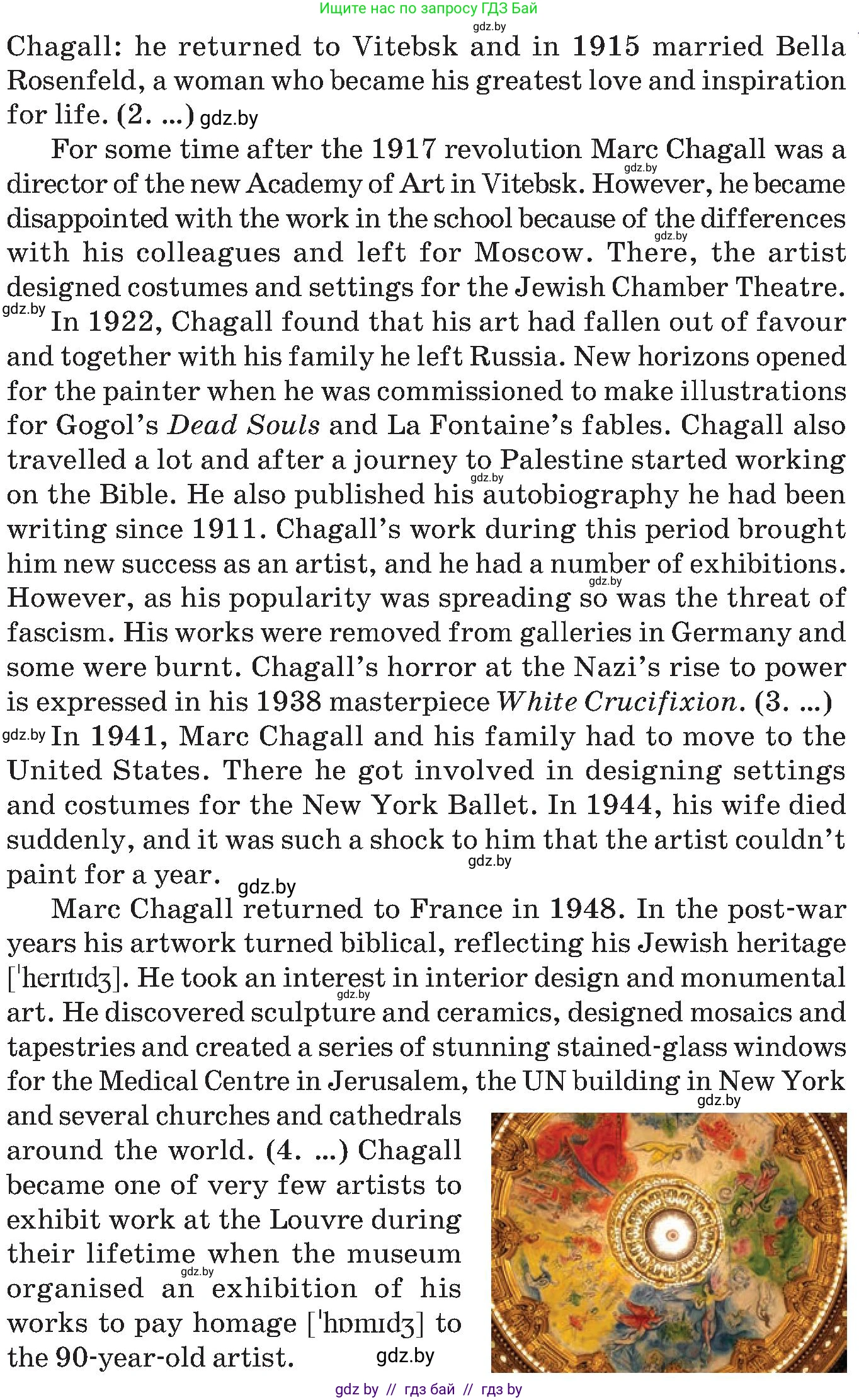
In 1922, Chagall found that his art had fallen out of favour and together with his family he left Russia. New horizons opened for the painter when he was commissioned to make illustrations for Gogol's Dead Souls and La Fontaine's fables. Chagall also travelled a lot and after a journey to Palestine started working on the Bible. He also published his autobiography he had been writing since 1911. Chagall's work during this period brought him new success as an artist, and he had a number of exhibitions. However, as his popularity was spreading so was the threat of fascism. His works were removed from galleries in Germany and some were burnt. Chagall's horror at the Nazi's rise to power is expressed in his 1938 masterpiece White Crucifixion. (3. ...)
In 1941, Marc Chagall and his family had to move to the United States. There he got involved in designing settings and costumes for the New York Ballet. In 1944, his wife died suddenly, and it was such a shock to him that the artist couldn't paint for a year.
Marc Chagall returned to France in 1948. In the post-war years his artwork turned biblical, reflecting his Jewish heritage ['herɪtɪdʒ]. He took an interest in interior design and monumental art. He discovered sculpture and ceramics, designed mosaics and tapestries and created a series of stunning stained-glass windows for the Medical Centre in Jerusalem, the UN building in New York and several churches and cathedrals around the world. (4. ...) Chagall became one of very few artists to exhibit work at the Louvre during their lifetime when the museum organised an exhibition of his works to pay homage ['hɒmɪdʒ] to the 90-year-old artist.
Решение 2. №1 (с. 13)
1. a. Ответьте на вопросы.
1. Представителем какого художественного направления является Марк Шагал?
2. С какими видами искусства связано творчество Марка Шагала?
3. Каковы его самые известные произведения искусства?
Ответ:
1. Marc Chagall is considered a master of European modernism. However, he borrowed elements from different modern art trends but didn't belong to any specific style or movement.
2. Marc Chagall's creative work is linked with painting, decorative art, book illustrations, designing settings and costumes for theatre and ballet, sculpture, ceramics, mosaics, tapestries, and stained-glass windows.
3. His 1938 masterpiece is White Crucifixion. He is also famous for his illustrations for Gogol's Dead Souls and La Fontaine's fables, stained-glass windows for the Medical Centre in Jerusalem and the UN building in New York, and designing settings and costumes for the New York Ballet.
Перевод:
1. Марк Шагал считается мастером европейского модернизма. Однако он заимствовал элементы из различных направлений современного искусства, но не принадлежал к какому-либо определённому стилю или течению.
2. Творчество Марка Шагала связано с живописью, декоративным искусством, книжными иллюстрациями, созданием декораций и костюмов для театра и балета, скульптурой, керамикой, мозаикой, гобеленами и витражами.
3. Его шедевром 1938 года является «Белое распятие». Он также известен своими иллюстрациями к «Мёртвым душам» Гоголя и басням Лафонтена, витражами для Медицинского центра в Иерусалиме и здания ООН в Нью-Йорке, а также созданием декораций и костюмов для Нью-Йоркского балета.
Другие задания:

Помогло решение? Оставьте отзыв в комментариях ниже.
Присоединяйтесь к Телеграм-группе @gdz_by_belarus
ПрисоединитьсяМы подготовили для вас ответ c подробным объяснением домашего задания по английскому языку за 10 класс, для упражнения номер 1 расположенного на странице 13 для 2-й части к Учебник (Student's book) 2021 года издания для учащихся школ и гимназий.
Теперь на нашем сайте ГДЗ.ТОП вы всегда легко и бесплатно найдёте условие с правильным ответом на вопрос «Как решить ДЗ» и «Как сделать» задание по английскому языку к упражнению №1 (с. 13), авторов: Демченко (Наталья Валентиновна), Юхнель (Наталья Валентиновна), Севрюкова (Татьяна Юрьевна), Бушуева (Эдите Владиславовна), Лапицкая (Людмила Михайловна), 2-й части повышенный уровень обучения учебного пособия издательства Вышэйшая школа.