 gdz.by


Номер 2, страница 52, часть 2 - гдз по английскому языку 10 класс учебник Демченко, Юхнель
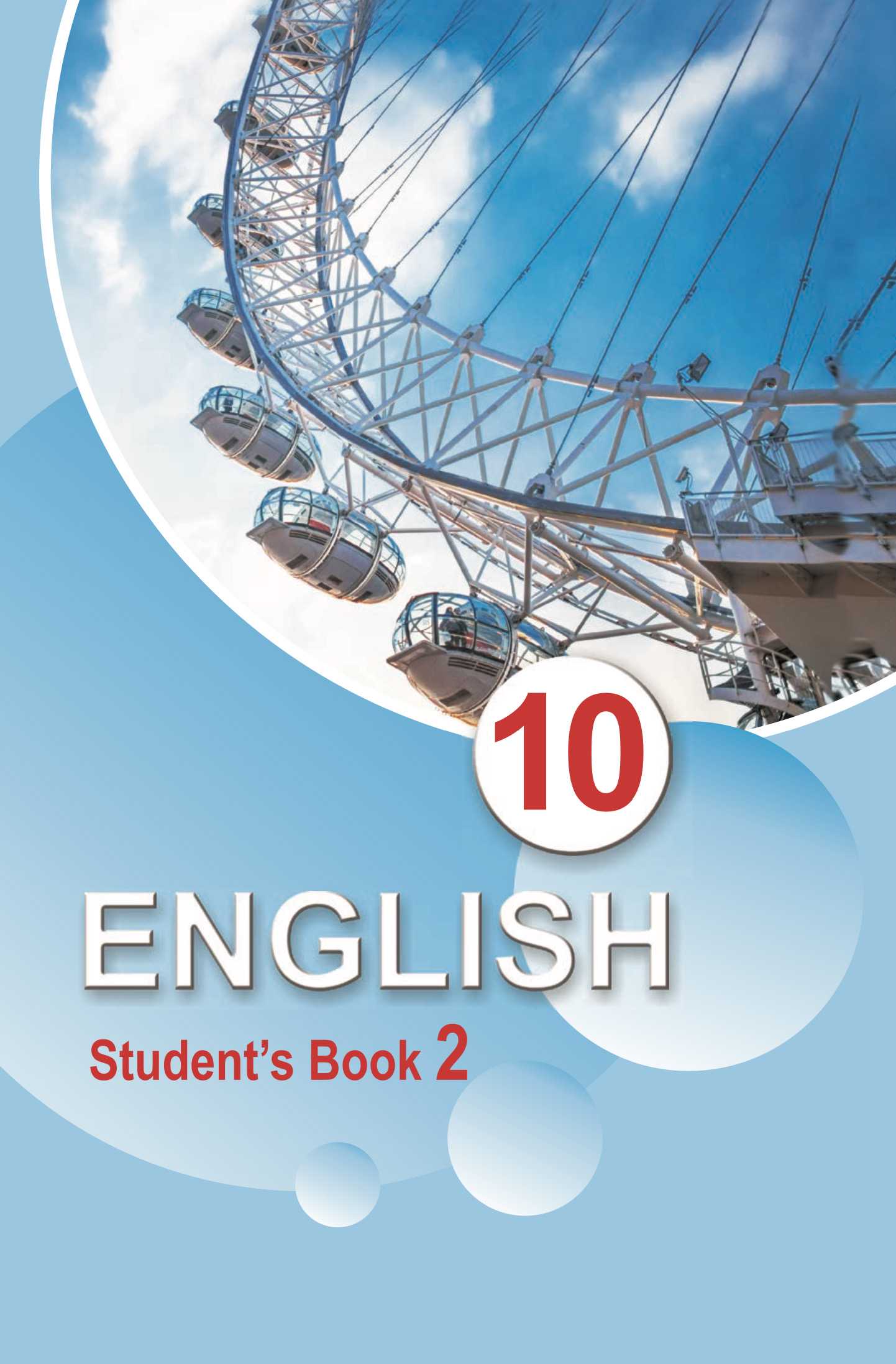
Авторы: Демченко Н. В., Юхнель Н. В., Севрюкова Т. Ю., Бушуева Э. В., Лапицкая Л. М.
Тип: Student's book (Учебник)
Издательство: Вышэйшая школа
Год издания: 2021 - 2025
Уровень обучения: повышенный
Часть: 2
Цвет обложки: голубой
Допущено Министерством образования Республики Беларусь
Популярные ГДЗ в 10 классе


Часть 2. Unit 6. Science. Lesson 2. Scientists are only human - номер 2, страница 52.
 №1
№1
№2 (с. 52)
Условие. №2 (с. 52)
скриншот условия
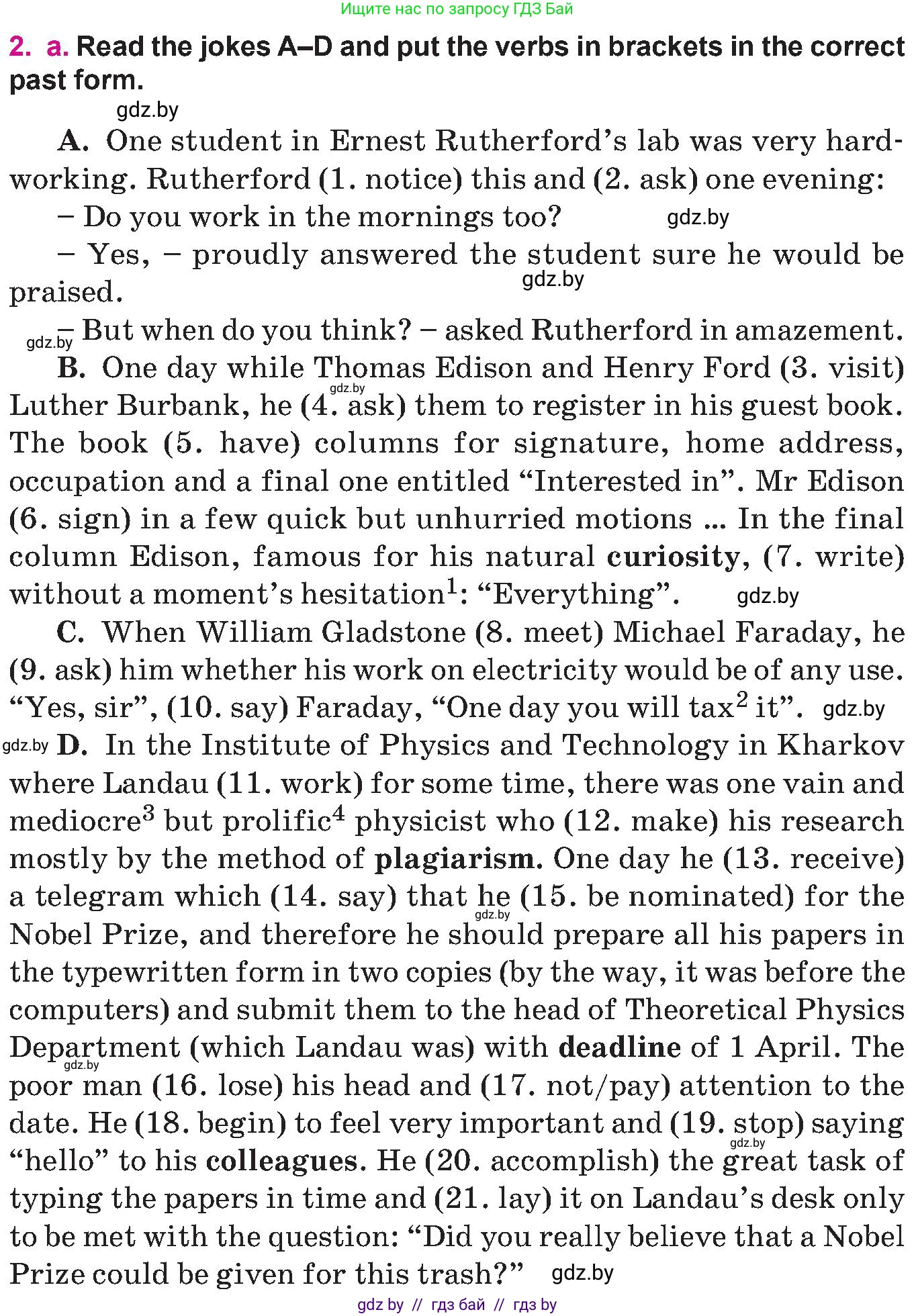
2. a. Read the jokes A–D and put the verbs in brackets in the correct past form.
A. One student in Ernest Rutherford’s lab was very hardworking. Rutherford (1. notice) this and (2. ask) one evening:
– Do you work in the mornings too?
– Yes, – proudly answered the student sure he would be praised.
– But when do you think? – asked Rutherford in amazement.
B. One day while Thomas Edison and Henry Ford (3. visit) Luther Burbank, he (4. ask) them to register in his guest book. The book (5. have) columns for signature, home address, occupation and a final one entitled “Interested in”. Mr Edison (6. sign) in a few quick but unhurried motions ... In the final column Edison, famous for his natural curiosity, (7. write) without a moment’s hesitation¹: “Everything”.
C. When William Gladstone (8. meet) Michael Faraday, he (9. ask) him whether his work on electricity would be of any use. “Yes, sir”, (10. say) Faraday, “One day you will tax² it”.
D. In the Institute of Physics and Technology in Kharkov where Landau (11. work) for some time, there was one vain and mediocre³ but prolific⁴ physicist who (12. make) his research mostly by the method of plagiarism. One day he (13. receive) a telegram which (14. say) that he (15. be nominated) for the Nobel Prize, and therefore he should prepare all his papers in the typewritten form in two copies (by the way, it was before the computers) and submit them to the head of Theoretical Physics Department (which Landau was) with deadline of 1 April. The poor man (16. lose) his head and (17. not/pay) attention to the date. He (18. begin) to feel very important and (19. stop) saying “hello” to his colleagues. He (20. accomplish) the great task of typing the papers in time and (21. lay) it on Landau’s desk only to be met with the question: “Did you really believe that a Nobel Prize could be given for this trash?”
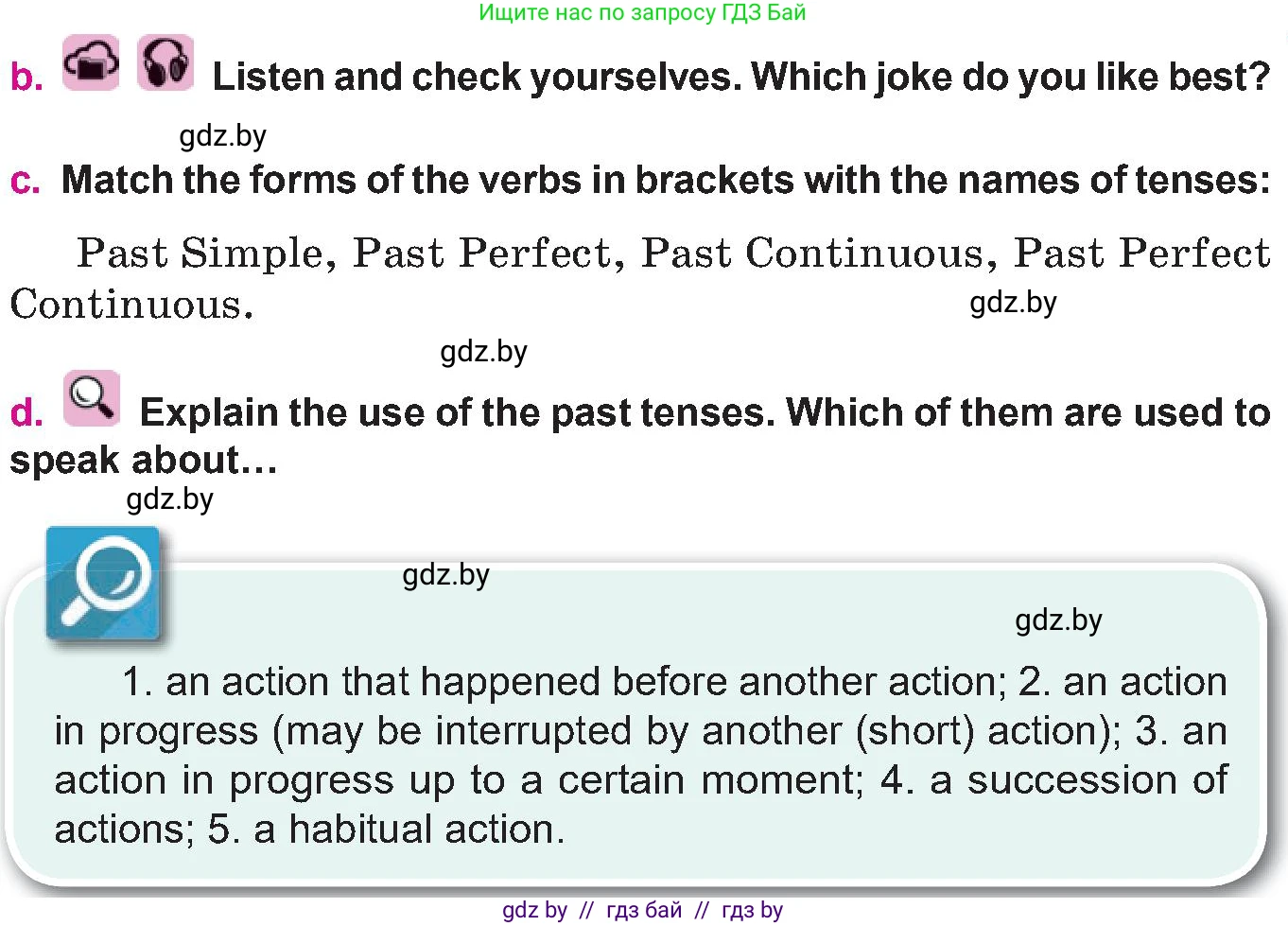
b. Listen and check yourselves. Which joke do you like best?
c. Match the forms of the verbs in brackets with the names of tenses:
Past Simple, Past Perfect, Past Continuous, Past Perfect Continuous.
d. Explain the use of the past tenses. Which of them are used to speak about...
1. an action that happened before another action; 2. an action in progress (may be interrupted by another (short) action); 3. an action in progress up to a certain moment; 4. a succession of actions; 5. a habitual action.
Решение 2. №2 (с. 52)
2. a. Прочитайте анекдоты A–D и поставьте глаголы в скобках в правильную форму прошедшего времени.
2. c. Соотнесите формы глаголов в скобках с названиями времен: Past Simple, Past Perfect, Past Continuous.
2. d. Объясните использование прошедших времен. Какие из них используются, чтобы говорить о...
1. действии, которое произошло до другого действия;
2. действии в процессе (может быть прервано другим (коротким) действием);
3. действии в процессе до определенного момента;
4. последовательности действий;
5. привычном действии.
Ответ:
2. a.
A. One student in Ernest Rutherford’s lab was very hard-working. Rutherford noticed this and asked one evening:
– Do you work in the mornings too?
– Yes, – proudly answered the student sure he would be praised.
– But when do you think? – asked Rutherford in amazement.
B. One day while Thomas Edison and Henry Ford were visiting Luther Burbank, he asked them to register in his guest book. The book had columns for signature, home address, occupation and a final one entitled “Interested in”. Mr Edison signed in a few quick but unhurried motions … In the final column Edison, famous for his natural curiosity, wrote without a moment’s hesitation: “Everything”.
C. When William Gladstone met Michael Faraday, he asked him whether his work on electricity would be of any use.
“Yes, sir”, said Faraday, “One day you will tax it”.
D. In the Institute of Physics and Technology in Kharkov where Landau had worked for some time, there was one vain and mediocre but prolific physicist who made his research mostly by the method of plagiarism. One day he received a telegram which said that he had been nominated for the Nobel Prize, and therefore he should prepare all his papers in the typewritten form in two copies (by the way, it was before the computers) and submit them to the head of Theoretical Physics Department (which Landau was) with deadline of 1 April. The poor man lost his head and didn't pay attention to the date. He began to feel very important and stopped saying “hello” to his colleagues. He accomplished the great task of typing the papers in time and laid it on Landau’s desk only to be met with the question: “Did you really believe that a Nobel Prize could be given for this trash?”
2. c.
| Tense | Verbs from the text |
| Past Simple | noticed, asked, asked, had, signed, wrote, met, asked, said, made, received, said, lost, didn't pay, began, stopped, accomplished, laid |
| Past Continuous | were visiting |
| Past Perfect | had worked, had been nominated |
2. d.
1. Past Perfect
2. Past Continuous
3. Past Continuous
4. Past Simple
5. Past Simple
Перевод:
2. a.
A. Один студент в лаборатории Эрнеста Резерфорда был очень трудолюбив. Резерфорд заметил это и однажды вечером спросил:
– Вы и по утрам работаете?
– Да, – гордо ответил студент, уверенный, что его похвалят.
– Но когда же вы думаете? – изумленно спросил Резерфорд.
B. Однажды, когда Томас Эдисон и Генри Форд навещали Лютера Бёрбанка, он попросил их зарегистрироваться в его гостевой книге. В книге были колонки для подписи, домашнего адреса, рода занятий и последняя, озаглавленная «Интересы». Мистер Эдисон расписался несколькими быстрыми, но неспешными движениями... В последней колонке Эдисон, известный своей природной любознательностью, без малейшего колебания написал: «Всё».
C. Когда Уильям Гладстон встретил Майкла Фарадея, он спросил его, будет ли от его работы по электричеству какая-либо польза.
«Да, сэр, – сказал Фарадей, – однажды вы обложите это налогом».
D. В Физико-техническом институте в Харькове, где Ландау проработал некоторое время, был один тщеславный и посредственный, но плодовитый физик, который проводил свои исследования в основном методом плагиата. Однажды он получил телеграмму, в которой говорилось, что он был номинирован на Нобелевскую премию, и поэтому ему следует подготовить все свои работы в машинописном виде в двух экземплярах (кстати, это было до компьютеров) и сдать их заведующему кафедрой теоретической физики (которым был Ландау) до 1 апреля. Бедняга потерял голову и не обратил внимания на дату. Он начал чувствовать себя очень важным и перестал здороваться со своими коллегами. Он выполнил великую задачу по печатанию работ вовремя и положил ее на стол Ландау, но в ответ услышал лишь вопрос: «Вы действительно верили, что за этот мусор могут дать Нобелевскую премию?»
2. c.
| Время | Глаголы из текста |
| Past Simple | noticed, asked, asked, had, signed, wrote, met, asked, said, made, received, said, lost, didn't pay, began, stopped, accomplished, laid |
| Past Continuous | were visiting |
| Past Perfect | had worked, had been nominated |
2. d.
1. Past Perfect
2. Past Continuous
3. Past Continuous
4. Past Simple
5. Past Simple
Другие задания:

Помогло решение? Оставьте отзыв в комментариях ниже.
Присоединяйтесь к Телеграм-группе @gdz_by_belarus
ПрисоединитьсяМы подготовили для вас ответ c подробным объяснением домашего задания по английскому языку за 10 класс, для упражнения номер 2 расположенного на странице 52 для 2-й части к Учебник (Student's book) 2021 года издания для учащихся школ и гимназий.
Теперь на нашем сайте ГДЗ.ТОП вы всегда легко и бесплатно найдёте условие с правильным ответом на вопрос «Как решить ДЗ» и «Как сделать» задание по английскому языку к упражнению №2 (с. 52), авторов: Демченко (Наталья Валентиновна), Юхнель (Наталья Валентиновна), Севрюкова (Татьяна Юрьевна), Бушуева (Эдите Владиславовна), Лапицкая (Людмила Михайловна), 2-й части повышенный уровень обучения учебного пособия издательства Вышэйшая школа.