 gdz.by


Номер 2, страница 73 - гдз по английскому языку 11 класс учебник Юхнель, Демченко

Авторы: Юхнель Н. В., Демченко Н. В., Романчук В. Р., Малиновская Е. А., Севрюкова Т. Ю., Бушуева Э. В., Наумова Е. Г., Яковчиц Т. Н.
Тип: Student's book (Учебник)
Издательство: Вышэйшая школа
Год издания: 2021 - 2025
Цвет обложки: бирюзовый, фиолетовый, оранжевый
ISBN: 978-985-06-3329-3
Допущено Министерством образования Республики Беларусь
Популярные ГДЗ в 11 классе











Unit 3. Environment. Lesson 5. Problems and solutions - номер 2, страница 73.
 №1
№1
№2 (с. 73)
Условие. №2 (с. 73)
скриншот условия
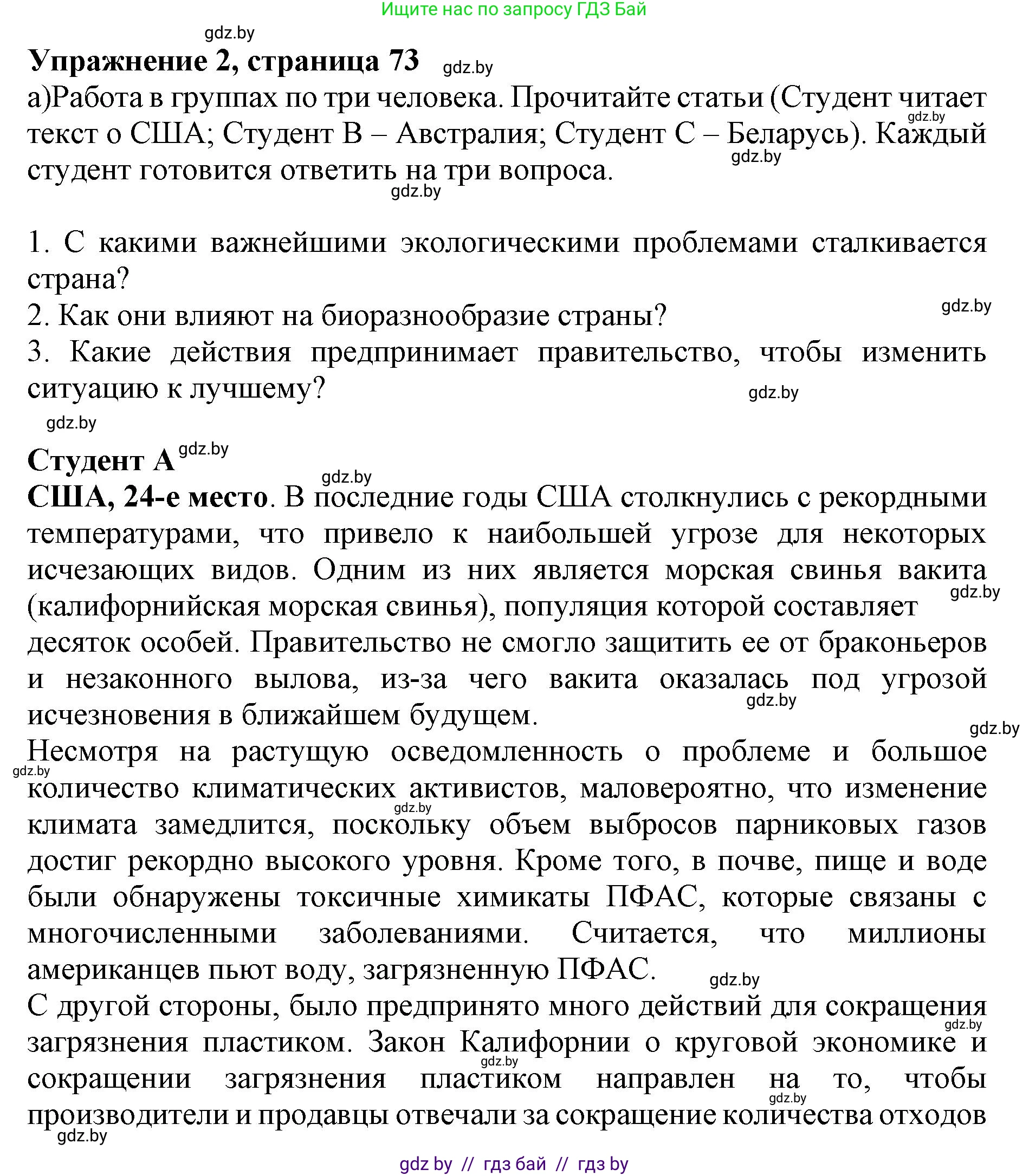
2. a) Work in groups of three. Read the articles (Student A reads text about the USA; Student B – Australia; Student C – Belarus). Each student prepares to answer three questions.
1. What are the crucial environmental issues the country is facing?
2. How do they affect the biodiversity of the country?
3. What actions does the government take to change the situation for the better?
Student A
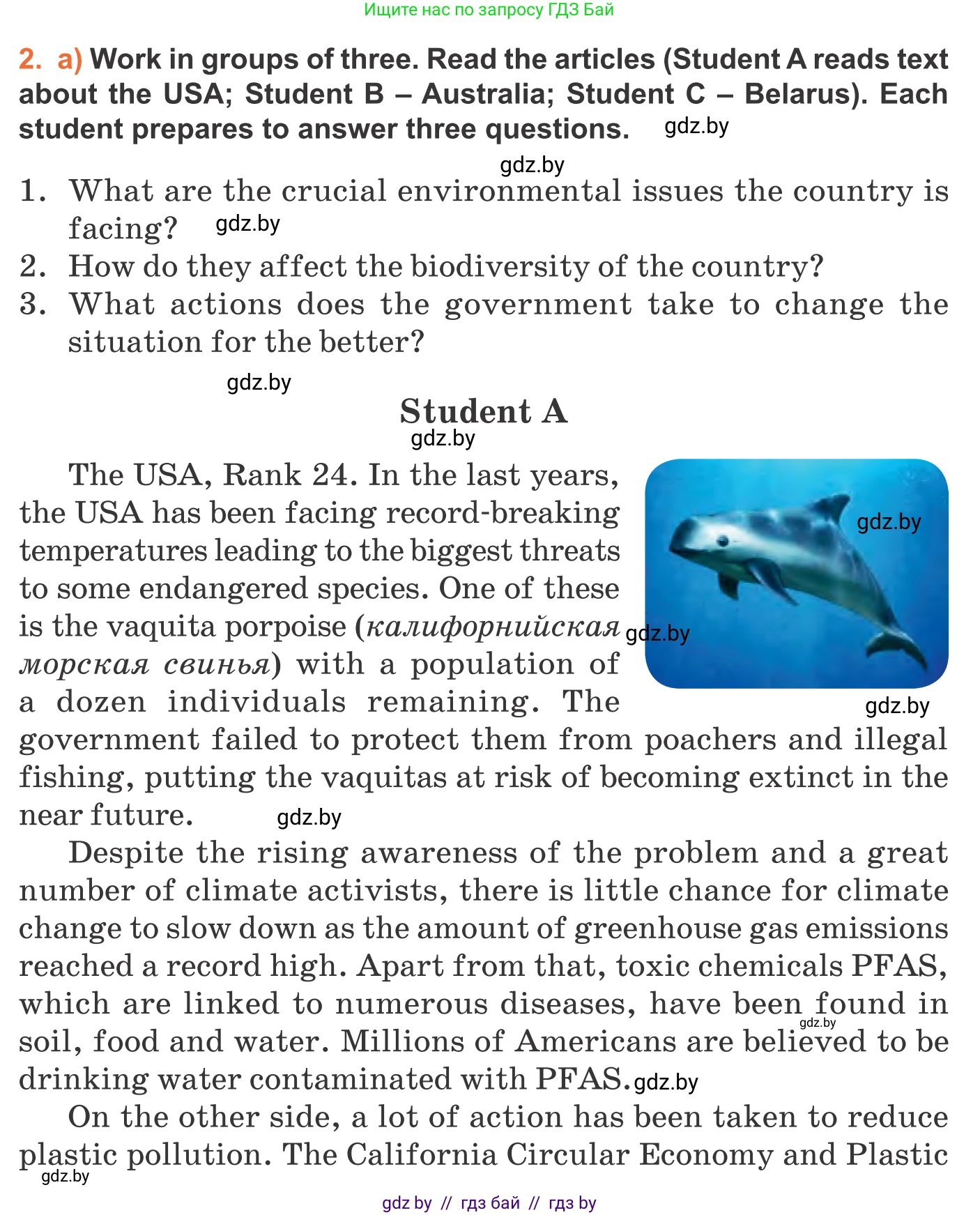
The USA, Rank 24. In the last years, the USA has been facing record-breaking temperatures leading to the biggest threats to some endangered species. One of these is the vaquita porpoise (калифорнийская морская свинья) with a population of a dozen individuals remaining. The government failed to protect them from poachers and illegal fishing, putting the vaquitas at risk of becoming extinct in the near future.
Despite the rising awareness of the problem and a great number of climate activists, there is little chance for climate change to slow down as the amount of greenhouse gas emissions reached a record high. Apart from that, toxic chemicals PFAS, which are linked to numerous diseases, have been found in soil, food and water. Millions of Americans are believed to be drinking water contaminated with PFAS.
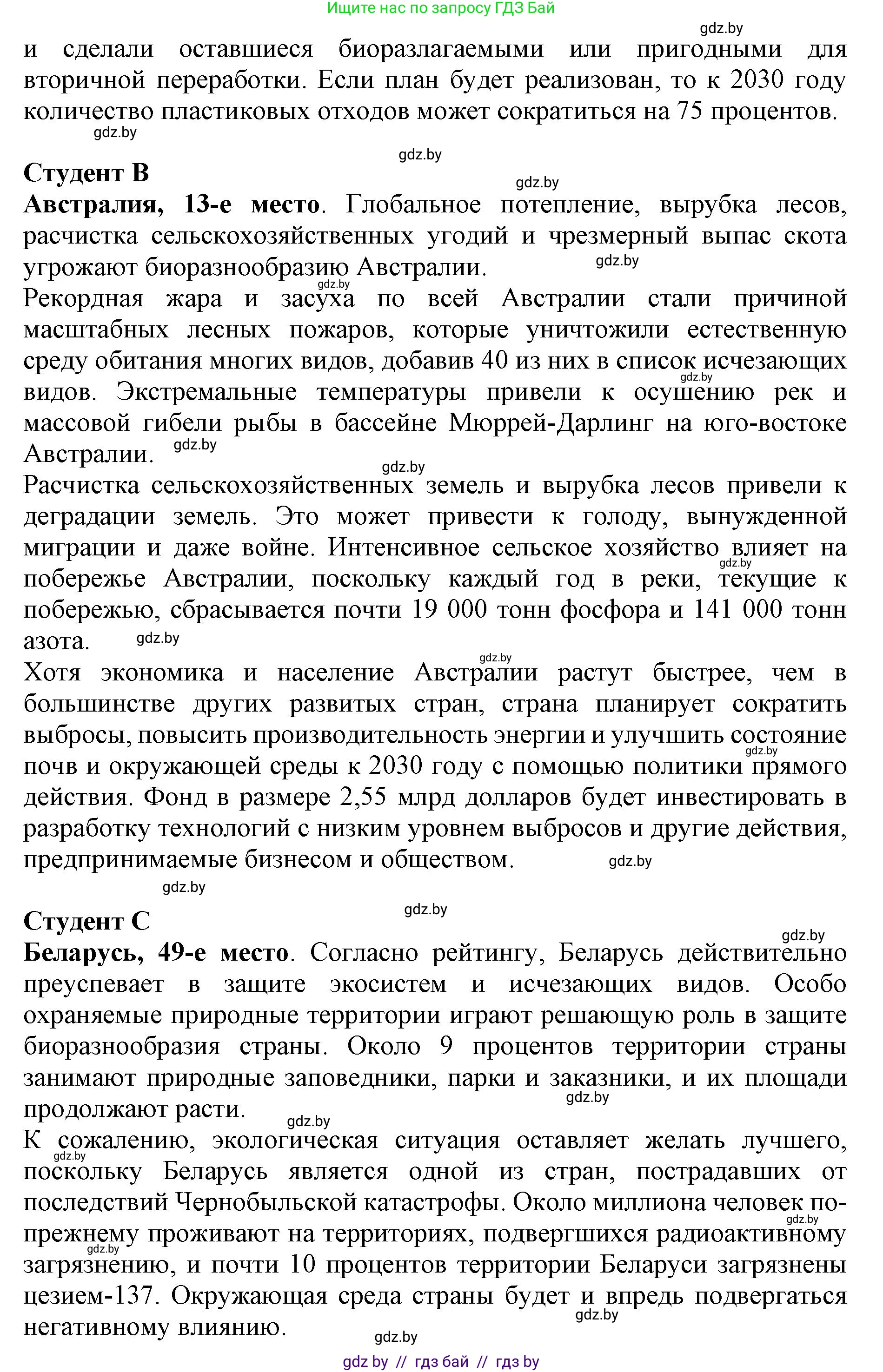
On the other side, a lot of action has been taken to reduce plastic pollution. The California Circular Economy and Plastic Pollution Reduction Act aims to make the manufacturers and sellers responsible for reducing the amount of waste and making the rest biodegradable or recyclable. If the plan succeeded, plastic waste could be reduced by 75 per cent by 2030.
Student B
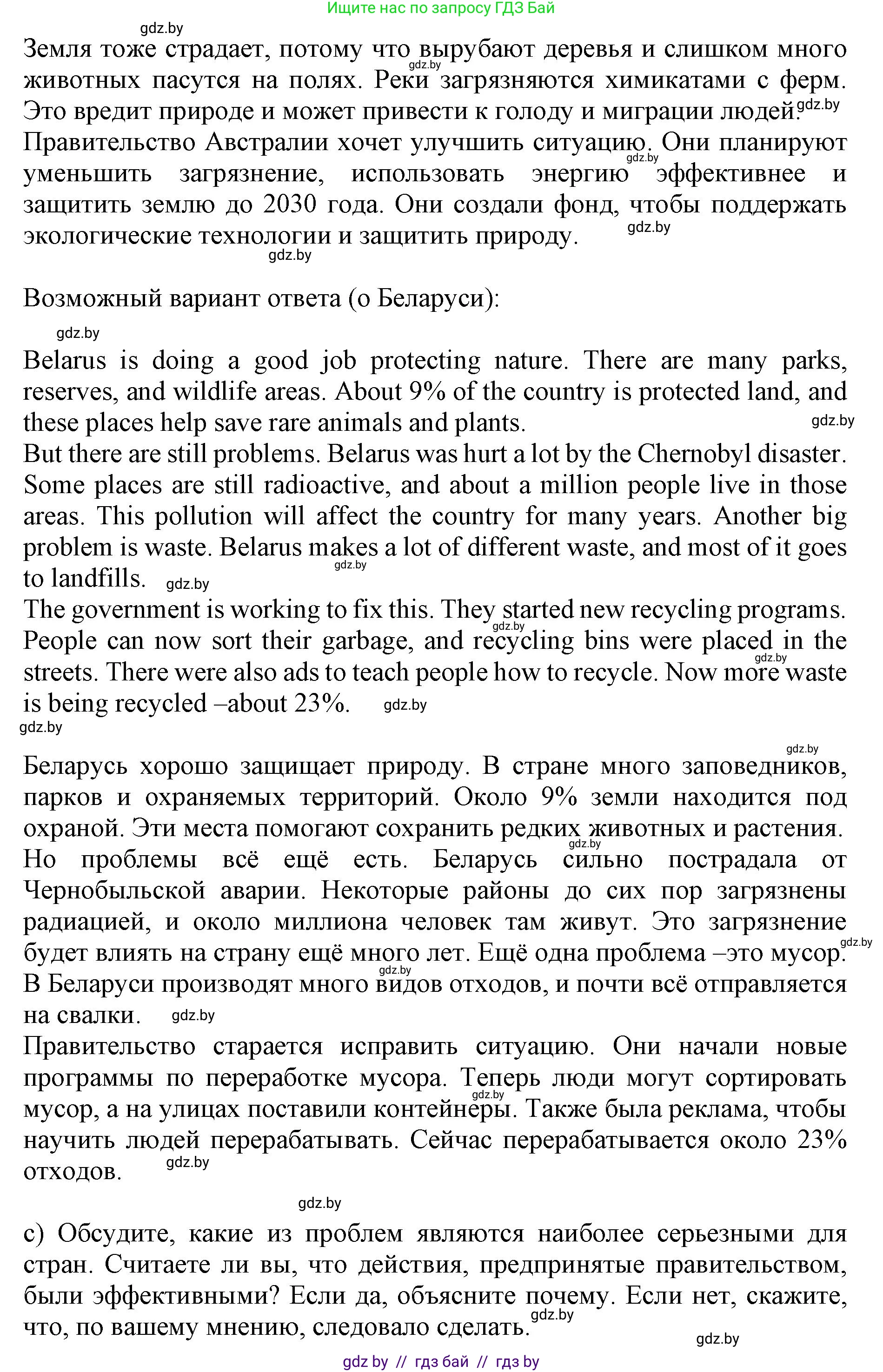
Australia, Rank 13. Global warming, deforestation, agriculture clearing and overgrazing (чрезмерный выпас скота) are threatening to the biodiversity of Australia.
Record heat and drought across Australia caused widespread bushfires that destroyed natural habitats of many species, adding 40 of them to the list of endangered species. Extreme temperatures led to river draining and mass fish deaths in the Murray-Darling Basin in the south-east of Australia.
Clearing activities for agricultural land and deforestation led to land degradation. It may result in famine, forced migration and even war. Intensive agriculture is affecting Australia’s coastline as each year almost 19,000 tonnes of phosphorus and 141,000 tonnes of nitrogen are released into rivers flowing to the coast.
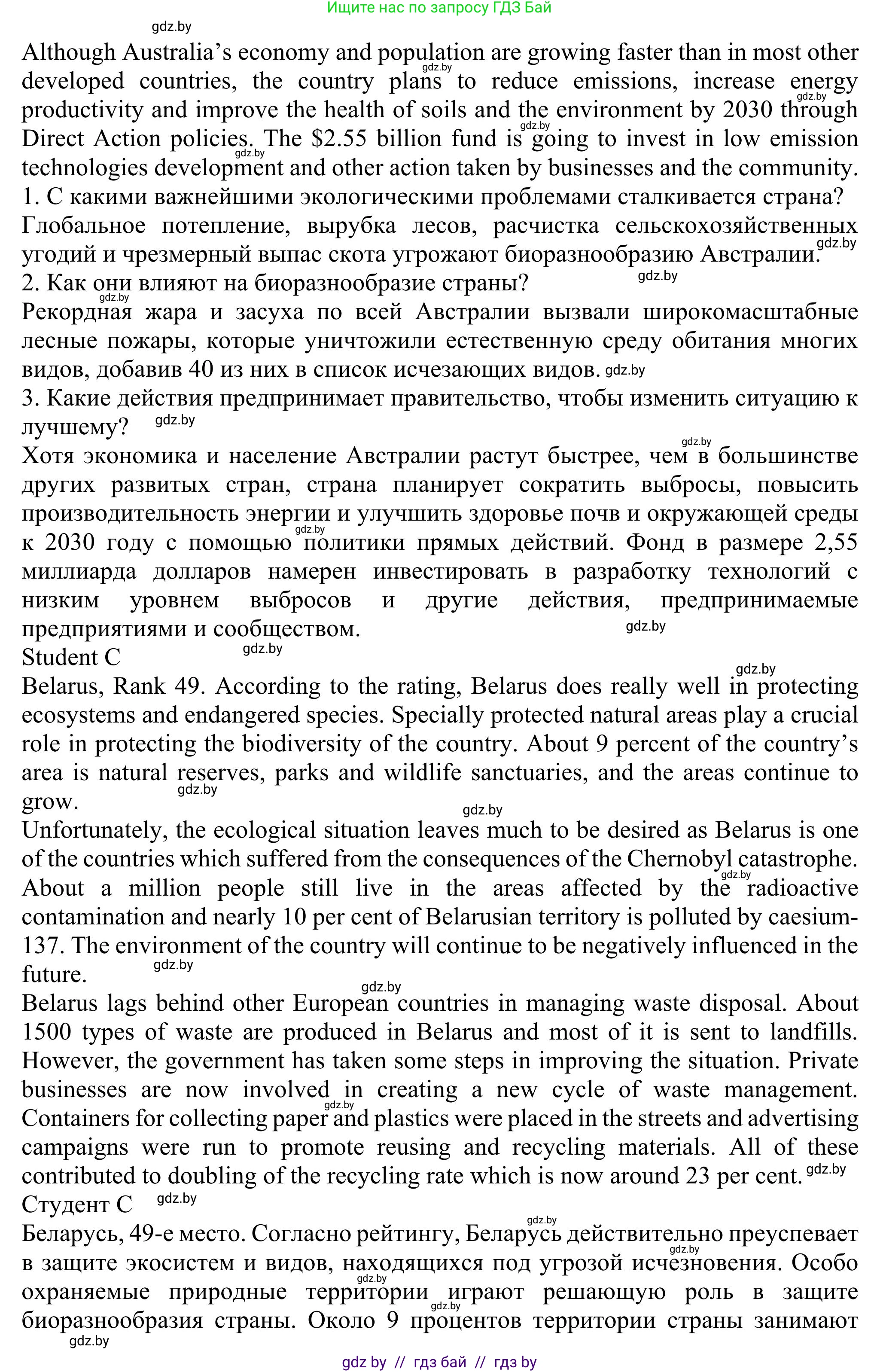
Although Australia’s economy and population are growing faster than in most other developed countries, the country plans to reduce emissions, increase energy productivity and improve the health of soils and the environment by 2030 through Direct Action policies. The $2.55 billion fund is going to invest in low emission technologies development and other action taken by businesses and the community.
Student C
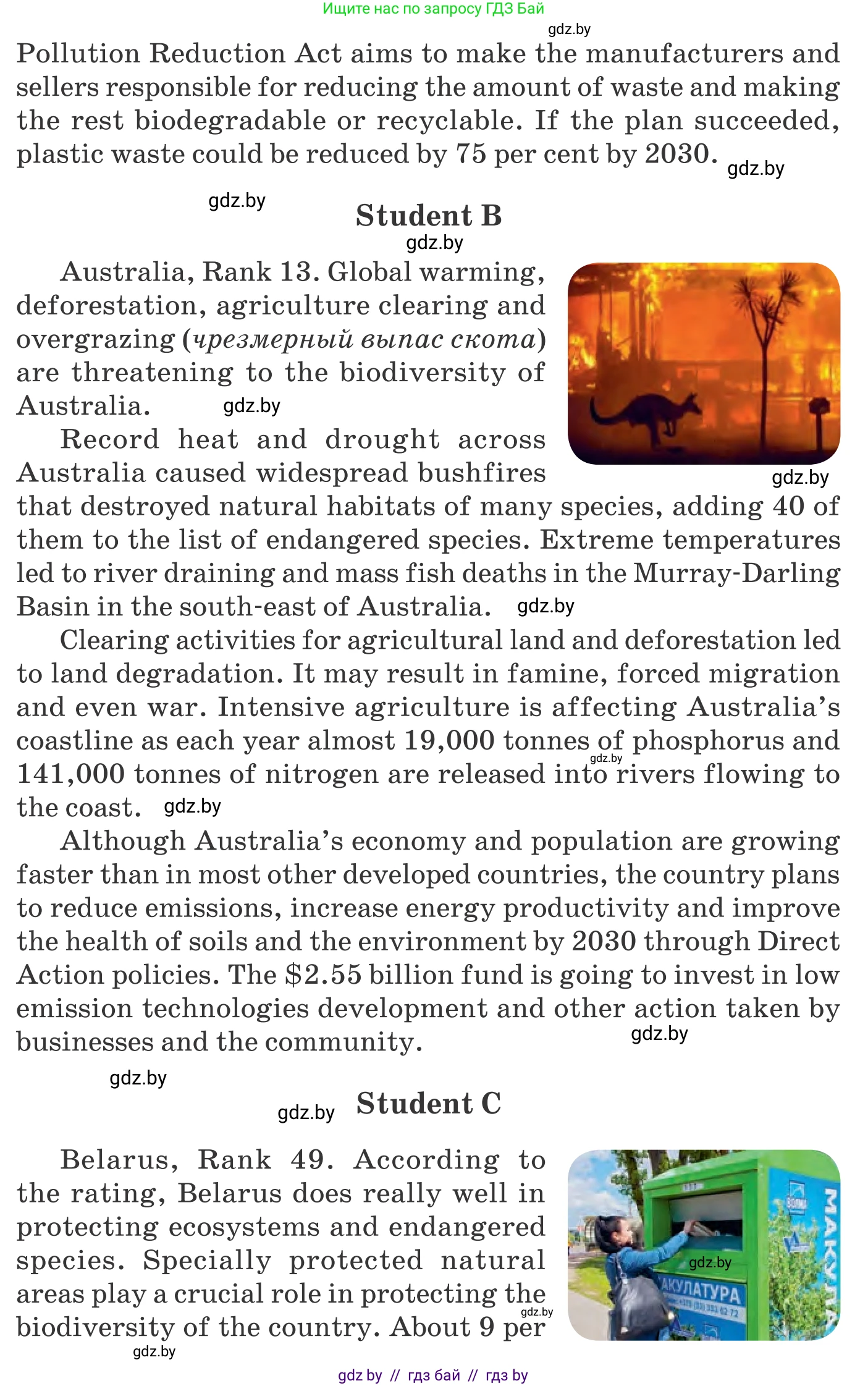
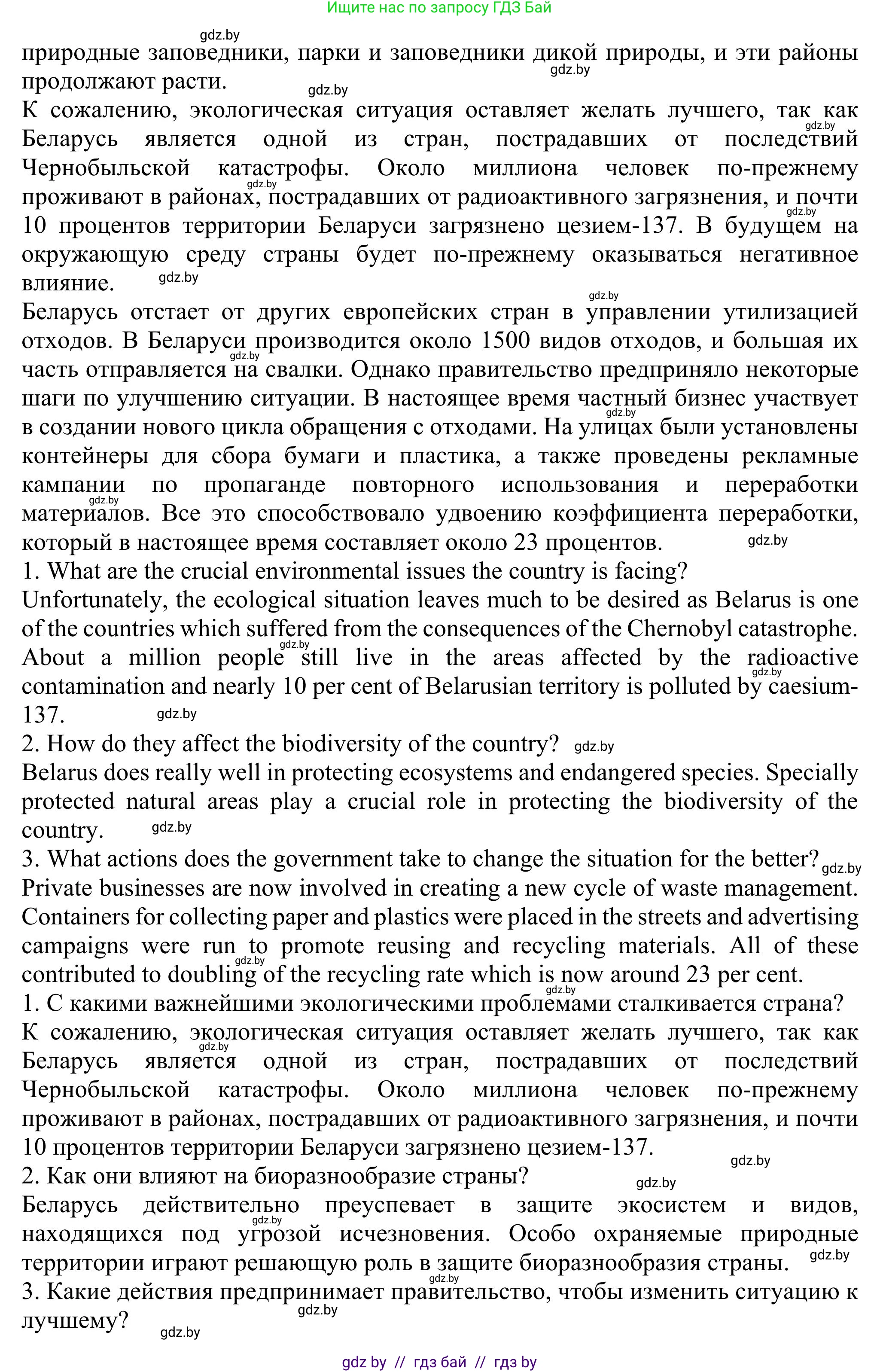
Belarus, Rank 49. According to the rating, Belarus does really well in protecting ecosystems and endangered species. Specially protected natural areas play a crucial role in protecting the biodiversity of the country. About 9 per cent of the country’s area is natural reserves, parks and wildlife sanctuaries, and the areas continue to grow.
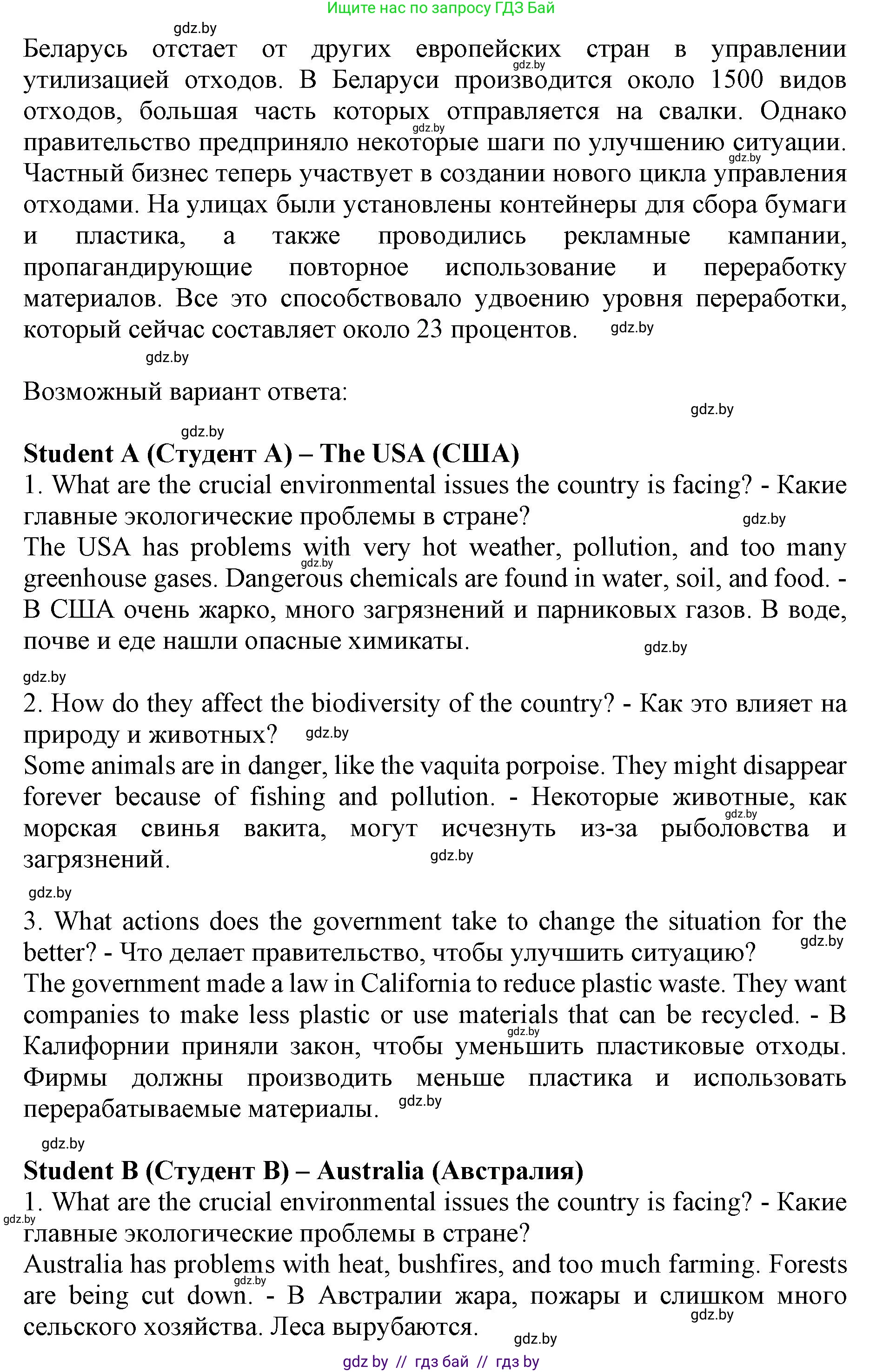
Unfortunately, the ecological situation leaves much to be desired as Belarus is one of the countries which suffered from the consequences of the Chernobyl catastrophe. About a million people still live in the areas affected by the radioactive contamination and nearly 10 per cent of Belarusian territory is polluted by caesium-137. The environment of the country will continue to be negatively influenced in the future.
Belarus lags behind other European countries in managing waste disposal. About 1500 types of waste are produced in Belarus and most of it is sent to landfills. However, the government has taken some steps in improving the situation. Private businesses are now involved in creating a new cycle of waste management. Containers for collecting paper and plastics were placed in the streets and advertising campaigns were run to promote reusing and recycling materials. All of these contributed to doubling of the recycling rate which is now around 23 per cent.
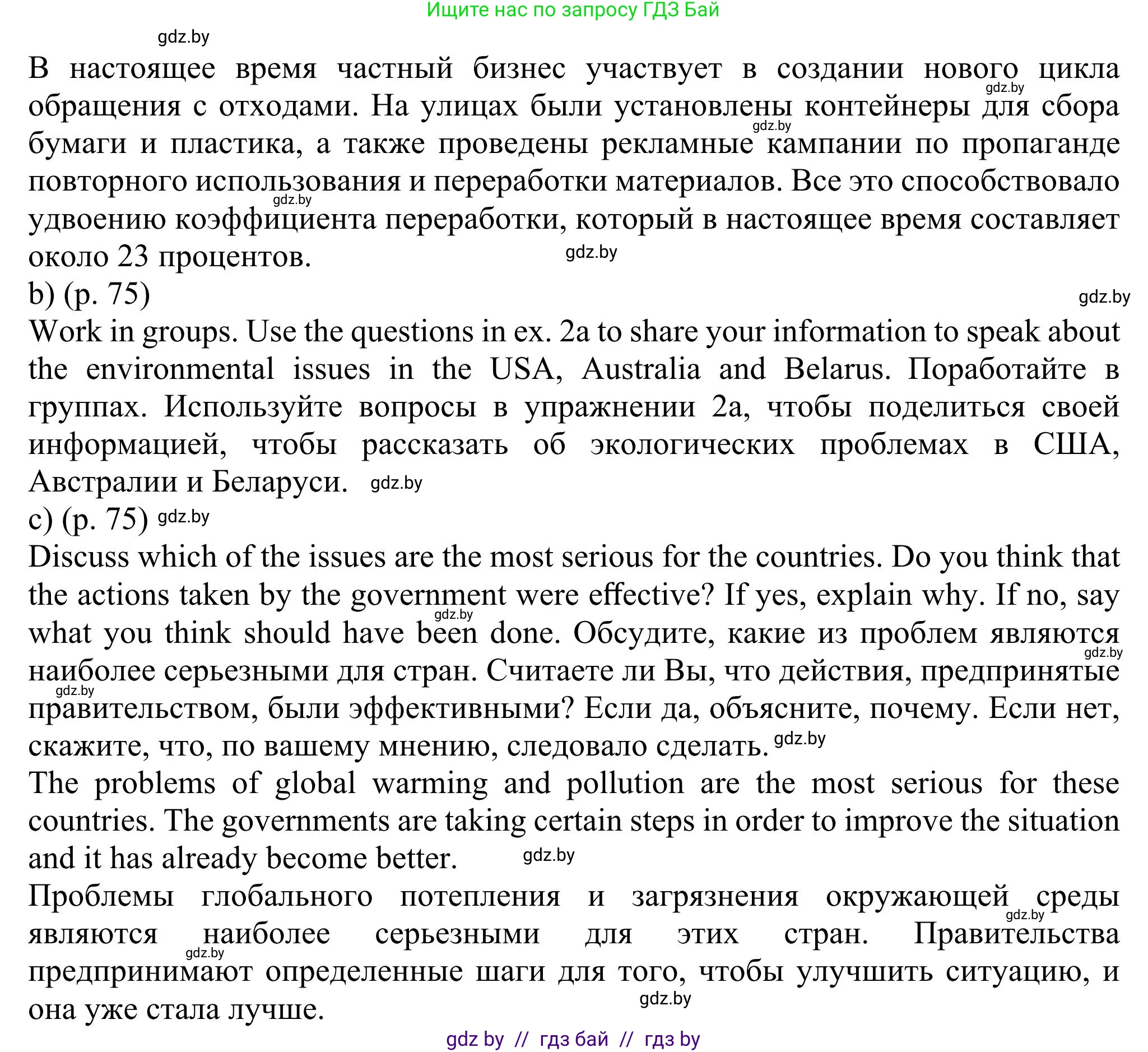
b) Work in groups. Use the questions in ex. 2a to share your information to speak about the environmental issues in the USA, Australia and Belarus.
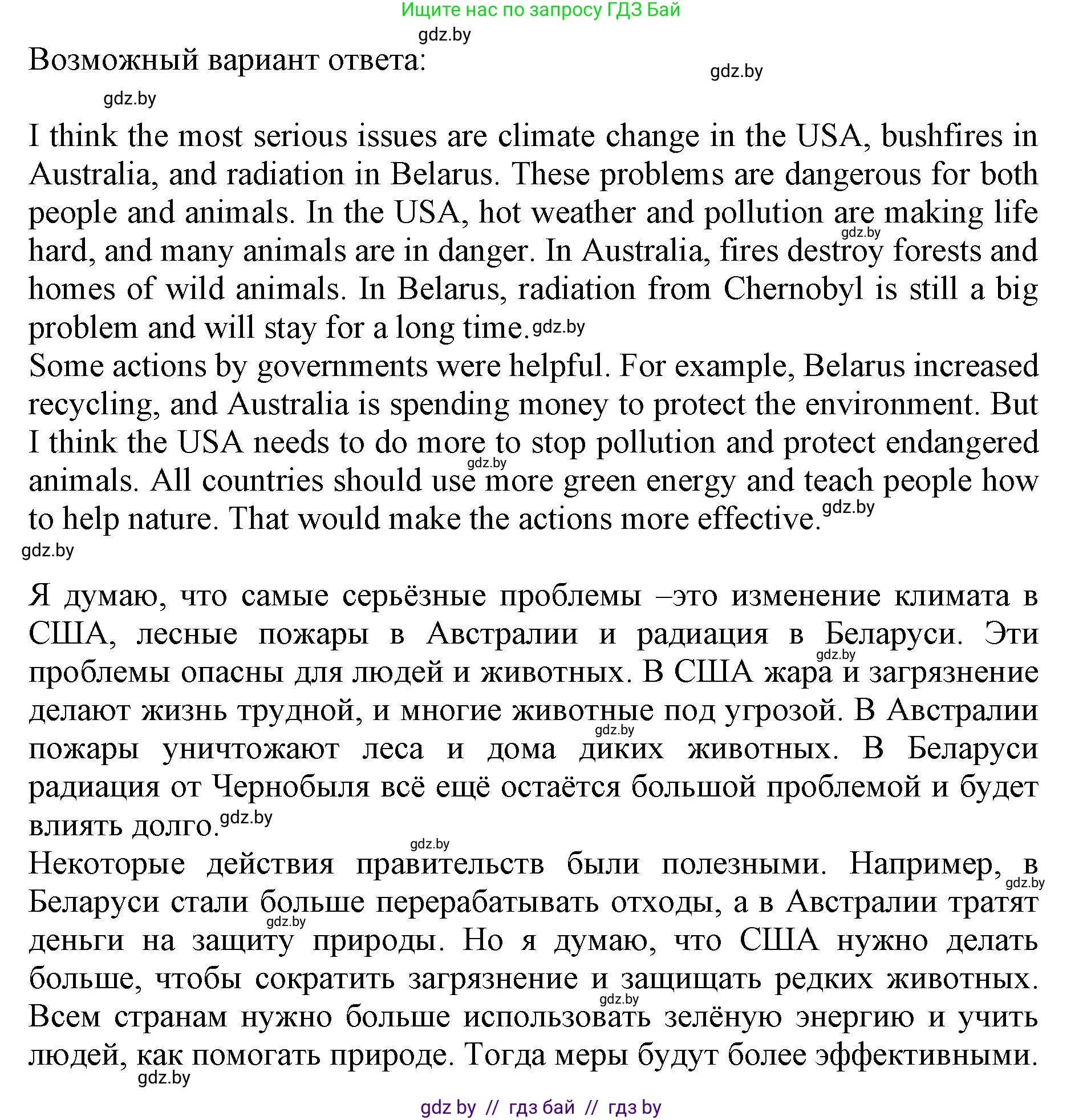
c) Discuss which of the issues are the most serious for the countries. Do you think that the actions taken by the government were effective? If yes, explain why. If no, say what you think should have been done.
Решение. №2 (с. 73)
Решение 2. №2 (с. 73)
Решение 3. №2 (с. 73)
2. a)
1. Каковы важнейшие экологические проблемы, с которыми сталкивается страна?
2. Как они влияют на биоразнообразие страны?
3. Какие действия предпринимает правительство, чтобы изменить ситуацию к лучшему?
Ответ:
USA
1. The crucial environmental issues are record-breaking temperatures, high greenhouse gas emissions, toxic chemical pollution (PFAS), and plastic pollution.
2. These issues threaten endangered species. For example, the vaquita porpoise is at risk of becoming extinct due to the government's failure to protect it from illegal fishing.
3. The government has enacted the California Circular Economy and Plastic Pollution Reduction Act, which aims to reduce plastic waste by 75 per cent by 2030 by making manufacturers responsible for waste reduction and recycling.
Australia
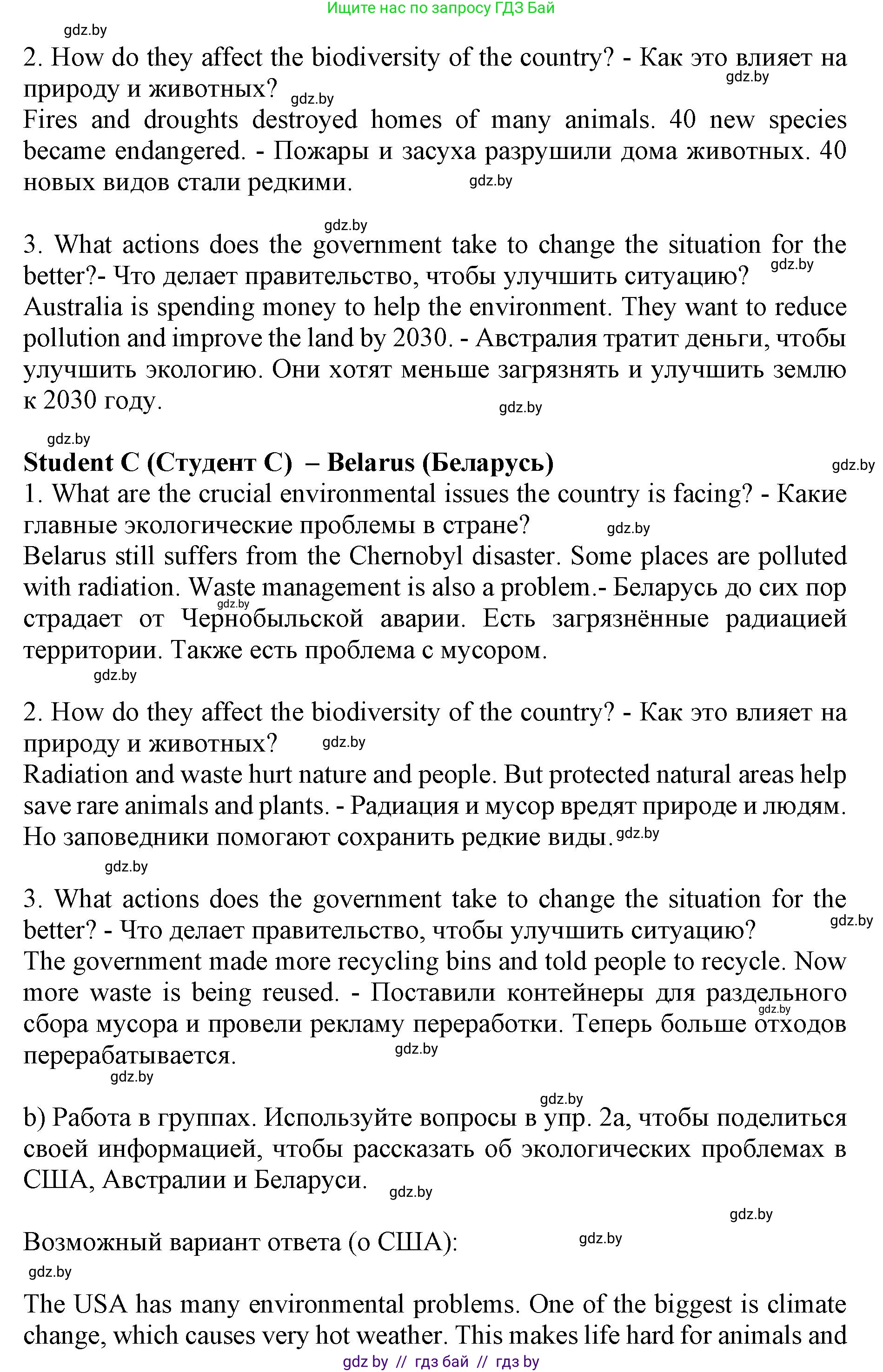
1. The main issues are global warming, deforestation, agriculture clearing, overgrazing, record heat and drought, and pollution from intensive agriculture.
2. These problems threaten the country's biodiversity, have caused widespread bushfires that destroyed habitats, added 40 species to the endangered list, and led to mass fish deaths.
3. The government plans to reduce emissions and improve the environment by 2030 through Direct Action policies. A $2.55 billion fund is dedicated to investing in low-emission technologies.
Belarus
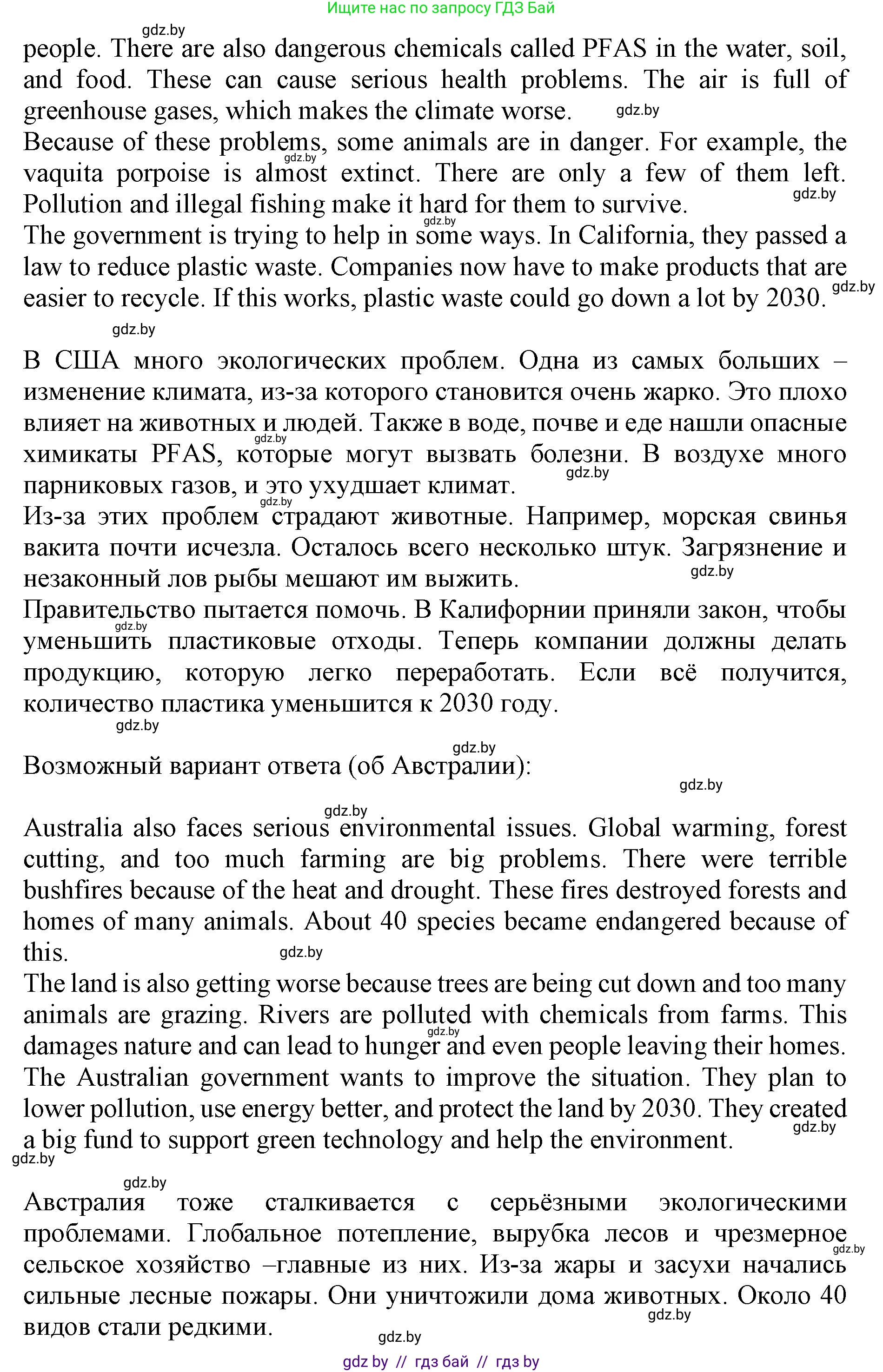
1. The key issues are the long-term consequences of the Chernobyl catastrophe, including radioactive contamination, and lagging behind in waste management, with most waste going to landfills.
2. While the country actively protects biodiversity with natural reserves, the radioactive contamination from Chernobyl has a long-term negative influence on the environment. The text does not specify the direct impact of waste on biodiversity.
3. The government has created specially protected natural areas. To improve waste management, it has taken steps to create a new cycle of waste management with the help of private businesses, installed containers for recycling, and run campaigns that have doubled the recycling rate to around 23 per cent.
Перевод:
США
1. Важнейшими экологическими проблемами являются рекордно высокие температуры, высокий уровень выбросов парниковых газов, загрязнение токсичными химикатами (ПФАС) и загрязнение пластиком.
2. Эти проблемы угрожают исчезающим видам. Например, калифорнийская морская свинья находится под угрозой исчезновения из-за того, что правительство не смогло защитить ее от незаконного вылова.
3. Правительство приняло Закон о циклической экономике и сокращении загрязнения пластиком в Калифорнии, который направлен на сокращение пластиковых отходов на 75 процентов к 2030 году, возлагая на производителей ответственность за сокращение отходов и переработку.
Австралия
1. Основные проблемы — это глобальное потепление, вырубка лесов, расчистка земель для сельского хозяйства, чрезмерный выпас скота, рекордная жара и засуха, а также загрязнение от интенсивного сельского хозяйства.
2. Эти проблемы угрожают биоразнообразию страны, вызвали обширные лесные пожары, уничтожившие среду обитания, добавили 40 видов в список находящихся под угрозой исчезновения и привели к массовой гибели рыбы.
3. Правительство планирует сократить выбросы и улучшить состояние окружающей среды к 2030 году с помощью политики «Прямых действий». Фонд в размере 2,55 миллиарда долларов предназначен для инвестиций в технологии с низким уровнем выбросов.
Беларусь
1. Ключевые проблемы — это долгосрочные последствия Чернобыльской катастрофы, включая радиоактивное загрязнение, и отставание в управлении отходами, так как большая часть отходов отправляется на свалки.
2. Хотя страна активно защищает биоразнообразие с помощью заповедников, радиоактивное загрязнение после Чернобыля оказывает долгосрочное негативное влияние на окружающую среду. В тексте не уточняется прямое влияние отходов на биоразнообразие.
3. Правительство создало особо охраняемые природные территории. Для улучшения управления отходами оно предприняло шаги по созданию нового цикла управления отходами с помощью частного бизнеса, установило контейнеры для переработки и провело кампании, которые удвоили уровень переработки примерно до 23 процентов.
Другие задания:

Помогло решение? Оставьте отзыв в комментариях ниже.
Присоединяйтесь к Телеграм-группе @gdz_by_belarus
ПрисоединитьсяМы подготовили для вас ответ c подробным объяснением домашего задания по английскому языку за 11 класс, для упражнения номер 2 расположенного на странице 73 к Учебник (Student's book) 2021 года издания для учащихся школ и гимназий.
Теперь на нашем сайте ГДЗ.ТОП вы всегда легко и бесплатно найдёте условие с правильным ответом на вопрос «Как решить ДЗ» и «Как сделать» задание по английскому языку к упражнению №2 (с. 73), авторов: Юхнель (Наталья Валентиновна), Демченко (Наталья Валентиновна), Романчук (Вероника Романовна), Малиновская (Елена Александровна), Севрюкова (Татьяна Юрьевна), Бушуева (Эдите Владиславовна), Наумова (Елена Георгиевна), Яковчиц (Т Н), учебного пособия издательства Вышэйшая школа.