 gdz.by


Номер 1, страница 181 - гдз по английскому языку 11 класс учебник Юхнель, Демченко
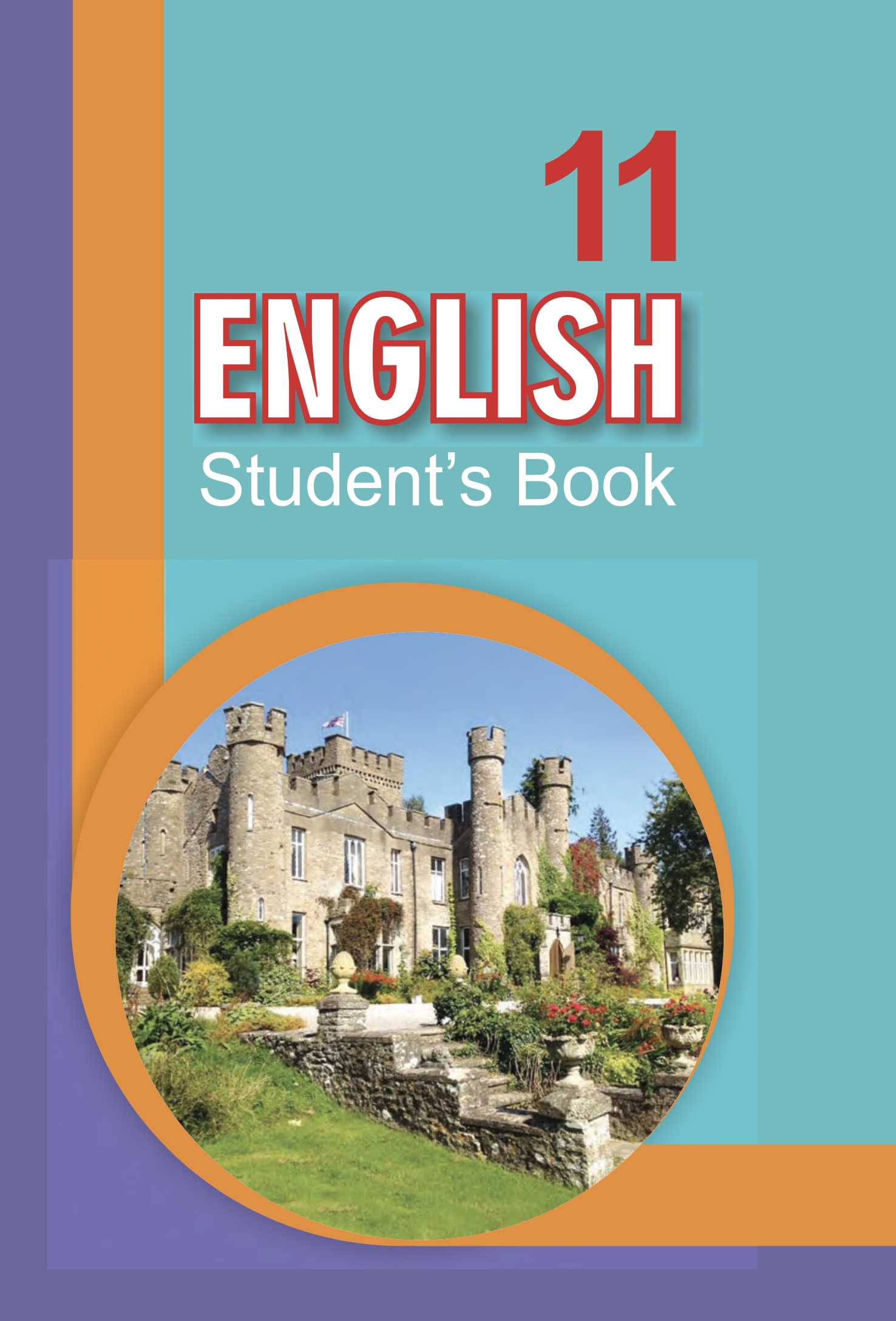
Авторы: Юхнель Н. В., Демченко Н. В., Романчук В. Р., Малиновская Е. А., Севрюкова Т. Ю., Бушуева Э. В., Наумова Е. Г., Яковчиц Т. Н.
Тип: Student's book (Учебник)
Издательство: Вышэйшая школа
Год издания: 2021 - 2025
Цвет обложки: бирюзовый, фиолетовый, оранжевый
ISBN: 978-985-06-3329-3
Допущено Министерством образования Республики Беларусь
Популярные ГДЗ в 11 классе





Unit 6. Dot by. Lesson 7. The origins - номер 1, страница 181.
 №4
№4
№1 (с. 181)
Условие. №1 (с. 181)
скриншот условия


1. Look at the pictures. Do you know these people? What did they do? Why are they famous? If you don’t know them, try to guess.
a) Look at the words in the chart. Match them with definitions.
| 1. Origin | a) A written history of a person’s life |
| 2. Background | b) something people do to honour and remember an important person. |
| 3. Biography | c) The starting point of something. |
| 4. Commemoration | d) A person’s experience and education |
b) You are going to read one of the three articles about these famous Belarusians of the past. Split into three groups.
Take notes about the following:
• Origin and background;
• The main facts of the biography;
• Commemoration.
Group A
Maksim Bogdanovich was a famous Belarusian poet, journalist, translator and literary critic. Together with Janka Kupala and Jakub Kolas he is one of the key Belarusian poets. He was born in Minsk in 1891 in the family of a scientist. His mother died very young of a very dangerous disease. It was tuberculosis. Some years later the family moved to Nizhny Novgorod in Russia where Bogdanovich’s father remarried several times. In everyday life Maksim’s family spoke Russian: the boy listned to many poems, fairy tales and legends in Belarusian which infuenced his work in the future. 1907 was the official beginning of his poet career when his novel Muzyka was published in Nasha Niva.
The novel tells a story of a musician who travels around his country playing the violin. His instrument makes people laugh and cry. It helps people to overcome their hardships. But some rich people decide to get rid of Muzyka and put him into prison where he dies. But the legend about his magic violin lives on.
Soon Bogdanovich graduated from his gymnasium and planned to enter the university in Saint Petersburg, but his family didn’t have enough money to pay for his studies. As a result he started to study law in Yaroslavl. At the same time Bogdanovich travelled to Vilno (today Vilnius) and met many outstanding people of that time. His numerous poems and articles regularly appeared in different newspapers both in Belarus and Russia. And in 1914 his book of poems Vianok was published in Vilno. His interests included not only poetry, but also translating famous foreign poets into Belarusian language. By 1917 he had translated Heinrich Heine and Alexander Pushkin.
He planned to continue his work, but in 1917 he had to move to the Crimea in order to cure his tuberculosis. Unfortunately, the treatment was unsuccessful and Maksim Bogdanovich died tragically young in Yalta. He lived a short, but a very bright life. It’s a pity that we didn’t inherit much of his works because a lot of them were destroyed by the fire in his father’s house. Some of his works became the basis for the opera Zorka Vianiera. The museums of the poet have been opened in Minsk, Grodno and Yaroslavl and several streets in major cities of Belarus and Russia have been named after Maksim Bogdanovich.
Group B
Francisk Skorina is a Belarusian legend. He has been remembered and respected for his contribution to the education and the development of printing. He was born in the ancient Belarusian city of Polotsk in the first half of the sixteenth century. It’s a pity, but the exact dates of his birth and death are unknown. He was born in the family of a merchant and got his primary education at home. As at that time there was no university on the territory of the Grand Duchy of Lithuania. Skorina had to travel to Krakow where he became a brilliant student of the Arts Faculty. After graduating from Krakow University he decided to travel further to Italy and soon became a doctor of medicine. As a result of his trips he became involved in printing and publishing of books. He printed his first book entitled The Psalter, in the Old Belarusian language in 1517 in Prague. It was followed by other twenty-three books. The most significant event for Belarusian culture was the first Bible in Belarusian. Some time later he moved to Vilno where he got married and continued his work. There he opened the first printing shop.
Unfortunately, his shop was destroyed by fire. Soon after that he faced his wife’s death and poverty because his printing business wasn’t successful.
Some scientist said that later Skorina moved to Czech Kingdom where he worked as a doctor and gardener in the house of a rich man. He died there in either 1540 or 1550.
Today we can call Skorina one of the founders of Belarusian literature. In 1969 the story of Francisk Skorina was told in the film I, Francisk Skorina… Two awards of the Republic of Belarus were named in honour of Skorina: Medal of Francisk Skorina and Order of Francisk Skorina. Besides, there is a bronze monument to Skorina near the building of the National Library in Minsk.
Group C
St Euphrosinia of Polotsk was the daughter of Prince Svyatoslav of Polotsk and granddaughter of Vseslav the Enchanter (Charodey). She was the first Belarusian woman enlightener.
Princess Predslava, who became Euphrosinia some years later, was born in about 1110 in Polotsk. When she was twelve her parents planned to marry her off to one of the princes who influenced the political life in the eastern European region. But Predslava refused to marry and ran away to her aunt who was the head of the convent (a monastery for women). There she wanted to become a nun as it was the only possible “carrier” for a woman at that time. But it took some time before Predslava’s father agreed with her choice, so as a result at the age of twelve Predslava became Euphrosinia.
Euphrosinia spent several years of her life in Sophia Cathedral in Polotsk. There she was copying religious books and giving the money that she earned to the poor. Later with the help of her family she founded her own convent. She also built two churches one of which, the church of the Holy Saviour, still stands today and is considered to be the most precious monument of early Belarusian architecture. She turned her convent not only into a religious, but also into a cultural centre. At the end of her life she went to the Holy Land where she died sometime after 1167. Her body was carried to Kiev and placed in the Monastery of the Caves.
It was only in 1910 that her body was brought back to her native town of Polotsk.
Her name is also associated with the Cross of Saint Euphrosinia. It was a magnificent piece of art that was created by one of the best masters of that time Lasar Bohsha. He used a unique ancient technique and decorated the Cross with precious stones. The Cross was presented by Euphrosinia to the church of the Holy Saviour in 1161. Over the centuries the Cross was stolen and then returned to Belarus several times. However, after World War II it mysteriously disappeared. Most probably it was stolen. The attempts to find it have been made by Belarusian scientists and the government. But the investigation didn’t bring any results. So in 1997 a Belarusian artist Nikolai Kuzmich presented a unique copy of the Cross that is now kept in St Euphrosinia’s Church in Polotsk.
c) Work in groups with the students who read about the person from your article. Compare your notes and add more information if necessary.
Решение. №1 (с. 181)


Решение 2. №1 (с. 181)

Решение 3. №1 (с. 181)
a) Посмотрите на слова в таблице. Сопоставьте их с определениями.
Ответ:
1. Origin - c) The starting point of something.
2. Background - d) A person's experience and education.
3. Biography - a) A written history of a person's life.
4. Commemoration - b) something people do to honour and remember an important person.
Перевод:
1. Origin (Происхождение) - c) Начальная точка чего-либо.
2. Background (Образование и опыт) - d) Опыт и образование человека.
3. Biography (Биография) - a) Письменная история жизни человека.
4. Commemoration (Увековечение памяти) - b) То, что люди делают, чтобы почтить и вспомнить важного человека.
Другие задания:

Помогло решение? Оставьте отзыв в комментариях ниже.
Присоединяйтесь к Телеграм-группе @gdz_by_belarus
ПрисоединитьсяМы подготовили для вас ответ c подробным объяснением домашего задания по английскому языку за 11 класс, для упражнения номер 1 расположенного на странице 181 к Учебник (Student's book) 2021 года издания для учащихся школ и гимназий.
Теперь на нашем сайте ГДЗ.ТОП вы всегда легко и бесплатно найдёте условие с правильным ответом на вопрос «Как решить ДЗ» и «Как сделать» задание по английскому языку к упражнению №1 (с. 181), авторов: Юхнель (Наталья Валентиновна), Демченко (Наталья Валентиновна), Романчук (Вероника Романовна), Малиновская (Елена Александровна), Севрюкова (Татьяна Юрьевна), Бушуева (Эдите Владиславовна), Наумова (Елена Георгиевна), Яковчиц (Т Н), учебного пособия издательства Вышэйшая школа.